As many of my friends know, I am a movie freak. I have seen thousands of movies numerous times and love all genres of film. While bored at work today, I decided to rank my favorite movies by decade and post them in a series.
To compile this list, I took all of the ranked
films from my IMDb account, which I grade after every movie I see, and sorted
them from highest to lowest. I then looked at every movie in each decade and
came up with my favorite ten.
I have included some honorable mentions for each decade to show what the top ten were up against. We will begin with the 1920s.
1920s
Honorable Mention: The Kid (1921), The Navigator (1924), and Wings (1927)
10. The Jazz Singer (1927)
I have included some honorable mentions for each decade to show what the top ten were up against. We will begin with the 1920s.
1920s
Honorable Mention: The Kid (1921), The Navigator (1924), and Wings (1927)
10. The Jazz Singer (1927)
 While finding the first movie to be filmed in
color is a bit muddled, the beginning of sound pictures can be pinpointed to the
Al Jolson musical The Jazz Singer. Featuring synchronized dialogue
sequences, The Jazz Singer had such an immediate impact on the film
industry, eccentric aviator and film producer/director Howard Hughes
incorporated the new technology into his half-completed silent movie, Hell’s
Angels, and converted the movie into a talkie at an increased cost.
Another memorable footnote from The Jazz Singer is Jolson’s performance
in blackface, which in today’s society almost always is looked upon as racist.
The Jazz Singer received Academy Award nominations for Writing Adapted
Screenplay and Engineering Effects and Warner Bros. production chief Darryl F.
Zanuck received a special Academy Award for producing “the pioneer outstanding
talking picture, which has revolutionized the industry.” It is included among
the group of films preserved in the National Film Registry at the Library of
Congress.
While finding the first movie to be filmed in
color is a bit muddled, the beginning of sound pictures can be pinpointed to the
Al Jolson musical The Jazz Singer. Featuring synchronized dialogue
sequences, The Jazz Singer had such an immediate impact on the film
industry, eccentric aviator and film producer/director Howard Hughes
incorporated the new technology into his half-completed silent movie, Hell’s
Angels, and converted the movie into a talkie at an increased cost.
Another memorable footnote from The Jazz Singer is Jolson’s performance
in blackface, which in today’s society almost always is looked upon as racist.
The Jazz Singer received Academy Award nominations for Writing Adapted
Screenplay and Engineering Effects and Warner Bros. production chief Darryl F.
Zanuck received a special Academy Award for producing “the pioneer outstanding
talking picture, which has revolutionized the industry.” It is included among
the group of films preserved in the National Film Registry at the Library of
Congress.9. The Passion of Joan of Arc (1928)
 This French silent film chronicles the imprisonment, trial, and execution of
the controversial religious warrioress. What makes The Passion of Joan of
Arc such a historically important film, both in regard to textbooks and
moviemaking, is how closely the script follows the trial records and the
camera-work that highlights the actors facial expressions through close-ups.
Richard Einhorn’s soundtrack to the film, titled Voices of Light, is
also a powerfully chilling score that accentuates the gripping performances,
which are made even more eerie by actors with no makeup applied. The
Passion of Joan of Arc has consistently made it on (credible) top ten
lists, including Sight & Sound magazine and the Village Voice, and
is considered to contain one of the greatest performances on film of any era
from Renée Jeanne Falconetti.
This French silent film chronicles the imprisonment, trial, and execution of
the controversial religious warrioress. What makes The Passion of Joan of
Arc such a historically important film, both in regard to textbooks and
moviemaking, is how closely the script follows the trial records and the
camera-work that highlights the actors facial expressions through close-ups.
Richard Einhorn’s soundtrack to the film, titled Voices of Light, is
also a powerfully chilling score that accentuates the gripping performances,
which are made even more eerie by actors with no makeup applied. The
Passion of Joan of Arc has consistently made it on (credible) top ten
lists, including Sight & Sound magazine and the Village Voice, and
is considered to contain one of the greatest performances on film of any era
from Renée Jeanne Falconetti.8. Safety Last! (1923)
 The most lasting image from this silent romantic comedy is star Harold
Lloyd hanging from a clock several stories up on a skyscraper. Besides the
impressive stunts Lloyd does throughout the final sequence climbing a 12-story
building, the comedic bits are also a hoot-and-a-half. Unlike some movies in
this list that were panned by critics to begin with and later found a cult
following that grew to become sincere appreciation, Safety Last! was a
critical and financial success and is still a hit at revivals. It was selected
in 1994 to the Library of Congress’s National Film Registry as being
“culturally, historically, or aesthetically significant.”
The most lasting image from this silent romantic comedy is star Harold
Lloyd hanging from a clock several stories up on a skyscraper. Besides the
impressive stunts Lloyd does throughout the final sequence climbing a 12-story
building, the comedic bits are also a hoot-and-a-half. Unlike some movies in
this list that were panned by critics to begin with and later found a cult
following that grew to become sincere appreciation, Safety Last! was a
critical and financial success and is still a hit at revivals. It was selected
in 1994 to the Library of Congress’s National Film Registry as being
“culturally, historically, or aesthetically significant.”
7.
Battleship Potemkin (1925)
![[battleship-potemkin-the-ultimate-edition-2pc-full-b-w-.jpg]](https://blogger.googleusercontent.com/img/b/R29vZ2xl/AVvXsEj8yxQjtdQCGg2d41zaZHhwM9AxCf-12S-FN_HDuc6NoVH3o_DDcuG9SmnsKBZeRsX9CcDw1YAC9hTF8NiV5Y3uvSnWagA-UlNI-4nlOfQvBBZPQQAAQClFOoQwEIPhAvEqx-5G/s1600/battleship-potemkin-the-ultimate-edition-2pc-full-b-w-.jpg) This is a dramatization
of the 1905 mutiny by the crew of the Russian Battleship Potemkin against its
czarist regime. However, it is not simply a propaganda film from Sergei
Eisenstein, but an experiment in the art of montage. Eisenstein wanted to edit
the film in such a way as to invoke sympathy for the rebels and abhorrence for
the upper class. Even if you haven’t seen the movie, you might have seen its
most famous scene, which is of the czar’s soldiers marching in unison down the
Odessa Steps and firing into the crowd, killing men, women, and children at
random. Eisenstein’s montage theory is executed flawlessly in the Odessa Steps
scene, creating some today to believe the made-for-film scene was a historically
accurate event. Along with being one of the finest propaganda films ever,
The Battleship Potemkin has garnered praise for more than 85 years as
one of the greatest films of all time. Empire magazine listed it at #3
in its 100 Best Films of World Cinema in 2010.
This is a dramatization
of the 1905 mutiny by the crew of the Russian Battleship Potemkin against its
czarist regime. However, it is not simply a propaganda film from Sergei
Eisenstein, but an experiment in the art of montage. Eisenstein wanted to edit
the film in such a way as to invoke sympathy for the rebels and abhorrence for
the upper class. Even if you haven’t seen the movie, you might have seen its
most famous scene, which is of the czar’s soldiers marching in unison down the
Odessa Steps and firing into the crowd, killing men, women, and children at
random. Eisenstein’s montage theory is executed flawlessly in the Odessa Steps
scene, creating some today to believe the made-for-film scene was a historically
accurate event. Along with being one of the finest propaganda films ever,
The Battleship Potemkin has garnered praise for more than 85 years as
one of the greatest films of all time. Empire magazine listed it at #3
in its 100 Best Films of World Cinema in 2010.6. The General (1926)
 Originally panned by critics and a flop at the
box office, The General has gone on to become one of the greatest
silent-era films of all time. Both thrilling and comedic, Buster Keaton’s
stunts and direction are still compelling, even in today’s action-heavy movie
world. Keaton was not only the star, but also contributed to writing, editing,
producing, and directing the picture as well. Despite its poor financial run,
thus resulting in Keaton having to abandon his dream to be an independent
filmmaker and enter into a restrictive contract deal with MGM, it has since
gained much favor with both critics and audiences. The American Film Institute
celebrated The General on both its 100 Laughs and 100 Films 10th
Anniversary Edition lists. The National Congress included it among the first
selections in 1989 to the National Film Registry.
Originally panned by critics and a flop at the
box office, The General has gone on to become one of the greatest
silent-era films of all time. Both thrilling and comedic, Buster Keaton’s
stunts and direction are still compelling, even in today’s action-heavy movie
world. Keaton was not only the star, but also contributed to writing, editing,
producing, and directing the picture as well. Despite its poor financial run,
thus resulting in Keaton having to abandon his dream to be an independent
filmmaker and enter into a restrictive contract deal with MGM, it has since
gained much favor with both critics and audiences. The American Film Institute
celebrated The General on both its 100 Laughs and 100 Films 10th
Anniversary Edition lists. The National Congress included it among the first
selections in 1989 to the National Film Registry.5. Sunrise: A Song of Two Humans (1927)
 The first ever Academy Award winner
for Unique and Artistic Production, which the next year would be combined with
another category to become the Best Picture award, Sunrise was an
American production from director F.W. Murnau in the style of German
Expressionism, which features distorted art design for symbolic effect. The
silent film used few title cards and experimented in long tracking shots, with
the longest ever being filmed up to that point at more than four minutes for one
take. Sunrise was immediately loved and was nominated in four
categories at the Academy Awards, winning three Oscars for best actress, best
cinematography, and best picture. It was also among the original films included
in the National Film Registry, Sight & Sound magazine’s critics’
poll for Top 10 best films ever made, and the American Film Industry’s Top 100
Passions film list.
The first ever Academy Award winner
for Unique and Artistic Production, which the next year would be combined with
another category to become the Best Picture award, Sunrise was an
American production from director F.W. Murnau in the style of German
Expressionism, which features distorted art design for symbolic effect. The
silent film used few title cards and experimented in long tracking shots, with
the longest ever being filmed up to that point at more than four minutes for one
take. Sunrise was immediately loved and was nominated in four
categories at the Academy Awards, winning three Oscars for best actress, best
cinematography, and best picture. It was also among the original films included
in the National Film Registry, Sight & Sound magazine’s critics’
poll for Top 10 best films ever made, and the American Film Industry’s Top 100
Passions film list.4. The Cabinet of Dr. Caligari (1920)
 Being one of the most influential German
Expressionist movies and among the earliest examples of executing the frame
story in film, The Cabinet of Dr. Caligari also introduced another
aspect of film that is highly common today, which I am not going to state here
as it will spoil some of the movie for those who have yet to see it. The art
design of The Cabinet of Dr. Caligari is unique in that shadows and
light were painted directly on the sets’ walls, floors, and backgrounds. This
movie inspired directors for decades afterward, is considered to be among the
first horror films, and had a great influence on the genre film noir.
Being one of the most influential German
Expressionist movies and among the earliest examples of executing the frame
story in film, The Cabinet of Dr. Caligari also introduced another
aspect of film that is highly common today, which I am not going to state here
as it will spoil some of the movie for those who have yet to see it. The art
design of The Cabinet of Dr. Caligari is unique in that shadows and
light were painted directly on the sets’ walls, floors, and backgrounds. This
movie inspired directors for decades afterward, is considered to be among the
first horror films, and had a great influence on the genre film noir.3. Nosferatu (1922)
 Another exceptional example of
German Expressionism in the 1920s, Nosferatu is an unauthorized
adaptation of Bram Stoker’s Dracula, resulting in the bankruptcy of the
company as Stoker’s estate sued the filmmakers for copyright infringement. Even
to this day, Max Schrek’s Count Orlock, substituting for the more famous Count
Dracula, is one of the most horrifying and iconic portrayals of a vampire. In a
time where vampires are written to be sexy, misunderstood creatures who only
want to find true love among the humans instead of utilizing our species like
cattle for their unending bloodlust, it is Schrek’s ghastly makeup and eerie
performance that reminds us vampires were originally created to be our enemy.
In 2010, Empire magazine listed Nosferatu at number 21 among its 100
Best Films of World Cinema.
Another exceptional example of
German Expressionism in the 1920s, Nosferatu is an unauthorized
adaptation of Bram Stoker’s Dracula, resulting in the bankruptcy of the
company as Stoker’s estate sued the filmmakers for copyright infringement. Even
to this day, Max Schrek’s Count Orlock, substituting for the more famous Count
Dracula, is one of the most horrifying and iconic portrayals of a vampire. In a
time where vampires are written to be sexy, misunderstood creatures who only
want to find true love among the humans instead of utilizing our species like
cattle for their unending bloodlust, it is Schrek’s ghastly makeup and eerie
performance that reminds us vampires were originally created to be our enemy.
In 2010, Empire magazine listed Nosferatu at number 21 among its 100
Best Films of World Cinema.2. The Gold Rush (1925)
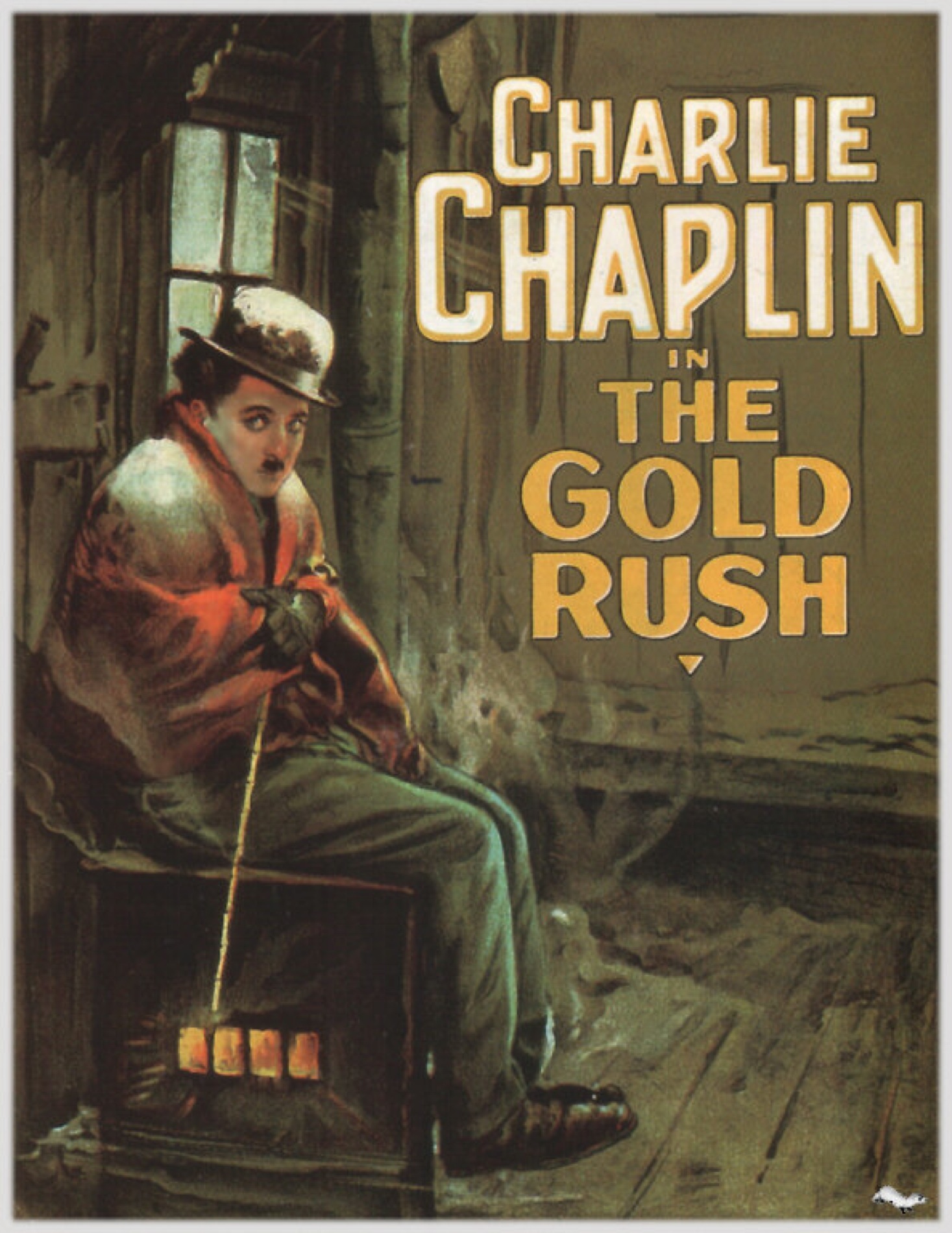 Any list of early cinema is not complete without a Charlie Chaplin
film, and this one isn’t going to be the last in my rankings. Not only starring
as his Little Tramp character, who debuted in 1914 and continued to star in
silent movies until 1936’s Modern Times, but also writing, producing,
and directing, some of Chaplin’s most memorable sequences can be found in
The Gold Rush, including the roll dance. The Gold Rush is the
fifth highest grossing silent film and the most successful silent comedy in
cinema history. The American Film Institute includes The Gold Rush
among its 100 Movies (at #74), 100 Laughs (#25), and 100 Movies 10th Anniversary
Edition list (#58). It was also selected to the National Film Registry for
preservation in 1992.
Any list of early cinema is not complete without a Charlie Chaplin
film, and this one isn’t going to be the last in my rankings. Not only starring
as his Little Tramp character, who debuted in 1914 and continued to star in
silent movies until 1936’s Modern Times, but also writing, producing,
and directing, some of Chaplin’s most memorable sequences can be found in
The Gold Rush, including the roll dance. The Gold Rush is the
fifth highest grossing silent film and the most successful silent comedy in
cinema history. The American Film Institute includes The Gold Rush
among its 100 Movies (at #74), 100 Laughs (#25), and 100 Movies 10th Anniversary
Edition list (#58). It was also selected to the National Film Registry for
preservation in 1992.1. Metropolis (1927)
.jpeg) German filmmakers knew what they were doing in the 20s as this is the fourth
Expressionist film to be in the top four of my best of the decade list. A
dystopian study of social upheaval between the workers and owners of capitalism
set in a science-fiction world, Metropolis is the most expensive silent
film ever made, and its lavishness can be appreciated in each viewing. The film
is still impressive, even by today’s standards, in its art direction and special
effects. Following its premiere in Germany, Metropolis was drastically
altered and many never saw the same footage or at the correct speed (as not all
movies were filmed at 24 frames per second like they are today) that director
Fritz Lang intended. Until 2008, a portion of the film was believed lost, but a
copy of the original film was discovered in Argentina. Despite being a classic
today, when it was initially released Metropolis was not the darling of
the silent era like it is now. Ranked 12th in Empire magazine’s list
of the Best 100 Films of World Cinema, it came in second in a list of the
greatest movies of the silent era.
German filmmakers knew what they were doing in the 20s as this is the fourth
Expressionist film to be in the top four of my best of the decade list. A
dystopian study of social upheaval between the workers and owners of capitalism
set in a science-fiction world, Metropolis is the most expensive silent
film ever made, and its lavishness can be appreciated in each viewing. The film
is still impressive, even by today’s standards, in its art direction and special
effects. Following its premiere in Germany, Metropolis was drastically
altered and many never saw the same footage or at the correct speed (as not all
movies were filmed at 24 frames per second like they are today) that director
Fritz Lang intended. Until 2008, a portion of the film was believed lost, but a
copy of the original film was discovered in Argentina. Despite being a classic
today, when it was initially released Metropolis was not the darling of
the silent era like it is now. Ranked 12th in Empire magazine’s list
of the Best 100 Films of World Cinema, it came in second in a list of the
greatest movies of the silent era.
Analysis
The 1920s is easily one of the weaker
decades in film history, but that is not really the fault of the filmmakers of
the era. As technology improved, so did the movies. People today find it very
hard to sit through silent movies that don’t explain everything to them through
dialogue. In the 20s, movies were still learning what could and couldn’t be
done, and with the discovery of sound on film with 1927’s The Jazz
Singer the medium changed forever. While this decade is probably my least
favorite when it comes to all movies made during that time period, the ones on
this list are among some of the best and most iconic in all of film history.
Top Movies By Decade: Part 2
– "Frankly my dear, I don't give a damn."
1930s
Honorable
Mentions: M (1931), Horse Feathers (1932), The Thin
Man (1934), The 39 Steps (1935), A Night at the Opera (1935), and
Wuthering Heights (1939)
10. All Quiet on the Western Front (1930)
10. All Quiet on the Western Front (1930)
 Watching this movie for the
first time was a seminal moment in my life as it helped me realize the
individual soldier my country is at war with doesn’t necessarily have the same
ideals as what we are led to believe when fighting whomever. Often our enemy is
a scared, disillusioned boy who got wrapped up in the idea of patriotism and is
now trapped in a war he regrets joining. All Quiet on the Western
Front illustrates the realism of what a human being went through during
World War I. It received instant praise from critics and audiences alike,
winning the Academy Awards for Best Picture and Best Director and receiving
nominations for Best Writing and Best Cinematography as well. It has since made
many lists for best film, including the American Film Institute’s 100 Years 100
Movies and 10 Top 10 lists. It was also selected in 1990 to the Library of
Congress’s National Film Registry as being deemed “culturally, historically, or
aesthetically significant.”
Watching this movie for the
first time was a seminal moment in my life as it helped me realize the
individual soldier my country is at war with doesn’t necessarily have the same
ideals as what we are led to believe when fighting whomever. Often our enemy is
a scared, disillusioned boy who got wrapped up in the idea of patriotism and is
now trapped in a war he regrets joining. All Quiet on the Western
Front illustrates the realism of what a human being went through during
World War I. It received instant praise from critics and audiences alike,
winning the Academy Awards for Best Picture and Best Director and receiving
nominations for Best Writing and Best Cinematography as well. It has since made
many lists for best film, including the American Film Institute’s 100 Years 100
Movies and 10 Top 10 lists. It was also selected in 1990 to the Library of
Congress’s National Film Registry as being deemed “culturally, historically, or
aesthetically significant.”9. Grand Illusion (1937)
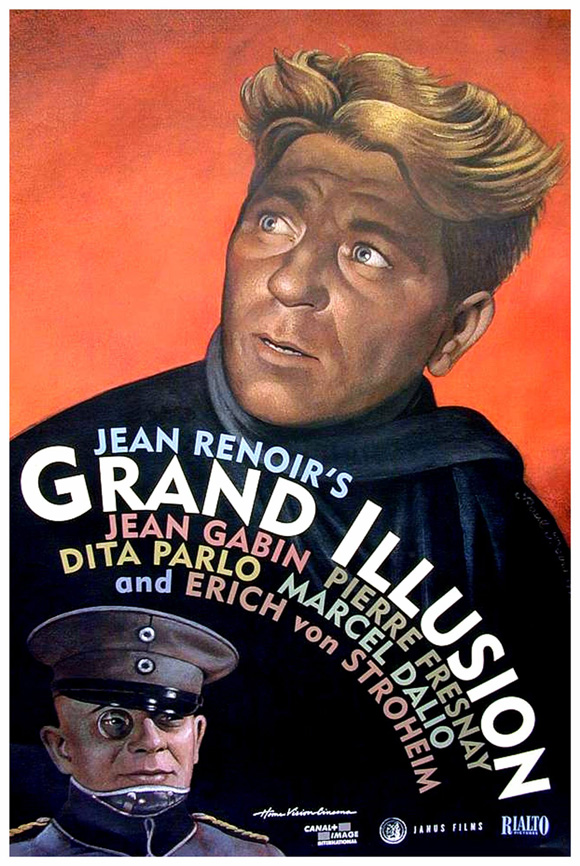 Feeling like a prison escape movie but having overtones that deal with
social classes and race relations, Le grande illuision, or Grand
Illusion, is unique in that it is a war film with no battle scenes. Set
during World War I, the film follows a group of French soldiers trying to escape
from a German prisoner-of-war camp. As well as being named by critics as one of
the great masterpieces of French cinema and ranking at #35 in Empire
magazine’s The 100 Best Films of World Cinema in 2010, Grand Illusion
was honored by director Orson Wells when he stated it was one of the films he
would take with him “on the ark.” Despite winning Best Artistic Ensemble at the
Venice Film Festival, the movie was banned in both Germany, for obvious reasons,
and France, so as not to lower soldiers’ morale.
Feeling like a prison escape movie but having overtones that deal with
social classes and race relations, Le grande illuision, or Grand
Illusion, is unique in that it is a war film with no battle scenes. Set
during World War I, the film follows a group of French soldiers trying to escape
from a German prisoner-of-war camp. As well as being named by critics as one of
the great masterpieces of French cinema and ranking at #35 in Empire
magazine’s The 100 Best Films of World Cinema in 2010, Grand Illusion
was honored by director Orson Wells when he stated it was one of the films he
would take with him “on the ark.” Despite winning Best Artistic Ensemble at the
Venice Film Festival, the movie was banned in both Germany, for obvious reasons,
and France, so as not to lower soldiers’ morale.8. Bringing Up Baby (1938)
 Screwball comedies are a mixed bag for me because
I sometimes can’t get past the implausible situations the characters find
themselves in, but Katharine Hepburn and Cary Grant give such sharp performances
in Bringing Up Baby that the entire plot seems to flow effortlessly.
Considered a failure when initially released and leading theater owners to label
Hepburn “box office poison,” its popularity has grown to become one of the most
memorable of the screwball comedy genre. AFI placed it on its 100 Movies, 100
Laughs, 100 Passions, 100 Quotes, and 100 Movies 10th Anniversary lists.
Bringing Up Baby had an influence on comedy films later in the
decade.
Screwball comedies are a mixed bag for me because
I sometimes can’t get past the implausible situations the characters find
themselves in, but Katharine Hepburn and Cary Grant give such sharp performances
in Bringing Up Baby that the entire plot seems to flow effortlessly.
Considered a failure when initially released and leading theater owners to label
Hepburn “box office poison,” its popularity has grown to become one of the most
memorable of the screwball comedy genre. AFI placed it on its 100 Movies, 100
Laughs, 100 Passions, 100 Quotes, and 100 Movies 10th Anniversary lists.
Bringing Up Baby had an influence on comedy films later in the
decade.7. It Happened One Night (1934)
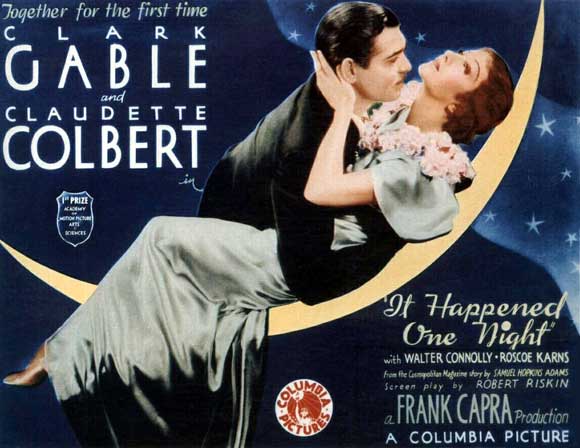 You
might be scratching your head after I made the proclamation about screwball
comedies not being my favorite genre of film and then I list another such movie
in the very next spot, but this Clark Gable, Claudette Colbert, Frank Capra hit
is a special kind of movie. It Happened One Night was the first to win
the “Big Five” of Oscar (Best Picture, Director, Actor, Actress, and
Screenplay), which has only happened three times in Academy Award history. The
film was selected for preservation in the Library of Congress in 1993. It was
also selected to AFI’s 100 Movies, 100 Laughs, 100 Passions, 100 Movies
Anniversary Edition, and 10 Top 10 lists.
You
might be scratching your head after I made the proclamation about screwball
comedies not being my favorite genre of film and then I list another such movie
in the very next spot, but this Clark Gable, Claudette Colbert, Frank Capra hit
is a special kind of movie. It Happened One Night was the first to win
the “Big Five” of Oscar (Best Picture, Director, Actor, Actress, and
Screenplay), which has only happened three times in Academy Award history. The
film was selected for preservation in the Library of Congress in 1993. It was
also selected to AFI’s 100 Movies, 100 Laughs, 100 Passions, 100 Movies
Anniversary Edition, and 10 Top 10 lists.6. Snow White and the Seven Dwarfs (1937)
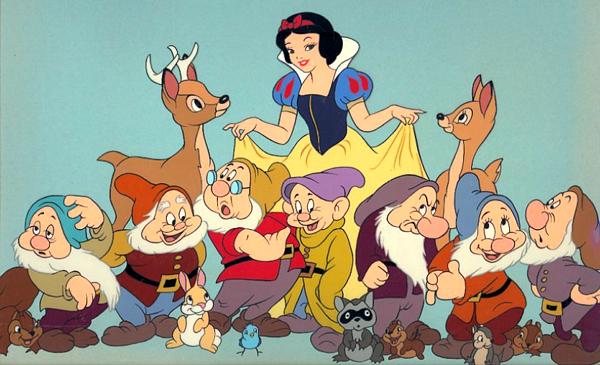 This was the pioneering first
full-length animated feature production from Walt Disney Studios that resulted
in a string of cartoon classics that have lasted decades and entertained
countless children. The American Film Institute listed it as one of two
animated movies in its 100 Movies list, the only animated film in its 10th
Anniversary list and later named it the greatest American animated film of all
time. AFI also listed the film among its 100 Heroes and Villains and 100 Songs
lists. In 1989, Snow White and the Seven Dwarfs was deemed culturally,
historically, or aesthetically significant by the United States National Film
Registry. Prior to being a box office smash, the film premiered to a standing
ovation from numerous Hollywood celebrities and a week later Walt Disney and the
seven dwarfs made the cover of Time magazine. During its original
theatrical run, it was the most financially successful film up to that time.
Disney received an Academy Honorary Award for providing a “significant screen
innovation which has charmed millions and pioneered a great new entertainment
field.”
This was the pioneering first
full-length animated feature production from Walt Disney Studios that resulted
in a string of cartoon classics that have lasted decades and entertained
countless children. The American Film Institute listed it as one of two
animated movies in its 100 Movies list, the only animated film in its 10th
Anniversary list and later named it the greatest American animated film of all
time. AFI also listed the film among its 100 Heroes and Villains and 100 Songs
lists. In 1989, Snow White and the Seven Dwarfs was deemed culturally,
historically, or aesthetically significant by the United States National Film
Registry. Prior to being a box office smash, the film premiered to a standing
ovation from numerous Hollywood celebrities and a week later Walt Disney and the
seven dwarfs made the cover of Time magazine. During its original
theatrical run, it was the most financially successful film up to that time.
Disney received an Academy Honorary Award for providing a “significant screen
innovation which has charmed millions and pioneered a great new entertainment
field.”5. Stagecoach (1939)
 The first of
many westerns directed by John Ford, starring John Wayne, and featuring Monument
Valley, Stagecoach is a thrilling adventure with memorable performances
and has influenced directors for decades. During his time directing Citizen
Kane, Orson Welles claims to have watched this movie about 40 times,
claiming it is a perfect textbook of filmmaking. It won Oscars for Best
Supporting Actor and Best Music and was nominated in five other categories,
including Best Picture and Best Director. Ford did end up winning for Best
Director at the New York Film Critics Awards. The film was selected for
preservation in the National Film Registry in 1995 and AFI listed it among its
100 Movies and 10 Top 10 westerns lists.
The first of
many westerns directed by John Ford, starring John Wayne, and featuring Monument
Valley, Stagecoach is a thrilling adventure with memorable performances
and has influenced directors for decades. During his time directing Citizen
Kane, Orson Welles claims to have watched this movie about 40 times,
claiming it is a perfect textbook of filmmaking. It won Oscars for Best
Supporting Actor and Best Music and was nominated in five other categories,
including Best Picture and Best Director. Ford did end up winning for Best
Director at the New York Film Critics Awards. The film was selected for
preservation in the National Film Registry in 1995 and AFI listed it among its
100 Movies and 10 Top 10 westerns lists.4. The Wizard of Oz (1939)
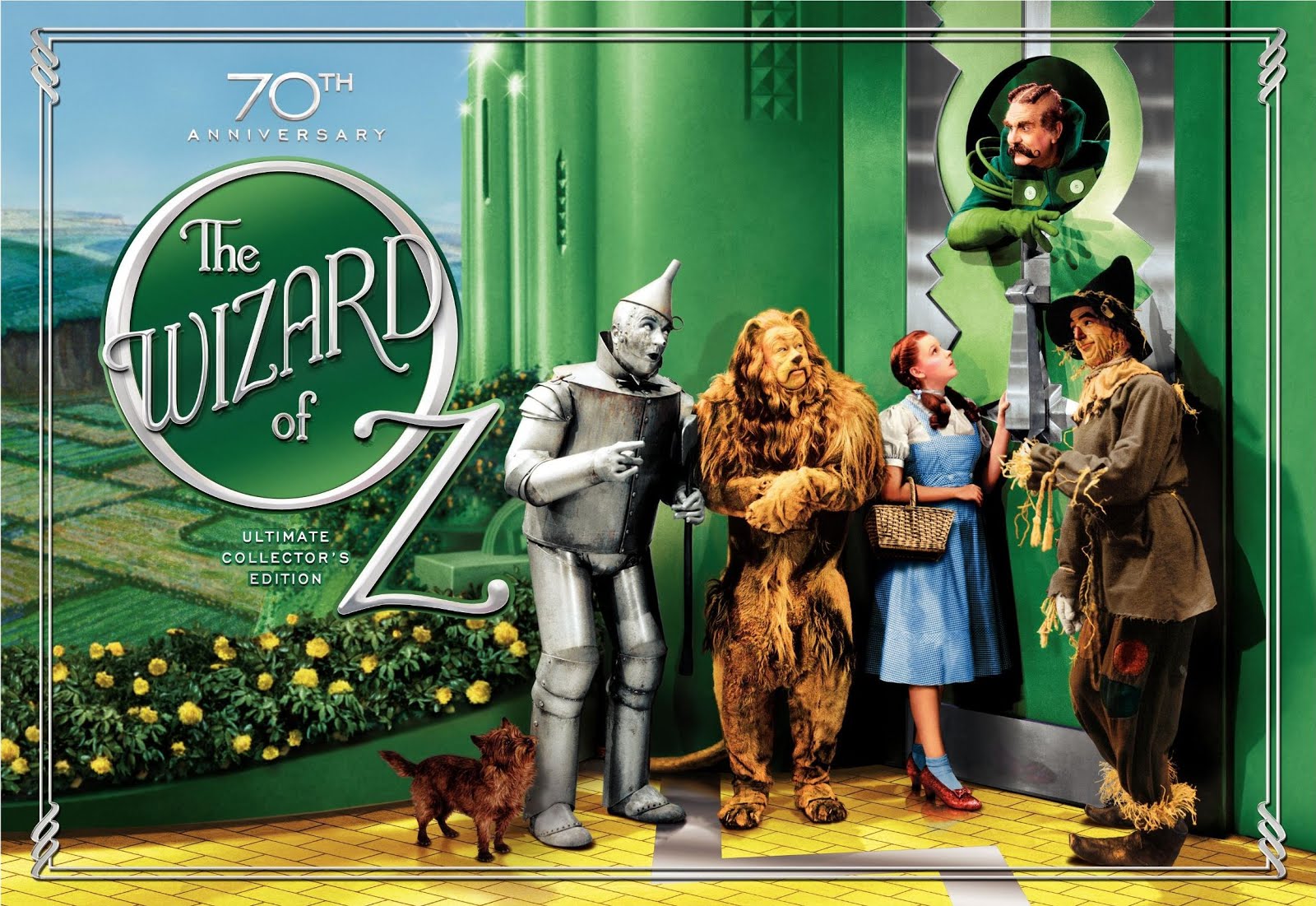 The quintessential idea of how film can take its
viewer to a fantastical new world while never leaving their seat in the movie
theater or couch at home, The Wizard of Oz combines the use of special
effects, Technicolor, musical hits, and standout characters to create one of the
most beloved motion pictures of all time. Due to being such an expensive
production, the film started out as a box office failure, however, it went on to
receive encouraging reviews, two Academy Awards wins, and numerous nominations
including Best Picture of the year, losing to a movie yet to be mentioned on
this list. The Wizard of Oz, thanks to annual telecasts beginning in
1956, has become the most-watched film in history and is often among the highest
ranked movies in critics’ polls. It made the AFI lists 100 Movies, 100 Thrills,
100 Heroes and Villains, 100 songs (twice), 100 Quotes (three times), 100
Musicals, 100 Cheers, 100 Movies Anniversary Edition, and 10 Top 10 Fantasy.
Other notable honors include rankings in Rolling Stone magazine’s 100
Maverick Movies, Entertainment Weekly’s 100 Greatest Films, The
Village Voice’s 100 Best films of the 20th Century, Sight &
Sound’s Greatest Film Poll of Directors, Total Film’s 100 Greatest
Films and 23 Weirdest Films lists, and The Observer’s 50 greatest film
soundtracks. It was selected to the National Film Registry its first year of
eligibility in 1989.
The quintessential idea of how film can take its
viewer to a fantastical new world while never leaving their seat in the movie
theater or couch at home, The Wizard of Oz combines the use of special
effects, Technicolor, musical hits, and standout characters to create one of the
most beloved motion pictures of all time. Due to being such an expensive
production, the film started out as a box office failure, however, it went on to
receive encouraging reviews, two Academy Awards wins, and numerous nominations
including Best Picture of the year, losing to a movie yet to be mentioned on
this list. The Wizard of Oz, thanks to annual telecasts beginning in
1956, has become the most-watched film in history and is often among the highest
ranked movies in critics’ polls. It made the AFI lists 100 Movies, 100 Thrills,
100 Heroes and Villains, 100 songs (twice), 100 Quotes (three times), 100
Musicals, 100 Cheers, 100 Movies Anniversary Edition, and 10 Top 10 Fantasy.
Other notable honors include rankings in Rolling Stone magazine’s 100
Maverick Movies, Entertainment Weekly’s 100 Greatest Films, The
Village Voice’s 100 Best films of the 20th Century, Sight &
Sound’s Greatest Film Poll of Directors, Total Film’s 100 Greatest
Films and 23 Weirdest Films lists, and The Observer’s 50 greatest film
soundtracks. It was selected to the National Film Registry its first year of
eligibility in 1989.3. Frankenstein (1931)
.jpg) Launching the career of Boris Karloff as the Monster, Frankenstein is a historic
film that, along with the help of Bela Lugosi’s Dracula, helped launch
Universal’s monster movie genre popular until the late 50s. The titular monster
is portrayed as a hapless individual who is more of a misunderstood creature
than the horrifying villain of the book. Considered to be one of the best
movies of the year, Frankenstein was received to universal acclaim and
is ranked among AFI’s 100 Movies, 100 Thrills, and 100 Quotes lists. It also
ranked on The New York Times Best 1000 Movies Ever list,
Bravo’s 100 Scariest Movie Moments list, and is among the Chicago Film
Critics Association’s scariest films ever made. The United States National Film
Registry selected it for preservation in 1991.
Launching the career of Boris Karloff as the Monster, Frankenstein is a historic
film that, along with the help of Bela Lugosi’s Dracula, helped launch
Universal’s monster movie genre popular until the late 50s. The titular monster
is portrayed as a hapless individual who is more of a misunderstood creature
than the horrifying villain of the book. Considered to be one of the best
movies of the year, Frankenstein was received to universal acclaim and
is ranked among AFI’s 100 Movies, 100 Thrills, and 100 Quotes lists. It also
ranked on The New York Times Best 1000 Movies Ever list,
Bravo’s 100 Scariest Movie Moments list, and is among the Chicago Film
Critics Association’s scariest films ever made. The United States National Film
Registry selected it for preservation in 1991.2. Gone With the Wind (1939)
 An epic that rivals all epic films, producer
David O. Selznick and director Victor Fleming made a movie that garnered 10
Academy Awards, a record at the time, and won the Best Picture Oscar in a year
that is considered the greatest individual season of filmmaking ever that
included such nominees as Goodbye, Mr. Chips, Mr. Smith Goes to
Washington, Ninotchka, Of Mice and Men,
Stagecoach, The Wizard of Oz, and Wuthering Heights.
The movie premiere was such a big event, it was shown at the end of a three-day
climax of festivities in Atlanta, which included a parade of limousines
featuring stars from the film, false antebellum fronts on stores and homes, and
a costume ball. Becoming the highest-grossing film of all time and holding the
position until 1966, Gone With the Wind was the longest running
American sound film made up to that point, coming in at 3 hours 44 minutes with
a 15-minute intermission. When inflation is taken into account, it still holds
the record for most money earned in theaters. The AFI listed it fourth on its
100 Movies and 10 To 10 Epic, second on its 100 Passions and 100 Film Scores,
first, 31st, and 59th, on its 100 Quotes, 43rd on its 100 Cheers, and sixth on
its 100 Movies Anniversary lists. This classic was among the inaugural films to
be deemed “culturally, historically, or aesthetically significant” and selected
for preservation in the Library of Congress’s National Film Registry.
An epic that rivals all epic films, producer
David O. Selznick and director Victor Fleming made a movie that garnered 10
Academy Awards, a record at the time, and won the Best Picture Oscar in a year
that is considered the greatest individual season of filmmaking ever that
included such nominees as Goodbye, Mr. Chips, Mr. Smith Goes to
Washington, Ninotchka, Of Mice and Men,
Stagecoach, The Wizard of Oz, and Wuthering Heights.
The movie premiere was such a big event, it was shown at the end of a three-day
climax of festivities in Atlanta, which included a parade of limousines
featuring stars from the film, false antebellum fronts on stores and homes, and
a costume ball. Becoming the highest-grossing film of all time and holding the
position until 1966, Gone With the Wind was the longest running
American sound film made up to that point, coming in at 3 hours 44 minutes with
a 15-minute intermission. When inflation is taken into account, it still holds
the record for most money earned in theaters. The AFI listed it fourth on its
100 Movies and 10 To 10 Epic, second on its 100 Passions and 100 Film Scores,
first, 31st, and 59th, on its 100 Quotes, 43rd on its 100 Cheers, and sixth on
its 100 Movies Anniversary lists. This classic was among the inaugural films to
be deemed “culturally, historically, or aesthetically significant” and selected
for preservation in the Library of Congress’s National Film Registry.1. King Kong (1933)
 Being filmed nearly 80 years ago,
shooting in black-and-white, and use of stop-motion animation, this monster
adventure film still stands up today as an exciting story with sentiment running
throughout. Not the first movie to follow a formula of having a scientist or
explorer test a theory in some strange, new land only to discover a monstrous
aberration, with its solid casting, impressive animation, and striking
soundtrack, King Kong is now a legendary Hollywood icon with
unforgettable scenes at the top of the Empire State Building and battling a
Tyrannosaurus Rex. Among the many accolades, AFI included it among its 100
Movies, 100 Thrills, 100 Passions, 100 Quotes, 100 Film Scores, 100 Movies
Anniversary Edition, and 10 Top 10 Fantasy lists. In 1991, King Kong
was preserved by the Library of Congress in its National Film
Registry.
Being filmed nearly 80 years ago,
shooting in black-and-white, and use of stop-motion animation, this monster
adventure film still stands up today as an exciting story with sentiment running
throughout. Not the first movie to follow a formula of having a scientist or
explorer test a theory in some strange, new land only to discover a monstrous
aberration, with its solid casting, impressive animation, and striking
soundtrack, King Kong is now a legendary Hollywood icon with
unforgettable scenes at the top of the Empire State Building and battling a
Tyrannosaurus Rex. Among the many accolades, AFI included it among its 100
Movies, 100 Thrills, 100 Passions, 100 Quotes, 100 Film Scores, 100 Movies
Anniversary Edition, and 10 Top 10 Fantasy lists. In 1991, King Kong
was preserved by the Library of Congress in its National Film
Registry.Analysis
The year 1939 is considered to be the most outstanding 365 days
in Hollywood's history, with releases including Gone With the Wind,
The Wizard of Oz, Stagecoach (all of which make my top ten
list), Wuthering Heights, Mr. Smith Goes to Washington, Of
Mice and Men, and other fabulous motion pictures. Coupled with other great
titles that made their way to theaters throughout the decade, the 1930s is one
of the most celebrated decades regarding the film industry.
Top Movies By Decade: Part 3
– "Here's looking at you, kid."
1940s
Honorable Mentions: The Philadelphia Story (1940), Rebecca (1940), The Best Years of Our Lives (1946), The Postman Always Rings Twice (1946), and Bicycle Thieves (1948)
10. Gilda (1946)
 One of the most
sensuous characters in movie history, Rita Hayworth oozes sex as the femme
fatale title character. Not earning any major award nominations, Gilda
is a great mix of tense film noir and hard-edged romance drama with
powerful performances from Hayworth and Glenn Ford. Another memorable moment of
the movie is Hayworth’s performance (although dubbed by Anita Ellis) during “Put
the Blame on Mame.” Although not an award show darling film, critics showed a
great liking for the movie and it has increased its legacy through references
and being featured in other films since its debut.
One of the most
sensuous characters in movie history, Rita Hayworth oozes sex as the femme
fatale title character. Not earning any major award nominations, Gilda
is a great mix of tense film noir and hard-edged romance drama with
powerful performances from Hayworth and Glenn Ford. Another memorable moment of
the movie is Hayworth’s performance (although dubbed by Anita Ellis) during “Put
the Blame on Mame.” Although not an award show darling film, critics showed a
great liking for the movie and it has increased its legacy through references
and being featured in other films since its debut.9. Miracle on 34th Street (1947)
 Considered one of the greatest Christmas
movies of all time, as a stand-alone feel-good drama, Miracle on 34th
Street is an audience favorite that shouldn’t be overlooked. Edmund Gwenn
gives one of the most convincing performances of all time as the questionable
Kris Kringle. Winning Academy Awards for Best Actor in a Supporting Role
(Gwenn), Best Original Story Writing, and Best Screenplay, the film was also up
for Best Picture. The American Film Institute included it on the 100 Cheers and
10 Top 10 Fantasy lists. Miracle on 34th Street was also nominated to
AFI’s 100 Movies, 100 Movies Anniversary Edition, and 100 Scores lists. In
2005, the Library of Congress selected this film to its National Film Registry
for preservation due to it being “culturally, historically, or aesthetically
significant.”
Considered one of the greatest Christmas
movies of all time, as a stand-alone feel-good drama, Miracle on 34th
Street is an audience favorite that shouldn’t be overlooked. Edmund Gwenn
gives one of the most convincing performances of all time as the questionable
Kris Kringle. Winning Academy Awards for Best Actor in a Supporting Role
(Gwenn), Best Original Story Writing, and Best Screenplay, the film was also up
for Best Picture. The American Film Institute included it on the 100 Cheers and
10 Top 10 Fantasy lists. Miracle on 34th Street was also nominated to
AFI’s 100 Movies, 100 Movies Anniversary Edition, and 100 Scores lists. In
2005, the Library of Congress selected this film to its National Film Registry
for preservation due to it being “culturally, historically, or aesthetically
significant.”8. Double Indemnity (1944)
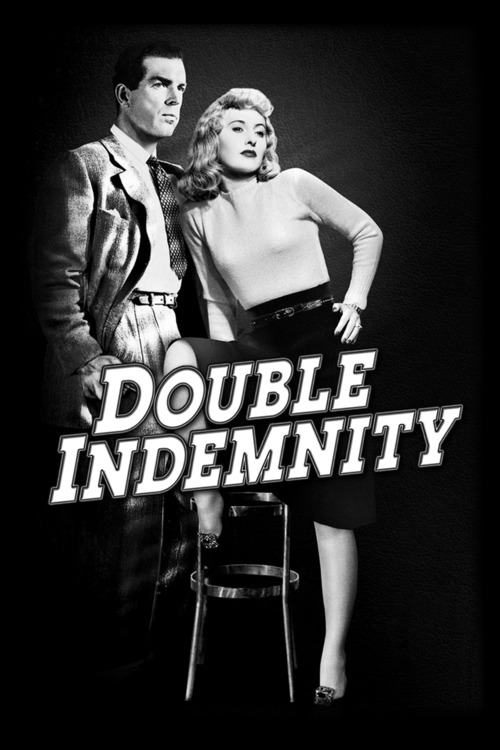 Written by detective fictionist Raymond Chandler and director Billy Wilder, this
is a paramount example of the film noir genre, setting the standard for decades
as to what a gritty crime story should look like. The original story the film
is based on was involved in a multi-studio bidding war but wouldn’t be made for
eight years after the Hays Office sent out a warning to not make the film due to
its “low tone and sordid flavor” that would harden the impressionable audience
members. While garnering high praise from critics, Double Indemnity
received seven Oscar nominations but lost in all categories. The film entered
the National Film Registry in 1992 and was among AFI’s 100 Movies and 100 Movies
Anniversary winners. Having to contend with two legends of the screen in Edward
G. Robinson and Fred MacMurray, Barbara Stanwyck portrays the cold-hearted wife
who wants her husband dead for the insurance money with magnificent
effect.
Written by detective fictionist Raymond Chandler and director Billy Wilder, this
is a paramount example of the film noir genre, setting the standard for decades
as to what a gritty crime story should look like. The original story the film
is based on was involved in a multi-studio bidding war but wouldn’t be made for
eight years after the Hays Office sent out a warning to not make the film due to
its “low tone and sordid flavor” that would harden the impressionable audience
members. While garnering high praise from critics, Double Indemnity
received seven Oscar nominations but lost in all categories. The film entered
the National Film Registry in 1992 and was among AFI’s 100 Movies and 100 Movies
Anniversary winners. Having to contend with two legends of the screen in Edward
G. Robinson and Fred MacMurray, Barbara Stanwyck portrays the cold-hearted wife
who wants her husband dead for the insurance money with magnificent
effect.7. The Maltese Falcon (1941)
 While
Double Indemnity set one of the standards that all film noirs would be
compared to, John Huston’s The Maltese Falcon is considered the first
major work in the genre. Bogart’s representation of the hard-hearted,
quick-witted, morally ambiguous detective Sam Spade, Mary Astor as his femme
fatale, and Peter Lorre and Sydney Greenstreet, in his film debut, rounding out
the characters couldn’t be more perfectly cast. Like another movie included
later on this list, the cinematography was ground-breaking at the time.
Accomplishing a rare feat in film, this of The Maltese Falcon is
actually the third version to be made. The original was released ten years
prior to the Hays Code preventing such lewd material from reaching the silver
screen and the second, more light-hearted comedy version was released in 1946
under the title Satan Met a Lady. The Maltese Falcon received
three Oscar nominations in the Best Picture, Best Supporting Actor, and Best
Adapted Screenplay categories with no wins acquired, was among the inaugural
selections to the Library of Congress National Film Registry, and has been
hailed as one of the greatest films of all time by critic Roger Ebert and
Entertainment Weekly. Among its many other praises from critics and film groups
alike, AFI has included this film among its 100 Films, 100 Thrills, 100 Quotes,
100 Films Anniversary Edition, and 10 Top 10 Mystery lists, and it was also
nominated for AFI’s 100 Heroes and Villains twice and a second dialogue line for
100 Quotes.
While
Double Indemnity set one of the standards that all film noirs would be
compared to, John Huston’s The Maltese Falcon is considered the first
major work in the genre. Bogart’s representation of the hard-hearted,
quick-witted, morally ambiguous detective Sam Spade, Mary Astor as his femme
fatale, and Peter Lorre and Sydney Greenstreet, in his film debut, rounding out
the characters couldn’t be more perfectly cast. Like another movie included
later on this list, the cinematography was ground-breaking at the time.
Accomplishing a rare feat in film, this of The Maltese Falcon is
actually the third version to be made. The original was released ten years
prior to the Hays Code preventing such lewd material from reaching the silver
screen and the second, more light-hearted comedy version was released in 1946
under the title Satan Met a Lady. The Maltese Falcon received
three Oscar nominations in the Best Picture, Best Supporting Actor, and Best
Adapted Screenplay categories with no wins acquired, was among the inaugural
selections to the Library of Congress National Film Registry, and has been
hailed as one of the greatest films of all time by critic Roger Ebert and
Entertainment Weekly. Among its many other praises from critics and film groups
alike, AFI has included this film among its 100 Films, 100 Thrills, 100 Quotes,
100 Films Anniversary Edition, and 10 Top 10 Mystery lists, and it was also
nominated for AFI’s 100 Heroes and Villains twice and a second dialogue line for
100 Quotes.6. The Third Man (1949)

5. It’s a Wonderful Life (1946)
 If you haven’t seen It’s a Wonderful Life
yet, stop what you’re doing right now, go to your local Blockbuster (if you can
find one), and rent this movie. Forget that it’s generally considered a
Christmas movie. Certainly it belongs in the pantheon of holiday favorite
films, but it is also a heartfelt and inspiring tear-jerker of a movie.
Directed by the iconic Frank Capra, whose filmmaking career garnered a total of
53 Oscar nominations and 14 wins including two Best Picture and three Best
Director statues, It’s a Wonderful Life stars James Stewart as George
Bailey, who when attempting to commit suicide on Christmas Eve is shown by his
guardian angel Clarence what impact George has made because of his existence.
Initially a financial disappointment, time has been kind to the feature, with it
topping AFI’s most inspirational films list. Other AFI lists acknowledging the
importance of It’s a Wonderful Life include 100 Movies, 100 Passions,
twice on 100 Heroes and Villains, 100 Movies Anniversary Edition, and 10 Top 10
Fantasy. At the Academy Awards, It’s a Wonderful Life received five
nominations, but won none of them. The Library of Congress included the movie
among its 1990 inductees to the National Film Registry and for decades it has
topped many favorite film lists among national and international media outlets.
Seneca Falls holds a It’s a Wonderful Life festival every December,
opened The Hotel Clarence named after the guardian angel, and recently opened a
It’s a Wonderful Life Museum.
If you haven’t seen It’s a Wonderful Life
yet, stop what you’re doing right now, go to your local Blockbuster (if you can
find one), and rent this movie. Forget that it’s generally considered a
Christmas movie. Certainly it belongs in the pantheon of holiday favorite
films, but it is also a heartfelt and inspiring tear-jerker of a movie.
Directed by the iconic Frank Capra, whose filmmaking career garnered a total of
53 Oscar nominations and 14 wins including two Best Picture and three Best
Director statues, It’s a Wonderful Life stars James Stewart as George
Bailey, who when attempting to commit suicide on Christmas Eve is shown by his
guardian angel Clarence what impact George has made because of his existence.
Initially a financial disappointment, time has been kind to the feature, with it
topping AFI’s most inspirational films list. Other AFI lists acknowledging the
importance of It’s a Wonderful Life include 100 Movies, 100 Passions,
twice on 100 Heroes and Villains, 100 Movies Anniversary Edition, and 10 Top 10
Fantasy. At the Academy Awards, It’s a Wonderful Life received five
nominations, but won none of them. The Library of Congress included the movie
among its 1990 inductees to the National Film Registry and for decades it has
topped many favorite film lists among national and international media outlets.
Seneca Falls holds a It’s a Wonderful Life festival every December,
opened The Hotel Clarence named after the guardian angel, and recently opened a
It’s a Wonderful Life Museum.4. The Treasure of the Sierra Madre (1948)
 Another John Huston/Humphrey Bogart collaboration,
this is one of the first American films to be shot almost entirely on location
outside the United States. The source of one of the most misquoted film lines
of all time, The Treasure of the Sierra Madre exemplifies the moral
descent mankind will tailspin into when greed and distrust creep into a
friendship. Huston won the Academy Award for directing and writing. Walter
Huston, the director’s father, won the Oscar for Best Supporting Actor the same
year. It was also nominated for Best Picture, but lost. Director Stanley
Kubrick listed The Treasure of the Sierra Madre as his fourth favorite
movie of all time. AFI recognized the movie by placing it on its 100 Movies,
100 Thrills, 100 Quotes, and 100 Movies Anniversary lists. It also received
nominations on the 100 Heroes and Villains and 100 Scores lists. In 1990,
The Treasure of the Sierra Madre was selected to the National Film
Registry.
Another John Huston/Humphrey Bogart collaboration,
this is one of the first American films to be shot almost entirely on location
outside the United States. The source of one of the most misquoted film lines
of all time, The Treasure of the Sierra Madre exemplifies the moral
descent mankind will tailspin into when greed and distrust creep into a
friendship. Huston won the Academy Award for directing and writing. Walter
Huston, the director’s father, won the Oscar for Best Supporting Actor the same
year. It was also nominated for Best Picture, but lost. Director Stanley
Kubrick listed The Treasure of the Sierra Madre as his fourth favorite
movie of all time. AFI recognized the movie by placing it on its 100 Movies,
100 Thrills, 100 Quotes, and 100 Movies Anniversary lists. It also received
nominations on the 100 Heroes and Villains and 100 Scores lists. In 1990,
The Treasure of the Sierra Madre was selected to the National Film
Registry.3. The Great Dictator (1940)
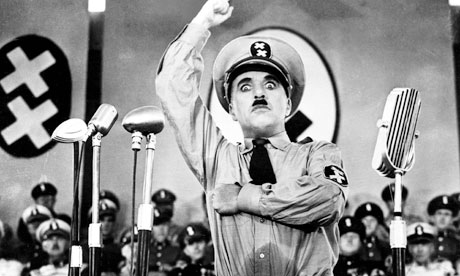 In
Charlie Chaplin’s first true “talkie,” the legendary filmmaker wrote, produced,
directed, and starred in the first major motion picture to satirize Nazism and
Adolph Hitler, resulting in a masterpiece of film. The Great Dictator
was also Chaplin’s greatest financial success. The film’s out-of-character plea
regarding war and oppression is one of the most moving moments this form of art
has ever captured on celluloid. It was winless in five categories at the
Academy Awards, losing in Best Actor, Best Supporting Actor, Best Original
Screenplay, Best Original Score, and Outstanding Production. The Library of
Congress included The Great Dictator in its 1997 class to the National
Film Registry. It was ranked at 37 on AFI’s 100 Laughs list.
In
Charlie Chaplin’s first true “talkie,” the legendary filmmaker wrote, produced,
directed, and starred in the first major motion picture to satirize Nazism and
Adolph Hitler, resulting in a masterpiece of film. The Great Dictator
was also Chaplin’s greatest financial success. The film’s out-of-character plea
regarding war and oppression is one of the most moving moments this form of art
has ever captured on celluloid. It was winless in five categories at the
Academy Awards, losing in Best Actor, Best Supporting Actor, Best Original
Screenplay, Best Original Score, and Outstanding Production. The Library of
Congress included The Great Dictator in its 1997 class to the National
Film Registry. It was ranked at 37 on AFI’s 100 Laughs list.2. Citizen Kane (1941)
 Six sentences isn’t enough to
extol the litany of great things Orson Welles’s directorial debut provided the
history of cinema. A few of the innovations Citizen Kane provided for
the film industry include narrative techniques, cinematography, camera angles,
use of shadow and light, and experimentation with editing and sound. To be
blunt, it completely changed the way movies were watched. A critical darling
when first released, the movie did not do well at the box office, but since then
it has frequently topped Best Of lists, including AFI’s 100 Movies and 100
Movies Anniversary lists, Sight & Sound, Editorial Jaguar, FIAF
Centenary List, France Critics Top 10, Cahiers du cinéma 100 films pour une
cinémathèque idéal, Kinovedcheskie Russia Top 10, Romanian Critics Top 10,
Time Out Magazine Greatest Films, and Village Voice 100 Greatest
Films. Citizen Kane was among the National Film Registry’s inaugural
group in 1989. It received nine Oscar nominations, including Best Picture, Best
Director, Best Actor, and Best Cinematography, but ended up winning only in the
Best Original Screenplay category.
Six sentences isn’t enough to
extol the litany of great things Orson Welles’s directorial debut provided the
history of cinema. A few of the innovations Citizen Kane provided for
the film industry include narrative techniques, cinematography, camera angles,
use of shadow and light, and experimentation with editing and sound. To be
blunt, it completely changed the way movies were watched. A critical darling
when first released, the movie did not do well at the box office, but since then
it has frequently topped Best Of lists, including AFI’s 100 Movies and 100
Movies Anniversary lists, Sight & Sound, Editorial Jaguar, FIAF
Centenary List, France Critics Top 10, Cahiers du cinéma 100 films pour une
cinémathèque idéal, Kinovedcheskie Russia Top 10, Romanian Critics Top 10,
Time Out Magazine Greatest Films, and Village Voice 100 Greatest
Films. Citizen Kane was among the National Film Registry’s inaugural
group in 1989. It received nine Oscar nominations, including Best Picture, Best
Director, Best Actor, and Best Cinematography, but ended up winning only in the
Best Original Screenplay category.
1.
Casablanca (1942)

Analysis
Despite restrictions from the Hays Office and having to endure budget cuts due to the war, Hollywood was still able to make some remarkable movies that have endured and become greater as time marches on. Some of the most memorable and paramount films were produced during this period. Legends of the big screen struck it big in this decade and are still considered the most identifiable products of Tinseltown to this day. With the advent of television, the decline of the studio system, and the unclear threats of a Cold War, Hollywood would never again see the height of theater attendance as it did during the 1930s and 40s.
Top Movies By Decade: Part 4 - "All right, Mr. DeMille, I'm ready for my close-up."
1950s
Honorable Mentions: All About Eve (1950), Winchester ’73 (1950), High Noon (1952), Shane (1953), Sabrina (1954), Blackboard Jungle (1955), Diabolique (1955), 12 Angry Men (1957), The Bridge on the River Kwai (1957), Paths of Glory (1957), and Vertigo (1958)
10. Cinderella (1950)
 Due to World War II and low box
office returns, this was the first feature-length, full-bodied animation film in
nearly a decade from Walt Disney Studios, which was heavily in debt and had not
had a big hit since Snow White and the Seven Dwarfs.
Cinderella is considered the last of the “golden age” of Disney
animations that spanned the 1930s and 40s. The generous profits from this film,
along with additional money made from record sales, music publishing, and other
merchandise, gave Disney a resurgence of cash flow to proceed with new films,
both animated and live action, establish his own distribution company, enter
television production, and begin building Disneyland. Cinderella
received three Academy Award nominations, all in the sound and song categories.
At the inaugural Berlin International Film Festival, it won the Golden Bear
(Music Film) award and the Big Bronze Plate award. The AFI included
Cinderella among its 10 Top 10 Animated films, ranking ninth.
Due to World War II and low box
office returns, this was the first feature-length, full-bodied animation film in
nearly a decade from Walt Disney Studios, which was heavily in debt and had not
had a big hit since Snow White and the Seven Dwarfs.
Cinderella is considered the last of the “golden age” of Disney
animations that spanned the 1930s and 40s. The generous profits from this film,
along with additional money made from record sales, music publishing, and other
merchandise, gave Disney a resurgence of cash flow to proceed with new films,
both animated and live action, establish his own distribution company, enter
television production, and begin building Disneyland. Cinderella
received three Academy Award nominations, all in the sound and song categories.
At the inaugural Berlin International Film Festival, it won the Golden Bear
(Music Film) award and the Big Bronze Plate award. The AFI included
Cinderella among its 10 Top 10 Animated films, ranking ninth.
9. Rear Window (1954)
 Some viewers are bored by the
single set, slow-moving story, however, those fascinated by Rear Window
are not alone, as the film received four Oscar nominations, was ranked 42nd and
48th on AFI’s 100 Movies and 100 Movies Anniversary lists, was universally
praised by critics, and in 1997 was included in the United States National Film
Registry. As the movie is all about voyeurism, Hitchcock’s film exquisitely
display’s the human need to look in on other people’s lives, ignoring what is
going on right in their own home. With the explosion of Facebook and Twitter,
the insatiable need to make a connection with others without ever becoming
involved is a successor to Hitchcock’s feature of a man and his camera looking
out into an apartment building courtyard. Rear Window uses a natural
soundtrack, with diegetic sounds and music stemming from James Stewart’s
neighboring apartments. Along with the 100 Movies wins, the AFI also included
Rear Window in its 100 Thrills and 10 Top 10 Mystery lists.
Some viewers are bored by the
single set, slow-moving story, however, those fascinated by Rear Window
are not alone, as the film received four Oscar nominations, was ranked 42nd and
48th on AFI’s 100 Movies and 100 Movies Anniversary lists, was universally
praised by critics, and in 1997 was included in the United States National Film
Registry. As the movie is all about voyeurism, Hitchcock’s film exquisitely
display’s the human need to look in on other people’s lives, ignoring what is
going on right in their own home. With the explosion of Facebook and Twitter,
the insatiable need to make a connection with others without ever becoming
involved is a successor to Hitchcock’s feature of a man and his camera looking
out into an apartment building courtyard. Rear Window uses a natural
soundtrack, with diegetic sounds and music stemming from James Stewart’s
neighboring apartments. Along with the 100 Movies wins, the AFI also included
Rear Window in its 100 Thrills and 10 Top 10 Mystery lists.
8. Seven Samurai (1954)
 Possibly better known to
American audiences in remakes such as The Magnificent Seven or A
Bug’s Life, the idea of recruiting individuals with special skills to
perform a specific task was originally seen on the Japanese screen in Akira
Kurosawa’s masterpiece, Seven Samurai. The now-common plot element
introduced in this film can be seen in popular American cinema, such as The
Guns of Navarone, Ocean’s Eleven, and The Dirty Dozen.
Seven Samurai is described as one of the greatest and most influential
films ever made, making it on Sight & Sound’s list of the 10
greatest films of all time in 1982 and the directors’ top ten film in 1992 and
2003 polls. It was also ranked number one in Empire magazine’s The 100
Best Films of World Cinema in 2010. Winner of the Silver Lion award at the
Venice Film Festival, the film was also honored with several nominations and
wins for acting and directing at the British Academy Film Awards, Jussi Awards,
and Mainichi Film Awards. Seven Samurai received two Academy Award
nominations as well.
Possibly better known to
American audiences in remakes such as The Magnificent Seven or A
Bug’s Life, the idea of recruiting individuals with special skills to
perform a specific task was originally seen on the Japanese screen in Akira
Kurosawa’s masterpiece, Seven Samurai. The now-common plot element
introduced in this film can be seen in popular American cinema, such as The
Guns of Navarone, Ocean’s Eleven, and The Dirty Dozen.
Seven Samurai is described as one of the greatest and most influential
films ever made, making it on Sight & Sound’s list of the 10
greatest films of all time in 1982 and the directors’ top ten film in 1992 and
2003 polls. It was also ranked number one in Empire magazine’s The 100
Best Films of World Cinema in 2010. Winner of the Silver Lion award at the
Venice Film Festival, the film was also honored with several nominations and
wins for acting and directing at the British Academy Film Awards, Jussi Awards,
and Mainichi Film Awards. Seven Samurai received two Academy Award
nominations as well.
7. Sleeping Beauty (1959)
 The final fairy tale animated feature produced by Walt Disney himself and the
last of Disney’s features to use hand-inked cels, Sleeping Beauty was
initially a financial failure, resulting in the first annual loss in a decade
and leading to massive layoffs in the animation department. It took nearly a
decade to get the movie made, with story work beginning eight years prior to its
theatrical release and voice recordings taking place seven years before as
well. The film was initially met with mixed reviews, most critics claiming poor
character development, but with the unique stylized design of the artwork and
lavish musical score have resulted in a sustained interest in the movie and
ultimately it is now one of the most praised animated features ever made.
Sleeping Beauty was nominated for an Oscar and a Grammy for its
soundtrack, but lost at both ceremonies.
The final fairy tale animated feature produced by Walt Disney himself and the
last of Disney’s features to use hand-inked cels, Sleeping Beauty was
initially a financial failure, resulting in the first annual loss in a decade
and leading to massive layoffs in the animation department. It took nearly a
decade to get the movie made, with story work beginning eight years prior to its
theatrical release and voice recordings taking place seven years before as
well. The film was initially met with mixed reviews, most critics claiming poor
character development, but with the unique stylized design of the artwork and
lavish musical score have resulted in a sustained interest in the movie and
ultimately it is now one of the most praised animated features ever made.
Sleeping Beauty was nominated for an Oscar and a Grammy for its
soundtrack, but lost at both ceremonies.
6. The Killing (1956)
 Where Seven Samurai set up the concept
of showing the audience the process of hiring a group of mercenaries to do a
job, Stanley Kubrick’s The Killing showcased a heist picture from
several different viewpoints and the precise planning and undertaking it takes
to pull off a multi-million dollar robbery, much like the number one movie for
this decade's list. Like many movies considered classics of their genre and
decade, this one was a disappointment at the box office. However, The
Killing showed off the talent Kubrick had as a director, cinematographer,
and storyteller, giving audiences a glimpse into what was to come later in his
career. Critics respected the picture, praising Kubrick as the next great
director with skills that hadn’t been seen since Orson Welles. The only major
award nomination for The Killing was at the BAFTAs for Best Film from
any Source, but its legacy has influenced many, including Quentin Tarantino’s
Reservoir Dogs.
Where Seven Samurai set up the concept
of showing the audience the process of hiring a group of mercenaries to do a
job, Stanley Kubrick’s The Killing showcased a heist picture from
several different viewpoints and the precise planning and undertaking it takes
to pull off a multi-million dollar robbery, much like the number one movie for
this decade's list. Like many movies considered classics of their genre and
decade, this one was a disappointment at the box office. However, The
Killing showed off the talent Kubrick had as a director, cinematographer,
and storyteller, giving audiences a glimpse into what was to come later in his
career. Critics respected the picture, praising Kubrick as the next great
director with skills that hadn’t been seen since Orson Welles. The only major
award nomination for The Killing was at the BAFTAs for Best Film from
any Source, but its legacy has influenced many, including Quentin Tarantino’s
Reservoir Dogs.
5. Sunset Boulevard (1950)
 One of the most well written film noirs, Billy Wilder’s Sunset
Boulevard is an absorbing movie with an unforgettable leading lady and
countless memorable quotes. Told through William Holden’s character,
unsuccessful screenwriter Joe Gillis, about his meeting and subsequent
tumultuous relationship with former silent-film star Norma Desmond, the film is
a disturbed showcase of Desmond’s fantasy world where she believes a comeback to
Hollywood stardom is near. Sunset Boulevard was an instant success,
nominated for 11 Academy Award nominations, winning three, was included in the
first group of films selected for preservation in the National Film Registry,
and saw its inclusion in the top 20 greatest films by the American Film
Institute in its 100 Movies and 100 Movies Anniversary lists, at 12 and 16
respectively. It is highly regarded as the greatest movie about Hollywood ever
made.
One of the most well written film noirs, Billy Wilder’s Sunset
Boulevard is an absorbing movie with an unforgettable leading lady and
countless memorable quotes. Told through William Holden’s character,
unsuccessful screenwriter Joe Gillis, about his meeting and subsequent
tumultuous relationship with former silent-film star Norma Desmond, the film is
a disturbed showcase of Desmond’s fantasy world where she believes a comeback to
Hollywood stardom is near. Sunset Boulevard was an instant success,
nominated for 11 Academy Award nominations, winning three, was included in the
first group of films selected for preservation in the National Film Registry,
and saw its inclusion in the top 20 greatest films by the American Film
Institute in its 100 Movies and 100 Movies Anniversary lists, at 12 and 16
respectively. It is highly regarded as the greatest movie about Hollywood ever
made.
4. Singin’ in the Rain (1952)
 Another
movie about Hollywood, this one takes a much more comedic and light-hearted tone
of Tinseltown. Tackling the period of time when films transitioned from silent
to talkies, Singin’ in the Rain has become known as one of the greatest
musicals to ever be made, but it was not originally accepted so pleasantly.
Co-director and star Gene Kelly’s dance number to the titular song with an
umbrella in the rainy streets has become an iconic moment in film history,
recognized by even those who have not seen the movie. The film received two
Academy Award nominations for Supporting Actor and Original Music Score, a
Golden Globe for Donald O’Connor’s performance, and recognition for best written
American musical at the Writers Guild of America. Singin’ in the Rain
has twice appeared on Sight & Sound’s list of the 10 best films of
all time. The film was among the United States Library of Congress’s first 25
films chosen for the newly established National Film Registry. The American
Film Institute included the musical among its 100 Movies, 100 Laughs, 100
Passions, 100 Songs (three times), 100 Musicals, and 100 Movies Anniversary
lists.
Another
movie about Hollywood, this one takes a much more comedic and light-hearted tone
of Tinseltown. Tackling the period of time when films transitioned from silent
to talkies, Singin’ in the Rain has become known as one of the greatest
musicals to ever be made, but it was not originally accepted so pleasantly.
Co-director and star Gene Kelly’s dance number to the titular song with an
umbrella in the rainy streets has become an iconic moment in film history,
recognized by even those who have not seen the movie. The film received two
Academy Award nominations for Supporting Actor and Original Music Score, a
Golden Globe for Donald O’Connor’s performance, and recognition for best written
American musical at the Writers Guild of America. Singin’ in the Rain
has twice appeared on Sight & Sound’s list of the 10 best films of
all time. The film was among the United States Library of Congress’s first 25
films chosen for the newly established National Film Registry. The American
Film Institute included the musical among its 100 Movies, 100 Laughs, 100
Passions, 100 Songs (three times), 100 Musicals, and 100 Movies Anniversary
lists.
3. On the Waterfront (1954)
 A tough,
gritty look at union violence, corruption, and racketeering among longshoremen
in New Jersey, On the Waterfront won eight Oscars, including Best
Picture, Best Director, Best Actor, and Best Story. Based on a Pulitzer Prize
winning 24-part series in the New York Sun, the film is considered to
be the director’s rejoinder to critics for his identifying former Communists in
the film industry before the House Committee on Un-American Activities.
Released to rave reviews from critics, On the Waterfront has since been
deemed “culturally, historically or aesthetically significant” by the Library of
Congress and was selected for preservation in the United States National Film
Registry during its inaugural year and included among many critics top film
lists it also made the Vatican’s list of 45 greatest films of all time. AFI
included the film among its 100 Movies, 100 Heroes and Villains, 100 Quotes, 100
Film Scores, 100 Cheers, and 100 Movies Anniversary lists.
A tough,
gritty look at union violence, corruption, and racketeering among longshoremen
in New Jersey, On the Waterfront won eight Oscars, including Best
Picture, Best Director, Best Actor, and Best Story. Based on a Pulitzer Prize
winning 24-part series in the New York Sun, the film is considered to
be the director’s rejoinder to critics for his identifying former Communists in
the film industry before the House Committee on Un-American Activities.
Released to rave reviews from critics, On the Waterfront has since been
deemed “culturally, historically or aesthetically significant” by the Library of
Congress and was selected for preservation in the United States National Film
Registry during its inaugural year and included among many critics top film
lists it also made the Vatican’s list of 45 greatest films of all time. AFI
included the film among its 100 Movies, 100 Heroes and Villains, 100 Quotes, 100
Film Scores, 100 Cheers, and 100 Movies Anniversary lists.
2. North by Northwest (1959)
 My personal favorite of
all of Hitchcock’s films, North by Northwest is also one of his most
critically favored among the innocent man on the run stories. Cary Grant, Eva
Marie Saint, and James Mason give commanding performances in this stylish
thriller with a finale set amongst one of America’s most historic monuments.
Ranking at 98 in Empire magazine’s list of the 500 Greatest Films of
All Time, North by Northwest is considered a masterpiece in filmmaking
for its themes of deception, mistaken identity, and moral relativism. The movie
was nominated for three Academy Awards and won a 1960 Edgar Award for Best
Motion Picture Screenplay. In 1995, the Library of Congress selected it for
preservation in the National Film Registry. Among AFI movie lists, North by
Northwest ranked among its 100 Movies, 100 Thrills, 100 Movies Anniversary,
and 10 Top 10 Mystery lists.
My personal favorite of
all of Hitchcock’s films, North by Northwest is also one of his most
critically favored among the innocent man on the run stories. Cary Grant, Eva
Marie Saint, and James Mason give commanding performances in this stylish
thriller with a finale set amongst one of America’s most historic monuments.
Ranking at 98 in Empire magazine’s list of the 500 Greatest Films of
All Time, North by Northwest is considered a masterpiece in filmmaking
for its themes of deception, mistaken identity, and moral relativism. The movie
was nominated for three Academy Awards and won a 1960 Edgar Award for Best
Motion Picture Screenplay. In 1995, the Library of Congress selected it for
preservation in the National Film Registry. Among AFI movie lists, North by
Northwest ranked among its 100 Movies, 100 Thrills, 100 Movies Anniversary,
and 10 Top 10 Mystery lists.
1. The Asphalt Jungle (1950)
 A film noir caper film with a cast who’s most
famous member now, Marilyn Monroe, was at the time unknown to audiences follows
a group of men planning and executing a jewel robbery. The Asphalt
Jungle, directed by John Huston, was nominated for four Academy Awards.
Creating a legacy with its style and production, the film is one of the most
influential crime films of the decade and presents an impressively staged
robbery to be copied for years to come, creating its own subgenre of caper
films. The Asphalt Jungle won awards at the Venice Film Festival,
National Board of Review, and Edgar Allen Poe Awards, along with nominations at
the Golden Globes, British Academy of Film and Television Arts, Directors Guild
of America, and Writers Guild of America. In 2008, the film was selected for
preservation in the National Film Registry.
A film noir caper film with a cast who’s most
famous member now, Marilyn Monroe, was at the time unknown to audiences follows
a group of men planning and executing a jewel robbery. The Asphalt
Jungle, directed by John Huston, was nominated for four Academy Awards.
Creating a legacy with its style and production, the film is one of the most
influential crime films of the decade and presents an impressively staged
robbery to be copied for years to come, creating its own subgenre of caper
films. The Asphalt Jungle won awards at the Venice Film Festival,
National Board of Review, and Edgar Allen Poe Awards, along with nominations at
the Golden Globes, British Academy of Film and Television Arts, Directors Guild
of America, and Writers Guild of America. In 2008, the film was selected for
preservation in the National Film Registry.
Despite restrictions from the Hays Office and having to endure budget cuts due to the war, Hollywood was still able to make some remarkable movies that have endured and become greater as time marches on. Some of the most memorable and paramount films were produced during this period. Legends of the big screen struck it big in this decade and are still considered the most identifiable products of Tinseltown to this day. With the advent of television, the decline of the studio system, and the unclear threats of a Cold War, Hollywood would never again see the height of theater attendance as it did during the 1930s and 40s.
Top Movies By Decade: Part 4 - "All right, Mr. DeMille, I'm ready for my close-up."
1950s
Honorable Mentions: All About Eve (1950), Winchester ’73 (1950), High Noon (1952), Shane (1953), Sabrina (1954), Blackboard Jungle (1955), Diabolique (1955), 12 Angry Men (1957), The Bridge on the River Kwai (1957), Paths of Glory (1957), and Vertigo (1958)
10. Cinderella (1950)
 Due to World War II and low box
office returns, this was the first feature-length, full-bodied animation film in
nearly a decade from Walt Disney Studios, which was heavily in debt and had not
had a big hit since Snow White and the Seven Dwarfs.
Cinderella is considered the last of the “golden age” of Disney
animations that spanned the 1930s and 40s. The generous profits from this film,
along with additional money made from record sales, music publishing, and other
merchandise, gave Disney a resurgence of cash flow to proceed with new films,
both animated and live action, establish his own distribution company, enter
television production, and begin building Disneyland. Cinderella
received three Academy Award nominations, all in the sound and song categories.
At the inaugural Berlin International Film Festival, it won the Golden Bear
(Music Film) award and the Big Bronze Plate award. The AFI included
Cinderella among its 10 Top 10 Animated films, ranking ninth.
Due to World War II and low box
office returns, this was the first feature-length, full-bodied animation film in
nearly a decade from Walt Disney Studios, which was heavily in debt and had not
had a big hit since Snow White and the Seven Dwarfs.
Cinderella is considered the last of the “golden age” of Disney
animations that spanned the 1930s and 40s. The generous profits from this film,
along with additional money made from record sales, music publishing, and other
merchandise, gave Disney a resurgence of cash flow to proceed with new films,
both animated and live action, establish his own distribution company, enter
television production, and begin building Disneyland. Cinderella
received three Academy Award nominations, all in the sound and song categories.
At the inaugural Berlin International Film Festival, it won the Golden Bear
(Music Film) award and the Big Bronze Plate award. The AFI included
Cinderella among its 10 Top 10 Animated films, ranking ninth.9. Rear Window (1954)
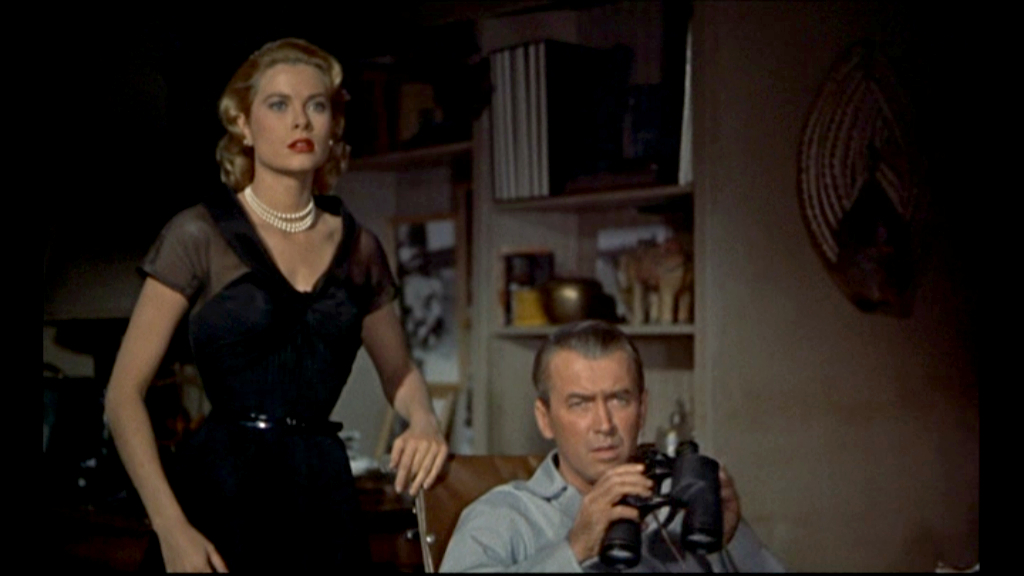 Some viewers are bored by the
single set, slow-moving story, however, those fascinated by Rear Window
are not alone, as the film received four Oscar nominations, was ranked 42nd and
48th on AFI’s 100 Movies and 100 Movies Anniversary lists, was universally
praised by critics, and in 1997 was included in the United States National Film
Registry. As the movie is all about voyeurism, Hitchcock’s film exquisitely
display’s the human need to look in on other people’s lives, ignoring what is
going on right in their own home. With the explosion of Facebook and Twitter,
the insatiable need to make a connection with others without ever becoming
involved is a successor to Hitchcock’s feature of a man and his camera looking
out into an apartment building courtyard. Rear Window uses a natural
soundtrack, with diegetic sounds and music stemming from James Stewart’s
neighboring apartments. Along with the 100 Movies wins, the AFI also included
Rear Window in its 100 Thrills and 10 Top 10 Mystery lists.
Some viewers are bored by the
single set, slow-moving story, however, those fascinated by Rear Window
are not alone, as the film received four Oscar nominations, was ranked 42nd and
48th on AFI’s 100 Movies and 100 Movies Anniversary lists, was universally
praised by critics, and in 1997 was included in the United States National Film
Registry. As the movie is all about voyeurism, Hitchcock’s film exquisitely
display’s the human need to look in on other people’s lives, ignoring what is
going on right in their own home. With the explosion of Facebook and Twitter,
the insatiable need to make a connection with others without ever becoming
involved is a successor to Hitchcock’s feature of a man and his camera looking
out into an apartment building courtyard. Rear Window uses a natural
soundtrack, with diegetic sounds and music stemming from James Stewart’s
neighboring apartments. Along with the 100 Movies wins, the AFI also included
Rear Window in its 100 Thrills and 10 Top 10 Mystery lists.8. Seven Samurai (1954)

7. Sleeping Beauty (1959)

6. The Killing (1956)

5. Sunset Boulevard (1950)
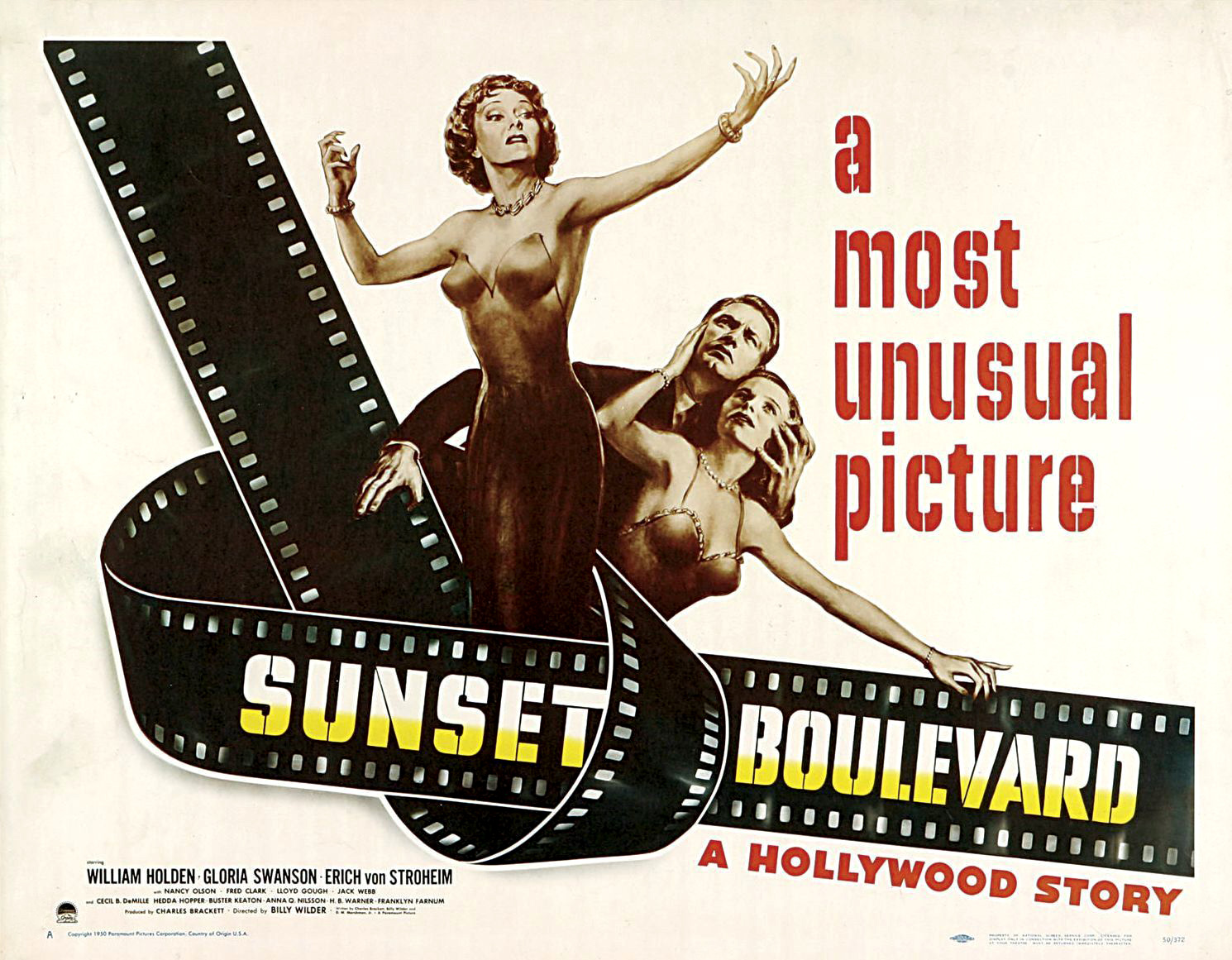
4. Singin’ in the Rain (1952)
3. On the Waterfront (1954)

2. North by Northwest (1959)
 My personal favorite of
all of Hitchcock’s films, North by Northwest is also one of his most
critically favored among the innocent man on the run stories. Cary Grant, Eva
Marie Saint, and James Mason give commanding performances in this stylish
thriller with a finale set amongst one of America’s most historic monuments.
Ranking at 98 in Empire magazine’s list of the 500 Greatest Films of
All Time, North by Northwest is considered a masterpiece in filmmaking
for its themes of deception, mistaken identity, and moral relativism. The movie
was nominated for three Academy Awards and won a 1960 Edgar Award for Best
Motion Picture Screenplay. In 1995, the Library of Congress selected it for
preservation in the National Film Registry. Among AFI movie lists, North by
Northwest ranked among its 100 Movies, 100 Thrills, 100 Movies Anniversary,
and 10 Top 10 Mystery lists.
My personal favorite of
all of Hitchcock’s films, North by Northwest is also one of his most
critically favored among the innocent man on the run stories. Cary Grant, Eva
Marie Saint, and James Mason give commanding performances in this stylish
thriller with a finale set amongst one of America’s most historic monuments.
Ranking at 98 in Empire magazine’s list of the 500 Greatest Films of
All Time, North by Northwest is considered a masterpiece in filmmaking
for its themes of deception, mistaken identity, and moral relativism. The movie
was nominated for three Academy Awards and won a 1960 Edgar Award for Best
Motion Picture Screenplay. In 1995, the Library of Congress selected it for
preservation in the National Film Registry. Among AFI movie lists, North by
Northwest ranked among its 100 Movies, 100 Thrills, 100 Movies Anniversary,
and 10 Top 10 Mystery lists.1. The Asphalt Jungle (1950)
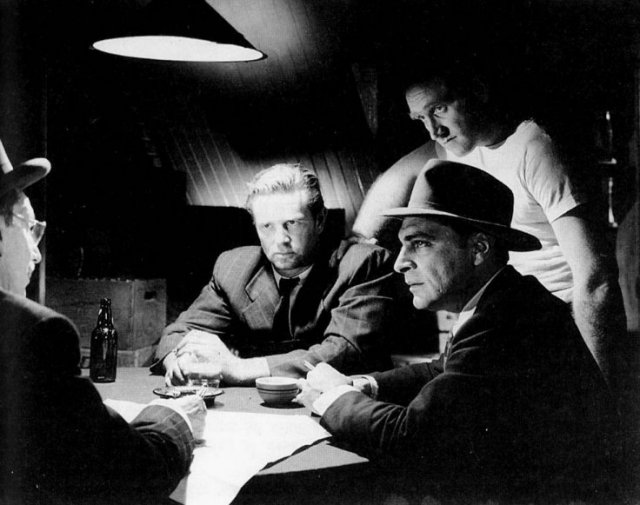
Analysis
Included in this list are animated pictures, heist movies, foreign films, and Hollywood movies about Hollywood. The 1950s are the end of the stranglehold Hollywood had on American audiences looking for visual stimulation as television began its competition, resulting in gimmicks and cheap ploys to herd people back into theaters. Big production, spectacle, widescreen techniques, and 3-D became prevalent in moviemaking. the 50s will also be well known for its heightening of interest in science fiction, thanks to Cold War paranoia and a renewed interest in science due to the atomic bomb. The western genre was revitalized and Alfred Hitchcock saw some of his most popular films released in this decade.
Top Movies By Decade: Part 5 – "Bond, James Bond."
1960s
Honorable Mentions: Judgment at Nuremberg (1961), The Birds (1963), The Great Escape (1963), High and Low (1963), A Fistful of Dollars (1964), For a Few Dollars More (1965), The Battle of Algiers (1966), The Graduate (1967), In the Heat of the Night (1967), Bullitt (1968), The Lion in Winter (1968), Night of the Living Dead (1968), and On Her Majesty’s Secret Service (1969)
10. 2001: A Space Odyssey (1968)
 Some
of the best films in cinema history take multiple viewings to fully appreciate.
2001: A Space Odyssey takes multiple viewings to understand. Stanley
Kubrick’s space epic, inspired by Arthur C. Clarke’s short story “The Sentinel,”
premiered to varied opinions but acquired a cult following and has since become
a mainstream masterpiece. Nominated for four Academy Awards, receiving a win
for visual effects, and ranked in numerous top ten polls, including AFI’s 100
Movies, 100 Thrills, 100 Quotes, and 100 Heroes and Villains, Sight &
Sound, and The Moving Arts Film Journal, the film is notable for
its deep thematic elements, scientific accuracy, soundtrack, ambiguous imagery,
unconventional storytelling, and minimal use of dialogue. 2001: A Space
Odyssey was included in the United States Library of Congress National Film
Registry in 1991, being deemed “culturally, historically, or aesthetically
significant.”
Some
of the best films in cinema history take multiple viewings to fully appreciate.
2001: A Space Odyssey takes multiple viewings to understand. Stanley
Kubrick’s space epic, inspired by Arthur C. Clarke’s short story “The Sentinel,”
premiered to varied opinions but acquired a cult following and has since become
a mainstream masterpiece. Nominated for four Academy Awards, receiving a win
for visual effects, and ranked in numerous top ten polls, including AFI’s 100
Movies, 100 Thrills, 100 Quotes, and 100 Heroes and Villains, Sight &
Sound, and The Moving Arts Film Journal, the film is notable for
its deep thematic elements, scientific accuracy, soundtrack, ambiguous imagery,
unconventional storytelling, and minimal use of dialogue. 2001: A Space
Odyssey was included in the United States Library of Congress National Film
Registry in 1991, being deemed “culturally, historically, or aesthetically
significant.”
9. Psycho (1960)
 Not a critical
success when released, Psycho was such a hit with moviegoers that it
was re-evaluated and has since been seen as not just a classic, but one of the
greatest films ever made. Following the abolition of the Production Code,
director Alfred Hitchcock pushed the limits of violence and sexuality in film,
and by filming one of the most well-known murder scenes in Hollywood history and
a killer score to go with it, he was able to create a ghastly thriller that is
probably Hitchcock’s most popular release. In 1992, the film was among those
inducted into the Congress National Film Registry. At the time of its release,
Psycho received four Oscar nominations, including Best Director and
Best Supporting Actress, nominations from the Directors Guild of America for
Outstanding Directorial Achievement and the Writers Guild of America, East for
Best Written American Drama. It won Best Motion Picture at the Edgar Allan Poe
Awards and Janet Leigh won a Golden Globe for Best Supporting Actress. Among
its numerous praises as one of the greatest movies of all time, Psycho
has been among many Best Of lists, including the AFI’s 100 Movies, 100 Movies
Anniversary Edition, 100 Thrills, 100 Heroes and Villains, 100 Quotes, and 100
Scores lists.
Not a critical
success when released, Psycho was such a hit with moviegoers that it
was re-evaluated and has since been seen as not just a classic, but one of the
greatest films ever made. Following the abolition of the Production Code,
director Alfred Hitchcock pushed the limits of violence and sexuality in film,
and by filming one of the most well-known murder scenes in Hollywood history and
a killer score to go with it, he was able to create a ghastly thriller that is
probably Hitchcock’s most popular release. In 1992, the film was among those
inducted into the Congress National Film Registry. At the time of its release,
Psycho received four Oscar nominations, including Best Director and
Best Supporting Actress, nominations from the Directors Guild of America for
Outstanding Directorial Achievement and the Writers Guild of America, East for
Best Written American Drama. It won Best Motion Picture at the Edgar Allan Poe
Awards and Janet Leigh won a Golden Globe for Best Supporting Actress. Among
its numerous praises as one of the greatest movies of all time, Psycho
has been among many Best Of lists, including the AFI’s 100 Movies, 100 Movies
Anniversary Edition, 100 Thrills, 100 Heroes and Villains, 100 Quotes, and 100
Scores lists.
8. The Good, the Bad and the Ugly (1966)
 Spaghetti western, war epic, and Italian action film. You could label
The Good, the Bad and the Ugly as any one of these genres and you would
be correct. The scope of Sergio Leone’s grand conclusion for Clint Eastwood’s
Man with No Name is filled with chaotic American Civil War battles, gunfights,
and hangings. Spaghetti westerns were not received with high praise at the time
of their release, but since then The Good, the Bad and the Ugly has
become very popular and has become European cinema’s best representation of the
western genre. It is included among Time’s 100 Greatest Movies of the
Last Century and Empire magazine’s Masterpiece Collection of 500
Greatest Movies at 25.
Spaghetti western, war epic, and Italian action film. You could label
The Good, the Bad and the Ugly as any one of these genres and you would
be correct. The scope of Sergio Leone’s grand conclusion for Clint Eastwood’s
Man with No Name is filled with chaotic American Civil War battles, gunfights,
and hangings. Spaghetti westerns were not received with high praise at the time
of their release, but since then The Good, the Bad and the Ugly has
become very popular and has become European cinema’s best representation of the
western genre. It is included among Time’s 100 Greatest Movies of the
Last Century and Empire magazine’s Masterpiece Collection of 500
Greatest Movies at 25.
7. Butch Cassidy and the Sundance Kid (1969)
 While The Good, the Bad and the Ugly is an
overly violent and surreal depiction of the Old West, Butch Cassidy and the
Sundance Kid instead goes the comedic route with its interpretation of the
American outlaw. The real treat in this movie is the chemistry between
headliners Paul Newman and then-unknown Robert Redford. The two were such a
great team, while only starring in two films together they are among the great
film duos alongside Laurel and Hardy, Abbott and Costello, or Hanks and Ryan.
Butch Cassidy and the Sundance Kid was the top grossing film of 1969
and won four Academy Awards for Best Cinematography, Best Original Score, Best
Song, and Best Original Screenplay, while also being nominated for Best
Director, Best Picture, and Best Sound. The film received numerous British
Academy Film Awards, including Best Film, Best Direction, Best Screenplay, Best
Cinematography, Best Actor (won by Redford), and Best Actress (won by Katherine
Ross). The movie was preserved by the Library of Congress in the National Film
Registry in 2003.
While The Good, the Bad and the Ugly is an
overly violent and surreal depiction of the Old West, Butch Cassidy and the
Sundance Kid instead goes the comedic route with its interpretation of the
American outlaw. The real treat in this movie is the chemistry between
headliners Paul Newman and then-unknown Robert Redford. The two were such a
great team, while only starring in two films together they are among the great
film duos alongside Laurel and Hardy, Abbott and Costello, or Hanks and Ryan.
Butch Cassidy and the Sundance Kid was the top grossing film of 1969
and won four Academy Awards for Best Cinematography, Best Original Score, Best
Song, and Best Original Screenplay, while also being nominated for Best
Director, Best Picture, and Best Sound. The film received numerous British
Academy Film Awards, including Best Film, Best Direction, Best Screenplay, Best
Cinematography, Best Actor (won by Redford), and Best Actress (won by Katherine
Ross). The movie was preserved by the Library of Congress in the National Film
Registry in 2003.
6. My Fair Lady (1964)
 A
musical film adaptation of a stage musical based on a film adaptation of the
original stage play Pygmalion, the Audrey Hepburn, Rex Harrison vehicle
won eight Academy awards, including Best Picture, Best Actor, and Best Director,
and was nominated for an additional four awards. My Fair Lady also won three
Golden Globes, a BAFTA, and was included in AFI’s 100 Movies, 100 Passions, 100
Songs, and 100 Musicals lists.
A
musical film adaptation of a stage musical based on a film adaptation of the
original stage play Pygmalion, the Audrey Hepburn, Rex Harrison vehicle
won eight Academy awards, including Best Picture, Best Actor, and Best Director,
and was nominated for an additional four awards. My Fair Lady also won three
Golden Globes, a BAFTA, and was included in AFI’s 100 Movies, 100 Passions, 100
Songs, and 100 Musicals lists.
5. Goldfinger (1964)
 The quintessential Bond film that every other Bond movie is measured up
against. Goldfinger began what is known as the Bond formula and blends
plot, women, cars, gadgets, locations, and over the top action sequences
seamlessly. The bond girls are unforgettable. The Aston Martin DB5 makes its
first appearance. Oddjob is the first henchman to have an interesting method of
killing, which would be copied by others like Jaws and Xenia Onatopp.
Goldfinger won an Oscar for Best Sound Effects Editing and received
nominations for a Grammy and BAFTA. It was selected to AFI’s 100 Thrills, 100
Quotes, 100 Songs, and 100 Heroes and Villains lists.
The quintessential Bond film that every other Bond movie is measured up
against. Goldfinger began what is known as the Bond formula and blends
plot, women, cars, gadgets, locations, and over the top action sequences
seamlessly. The bond girls are unforgettable. The Aston Martin DB5 makes its
first appearance. Oddjob is the first henchman to have an interesting method of
killing, which would be copied by others like Jaws and Xenia Onatopp.
Goldfinger won an Oscar for Best Sound Effects Editing and received
nominations for a Grammy and BAFTA. It was selected to AFI’s 100 Thrills, 100
Quotes, 100 Songs, and 100 Heroes and Villains lists.
4. To Kill a Mockingbird (1962)
 Featuring one of the most morally
upstanding, kindly father figures in cinematic history, Harper Lee’s To Kill
a Mockingbird was adapted into a powerful story of growing up in America
and learning about the hardships of life through the eyes of a little girl. The
film received Academy Award nominations for Best Picture, Best Director, Best
Cinematography, Best Supporting Actress, and Best Musical Score and won the
award in Best Actor, Best Art Direction, and Best Adapted Screenplay. It also
received three Golden Globe Awards and won an award at the 1963 Cannes Film
Festival. To Kill a Mockingbird is among AFI’s 100 Movies, 100 Movies
Anniversary Edition, 100 Heroes and Villains, 100 Scores, 100 Cheers, and 10 Top
10 lists. It was selected to the United States National Film Registry by the
Library of Congress in 1995.
Featuring one of the most morally
upstanding, kindly father figures in cinematic history, Harper Lee’s To Kill
a Mockingbird was adapted into a powerful story of growing up in America
and learning about the hardships of life through the eyes of a little girl. The
film received Academy Award nominations for Best Picture, Best Director, Best
Cinematography, Best Supporting Actress, and Best Musical Score and won the
award in Best Actor, Best Art Direction, and Best Adapted Screenplay. It also
received three Golden Globe Awards and won an award at the 1963 Cannes Film
Festival. To Kill a Mockingbird is among AFI’s 100 Movies, 100 Movies
Anniversary Edition, 100 Heroes and Villains, 100 Scores, 100 Cheers, and 10 Top
10 lists. It was selected to the United States National Film Registry by the
Library of Congress in 1995.
3. Dr. Strangelove or: How I Learned to Stop Worrying and Love the Bomb (1964)
 If black
comedies about nuclear war are your sort of thing, this is the movie for you.
Directed by Stanley Kubrick and starring Peter Sellers in three separate roles
as President of the United States, a former Nazi wheel chair-bound scientist,
and a Royal Air Force officer, Dr. Strangelove satirizes many Cold War
attitudes, with its primary focus on the theory of mutual assured destruction.
Often ranked among the greatest comedies of all time, the film was selected to
the National Film Registry in 1989. It currently holds a 100% fresh rating on
the movie review website Rotten Tomatoes and is ranked highly on IMDB’s Top 250
movies. Among the numerous nominations from the Academy Awards and BAFTA
Awards, it won four. In addition, it won the American comedy award from the
Writers Guild of America and a Hugo Award for Best Dramatic Presentation.
Dr. Strangelove is rated the fifth greatest film in Sight &
Sound’s directors’ poll, the only comedy in the top 10. AFI included the
film on its 100 Movies, 100 Movies Anniversary Edition, 100 Laughs, and 100
Quotes lists.
If black
comedies about nuclear war are your sort of thing, this is the movie for you.
Directed by Stanley Kubrick and starring Peter Sellers in three separate roles
as President of the United States, a former Nazi wheel chair-bound scientist,
and a Royal Air Force officer, Dr. Strangelove satirizes many Cold War
attitudes, with its primary focus on the theory of mutual assured destruction.
Often ranked among the greatest comedies of all time, the film was selected to
the National Film Registry in 1989. It currently holds a 100% fresh rating on
the movie review website Rotten Tomatoes and is ranked highly on IMDB’s Top 250
movies. Among the numerous nominations from the Academy Awards and BAFTA
Awards, it won four. In addition, it won the American comedy award from the
Writers Guild of America and a Hugo Award for Best Dramatic Presentation.
Dr. Strangelove is rated the fifth greatest film in Sight &
Sound’s directors’ poll, the only comedy in the top 10. AFI included the
film on its 100 Movies, 100 Movies Anniversary Edition, 100 Laughs, and 100
Quotes lists.
2. Lawrence of Arabia (1962)
 Moving performances, epic landscapes, and a mesmerizing score are all the things
that make David Lean’s Lawrence of Arabia an ambitious and masterful
picture. Lean is able to take a bleak and savage place like the desert and
romanticize it through the camera lens, creating a remarkable and beautiful
backdrop to the story of World War I British army officer T.E. Lawrence, who
helped mobilize a guerilla-style Arab revolt against the Ottoman Turkish rule.
Although the historical accuracy is hotly debated, both in terms of events and
representations of Lawrence, the film was an immediate success and has been
fawned over for decades. Lawrence of Arabia is constantly among the
top of lists touting the best in cinema, including the American Film Institute
ranking it fifth, seventh, and first among its 100 Movies, 100 Movies
Anniversary Edition, and 10 Top 10 Epic lists. Other AFI lists the film is
included in are 100 Thrills, 100 Heroes and Villains, 100 Scores, and 100
Cheers. In 1991, the Library of Congress deemed the film “culturally,
historically, or aesthetically significant” and selected it for preservation in
the United States National Film Registry. It received 10 Oscar nominations and
won seven, including Best Picture and Best Director. The BAFTAs and Golden
Globes also recognized its greatness, bestowing nine wins and another two
nomination to the picture.
Moving performances, epic landscapes, and a mesmerizing score are all the things
that make David Lean’s Lawrence of Arabia an ambitious and masterful
picture. Lean is able to take a bleak and savage place like the desert and
romanticize it through the camera lens, creating a remarkable and beautiful
backdrop to the story of World War I British army officer T.E. Lawrence, who
helped mobilize a guerilla-style Arab revolt against the Ottoman Turkish rule.
Although the historical accuracy is hotly debated, both in terms of events and
representations of Lawrence, the film was an immediate success and has been
fawned over for decades. Lawrence of Arabia is constantly among the
top of lists touting the best in cinema, including the American Film Institute
ranking it fifth, seventh, and first among its 100 Movies, 100 Movies
Anniversary Edition, and 10 Top 10 Epic lists. Other AFI lists the film is
included in are 100 Thrills, 100 Heroes and Villains, 100 Scores, and 100
Cheers. In 1991, the Library of Congress deemed the film “culturally,
historically, or aesthetically significant” and selected it for preservation in
the United States National Film Registry. It received 10 Oscar nominations and
won seven, including Best Picture and Best Director. The BAFTAs and Golden
Globes also recognized its greatness, bestowing nine wins and another two
nomination to the picture.
1. From Russia with Love (1963)
 The film before Goldfinger, From Russia
with Love is a true spy movie. Its utilization of fewer gadgets lets Bond
use his wits rather than an Omega watch with built-in laser. There are twists
and turns throughout the film that begins during the first Bond pre-title
sequence where our hero is hunted down by a homicidal assassin named Donald
"Red" Grant. From Russia with Love is adored by nearly all who view
it, mixing humor, action, sexuality, and fun into a seamless adventure with
suave Sean Connery carrying the picture the entire way.
The film before Goldfinger, From Russia
with Love is a true spy movie. Its utilization of fewer gadgets lets Bond
use his wits rather than an Omega watch with built-in laser. There are twists
and turns throughout the film that begins during the first Bond pre-title
sequence where our hero is hunted down by a homicidal assassin named Donald
"Red" Grant. From Russia with Love is adored by nearly all who view
it, mixing humor, action, sexuality, and fun into a seamless adventure with
suave Sean Connery carrying the picture the entire way.
1970s
 Is it the greatest sports movie of all time? Possibly. Is it the greatest achievement of Sylvester
Stallone’s career? Undeniably. Rocky
is the criterion in underdog stories and average Joe given a shot at greatness.
The first in a franchise that became a cliché of itself received critical
acclaim and was a box office smash made on a shoestring budget. On a budget of
only $950,000, Rocky went on to earn
$225 million, the most money of any film released that year. The film originally
received some mixed reviews with many calling it “schmaltzy,” but it is now
fondly adored as a manly fairy tale about a nobody given the unlikely chance to
become somebody. Empire included the
film in its list of the 500 greatest films of all time. AFI ranked it second in
its Ten Top 10 list of sports genre and included it on the 100 Films, 100
Thrills, 100 Heroes and Villains, 100 Songs, 100 Quotes, 100 Cheers, and 10th
Anniversary 100 Films lists. Rocky won three Academy Awards,
including Best Picture and Best Director.
It was nominated in another seven categories.
Is it the greatest sports movie of all time? Possibly. Is it the greatest achievement of Sylvester
Stallone’s career? Undeniably. Rocky
is the criterion in underdog stories and average Joe given a shot at greatness.
The first in a franchise that became a cliché of itself received critical
acclaim and was a box office smash made on a shoestring budget. On a budget of
only $950,000, Rocky went on to earn
$225 million, the most money of any film released that year. The film originally
received some mixed reviews with many calling it “schmaltzy,” but it is now
fondly adored as a manly fairy tale about a nobody given the unlikely chance to
become somebody. Empire included the
film in its list of the 500 greatest films of all time. AFI ranked it second in
its Ten Top 10 list of sports genre and included it on the 100 Films, 100
Thrills, 100 Heroes and Villains, 100 Songs, 100 Quotes, 100 Cheers, and 10th
Anniversary 100 Films lists. Rocky won three Academy Awards,
including Best Picture and Best Director.
It was nominated in another seven categories.
9. The Day of the Jackal (1973)
 A political/crime thriller shot in a way that feels like a documentary,
The Day of the Jackal presents a cat
and mouse chase to track down an assassin who is targeting French president
Charles de Gaulle. While the story is fictional with characters from the real
world, the director’s intent was to create a suspenseful experience where the
viewer knew the outcome of the film but would still be enthralled by the
narrative. Following the plot of the novel by the same name, this film was very
well received by critics and was nominated for numerous awards. Along with
winning the BAFTA for best film editing, it was also nominated for Best Film,
Best Direction, Best Screenplay, and three other categories. The
Day of the Jackal also received an Academy Award nomination and three Golden
Globe nominations.
A political/crime thriller shot in a way that feels like a documentary,
The Day of the Jackal presents a cat
and mouse chase to track down an assassin who is targeting French president
Charles de Gaulle. While the story is fictional with characters from the real
world, the director’s intent was to create a suspenseful experience where the
viewer knew the outcome of the film but would still be enthralled by the
narrative. Following the plot of the novel by the same name, this film was very
well received by critics and was nominated for numerous awards. Along with
winning the BAFTA for best film editing, it was also nominated for Best Film,
Best Direction, Best Screenplay, and three other categories. The
Day of the Jackal also received an Academy Award nomination and three Golden
Globe nominations.
8. Star Wars: Episode IV – A New Hope (1977)
 What can be said about this film that hasn’t
already been covered in exhausting detail. It is an iconic movie that is one of
the best of its genre. It started a
series that has provided children (and now adults) an abundance of excitement,
pleasure, and wonderment. The characters
found in the Star Wars universe are all adored from the imaginative alien heroes
like Yoda and Chewbacca to the tragic protagonist-turned-villain. While the decisions George Lucas has made
regarding this series, in regard to both new stories and distribution and
alterations to the originals, has marred the series some, but Episode IV is
still a revered classic that changed how space movies were made. Star
Wars: Episode IV grossed $460 million in the U.S. on its initial release,
which adjusted for inflation is the second highest grossing of all time. The awards are too countless to list here,
but just know that it is really, really well liked.
What can be said about this film that hasn’t
already been covered in exhausting detail. It is an iconic movie that is one of
the best of its genre. It started a
series that has provided children (and now adults) an abundance of excitement,
pleasure, and wonderment. The characters
found in the Star Wars universe are all adored from the imaginative alien heroes
like Yoda and Chewbacca to the tragic protagonist-turned-villain. While the decisions George Lucas has made
regarding this series, in regard to both new stories and distribution and
alterations to the originals, has marred the series some, but Episode IV is
still a revered classic that changed how space movies were made. Star
Wars: Episode IV grossed $460 million in the U.S. on its initial release,
which adjusted for inflation is the second highest grossing of all time. The awards are too countless to list here,
but just know that it is really, really well liked.
7. Animal House (1978)
 There used to be a time that putting the National Lampoon name on a movie title
meant something. When Animal House was released, it was a
major hit for the comedy group. Whatever
your thoughts of the film’s low-brow jokes today, the film began an all-new
genre that Hollywood is cashing in on still today. Wikipedia says it best: “The
film, along with 1977’s The Kentucky
Fried Movie, also directed by Landis, was largely responsible for defining
and launching the gross-out genre of films, which became one of Hollywood’s
staples.” This factoid is followed up with: “In 2001, the United States Library
of Congress deemed Animal House
‘culturally, historically, or aesthetically significant’ and selected it for
preservation in the National Film Registry.” Animal House was listed as Bravo’s
number one funniest movie of all time, AFI’s 36th funniest on its 100 Laughs
list, and is included in Empire
magazine’s 500 Greatest Movies of All Time. Financially, the movie was the
second most popular of the year.
There used to be a time that putting the National Lampoon name on a movie title
meant something. When Animal House was released, it was a
major hit for the comedy group. Whatever
your thoughts of the film’s low-brow jokes today, the film began an all-new
genre that Hollywood is cashing in on still today. Wikipedia says it best: “The
film, along with 1977’s The Kentucky
Fried Movie, also directed by Landis, was largely responsible for defining
and launching the gross-out genre of films, which became one of Hollywood’s
staples.” This factoid is followed up with: “In 2001, the United States Library
of Congress deemed Animal House
‘culturally, historically, or aesthetically significant’ and selected it for
preservation in the National Film Registry.” Animal House was listed as Bravo’s
number one funniest movie of all time, AFI’s 36th funniest on its 100 Laughs
list, and is included in Empire
magazine’s 500 Greatest Movies of All Time. Financially, the movie was the
second most popular of the year.
6. The Exorcist (1973)
 This is the scariest movie I have ever seen and am reluctant to watch it ever
again as its images still give me frights. Partly what makes The Exorcist so horrifying is that I
believe demon possessions and exorcisms do take place in the world. Earning 10 Oscar nominations, and winning
two, The Exorcist is one of the
highest grossing films of all time. It also received seven Golden Globe
nominations. Touted the scariest film of all time by several film magazines,
websites, and viewers themselves, it was listed at third on Bravo’s 100 Scariest
Movie Moments and in 2003 came in second in Channel 4’s 100 Greatest Scary
Moments in the United Kingdom. The Library of Congress selected it to be
preserved in 2010.
This is the scariest movie I have ever seen and am reluctant to watch it ever
again as its images still give me frights. Partly what makes The Exorcist so horrifying is that I
believe demon possessions and exorcisms do take place in the world. Earning 10 Oscar nominations, and winning
two, The Exorcist is one of the
highest grossing films of all time. It also received seven Golden Globe
nominations. Touted the scariest film of all time by several film magazines,
websites, and viewers themselves, it was listed at third on Bravo’s 100 Scariest
Movie Moments and in 2003 came in second in Channel 4’s 100 Greatest Scary
Moments in the United Kingdom. The Library of Congress selected it to be
preserved in 2010.
5. One Flew Over the Cuckoo’s Nest (1975)
 One of only three films to win the
Academy Award Grand Slam (which ironically is five categories, not four), One Flew Over the Cuckoo’s Nest is the
story of a convict who is put in a mental institution and reveals the philosophy
and routines of such psychiatric wards of the time period. Along with Jack
Nicholson’s Oscar winning performance and the Best Picture, Director,
Screenplay, and Actress wins, this film was also nominated for Academy Awards in
Supporting Actor, Cinematography, Editing, and Musical Score. It also won 12 other awards at the Golden
Globes and BAFTAs and was nominated in another two categories. Other accolades
include AFI’s Top 100 Films, 100 Films 10th Anniversary, 100 Heroes and
Villains, and 100 Cheers lists. The film was included in the National Film
Registry in 1993.
One of only three films to win the
Academy Award Grand Slam (which ironically is five categories, not four), One Flew Over the Cuckoo’s Nest is the
story of a convict who is put in a mental institution and reveals the philosophy
and routines of such psychiatric wards of the time period. Along with Jack
Nicholson’s Oscar winning performance and the Best Picture, Director,
Screenplay, and Actress wins, this film was also nominated for Academy Awards in
Supporting Actor, Cinematography, Editing, and Musical Score. It also won 12 other awards at the Golden
Globes and BAFTAs and was nominated in another two categories. Other accolades
include AFI’s Top 100 Films, 100 Films 10th Anniversary, 100 Heroes and
Villains, and 100 Cheers lists. The film was included in the National Film
Registry in 1993.
4. Alien (1979)
 Trapped in the confines of a space craft as a monstrous extraterrestrial life
form terrorizes the crew, Alien delivered on every
level as a great science fiction, horror, suspense, and/or action movie.
The
film works for all types of moviegoers, ranging from the slow-paced thriller types to
gore-fest enthusiasts. The original in a long-running series introduced various
aspects of the alien creature, including the egg, facehugger, chestburster, and
fully grown alien. Alien won the Academy Award for Visual Effects and was also nominated for Best Art Direction. It won three Saturn Awards in Best Science Fiction Film, Best
Direction, and Best Supporting Actress, and was also nominated in four other categories. It received five BAFTA
nominations and won the Hugo Award for Best Dramatic Presentation. Jerry
Goldsmith's score received nominations for the Golden Globe Award for
Best Original Score and the Grammy Award for Best Soundtrack
Album.
Trapped in the confines of a space craft as a monstrous extraterrestrial life
form terrorizes the crew, Alien delivered on every
level as a great science fiction, horror, suspense, and/or action movie.
The
film works for all types of moviegoers, ranging from the slow-paced thriller types to
gore-fest enthusiasts. The original in a long-running series introduced various
aspects of the alien creature, including the egg, facehugger, chestburster, and
fully grown alien. Alien won the Academy Award for Visual Effects and was also nominated for Best Art Direction. It won three Saturn Awards in Best Science Fiction Film, Best
Direction, and Best Supporting Actress, and was also nominated in four other categories. It received five BAFTA
nominations and won the Hugo Award for Best Dramatic Presentation. Jerry
Goldsmith's score received nominations for the Golden Globe Award for
Best Original Score and the Grammy Award for Best Soundtrack
Album.
3. The Godfather: Part II (1974)
 One of the most distinguishing accolades
bestowed upon the Godfather series is that The Godfather and The Godfather: Part II are the only film
and its sequel to win the Oscar for Best Picture. This is the continuation of
the Corleone family as Michael attempts to legitimize the family business. It is
balanced by the prequel story of a young Vito Corleone and his rise to power. The Godfather: Part II is as highly
regarded as its predecessor, it is considered an influential piece of cinema
history, especially in the crime/gangster genre. Financially, it was the
fifth-highest-grossing film of the year, making $193 million on a $13 million
budget. Among its numerous accolades, The
Godfather: Part II was featured on Sight and Sound’s list of the ten
greatest films of all time in 1992 and 2002, is ranked seventh on Entertainment Weekly’s list of the 100
Greatest Movies of All Time, and is first on TV Guide’s 1998 list of the 50 Greatest
Movies of All Time on TV and Video. Pacino’s performance also garnered great
praise throughout the film industry and media. In total, it received 19 Academy
Award, Golden Globe, and BAFTA nominations, winning in seven categories. It has
also made five of AFI’s Top 100 lists.
One of the most distinguishing accolades
bestowed upon the Godfather series is that The Godfather and The Godfather: Part II are the only film
and its sequel to win the Oscar for Best Picture. This is the continuation of
the Corleone family as Michael attempts to legitimize the family business. It is
balanced by the prequel story of a young Vito Corleone and his rise to power. The Godfather: Part II is as highly
regarded as its predecessor, it is considered an influential piece of cinema
history, especially in the crime/gangster genre. Financially, it was the
fifth-highest-grossing film of the year, making $193 million on a $13 million
budget. Among its numerous accolades, The
Godfather: Part II was featured on Sight and Sound’s list of the ten
greatest films of all time in 1992 and 2002, is ranked seventh on Entertainment Weekly’s list of the 100
Greatest Movies of All Time, and is first on TV Guide’s 1998 list of the 50 Greatest
Movies of All Time on TV and Video. Pacino’s performance also garnered great
praise throughout the film industry and media. In total, it received 19 Academy
Award, Golden Globe, and BAFTA nominations, winning in seven categories. It has
also made five of AFI’s Top 100 lists.
2. Jaws (1975)
 Movies
need all of its parts to be spectacular. The acting, screenplay, music,
cinematography, and effects all have to mesh fluidly. Another ingredient that
sets the tone is the tagline, and Jaws had a great one: Don’t go in the water. Steven
Spielberg’s classic about a shark terrorizing a beach town became a watermark
moment in Hollywood as it started what has become the summer blockbuster season.
Jaws became the most successful
motion picture of all time financially, being beaten two years later by Star Wars. In 2001, it was included by
the Library of Congress in the National Film Registry and in 2006 the screenplay
was ranked 63rd best of all time by the Writers Guild of America. Winning three
Academy Awards, it lost Best Picture to One Flew Over the Cuckoo’s Nest. Along
with winning the Oscar, John Williams’ haunting theme also won the Grammy,
BAFTA, and Golden Globe awards for best score. It received other nominations at
the BAFTA, Golden Globe, Director’s Guild of America, and Writers Guild of
America ceremonies. The American Film Institute included it at number 48 on its
100 Years list, 56 on its 10th Anniversary list, and many other sources have
ranked it among the 50 and 100 greatest films of all time. It was also among
AFI’s 100 Quotes, 100 Thrills and 100 Heroes and Villains
lists.
Movies
need all of its parts to be spectacular. The acting, screenplay, music,
cinematography, and effects all have to mesh fluidly. Another ingredient that
sets the tone is the tagline, and Jaws had a great one: Don’t go in the water. Steven
Spielberg’s classic about a shark terrorizing a beach town became a watermark
moment in Hollywood as it started what has become the summer blockbuster season.
Jaws became the most successful
motion picture of all time financially, being beaten two years later by Star Wars. In 2001, it was included by
the Library of Congress in the National Film Registry and in 2006 the screenplay
was ranked 63rd best of all time by the Writers Guild of America. Winning three
Academy Awards, it lost Best Picture to One Flew Over the Cuckoo’s Nest. Along
with winning the Oscar, John Williams’ haunting theme also won the Grammy,
BAFTA, and Golden Globe awards for best score. It received other nominations at
the BAFTA, Golden Globe, Director’s Guild of America, and Writers Guild of
America ceremonies. The American Film Institute included it at number 48 on its
100 Years list, 56 on its 10th Anniversary list, and many other sources have
ranked it among the 50 and 100 greatest films of all time. It was also among
AFI’s 100 Quotes, 100 Thrills and 100 Heroes and Villains
lists.
1. The Godfather (1972)
 This is my ultimate number one film of all time. It is the one that would go
to a deserted island with me, the one I can put in at any time for any reason,
and the one that will always be easily accessible for viewing on all types of
medium. Where The Godfather: Part II
continues the story of the Corleone family and shows its patriarchs violent rise
to become the Godfather, the first film intimately introduces us to the
characters and puts on display the inner-workings of a crime family. The
countless accolades for The Godfather
include three Academy Award wins, eight more nominations, seven Golden Globe
nominations with five wins, five BAFTA nominations with one win, and a Grammy
win. The film is ranked at the top of innumerable lists and has sealed a legacy
in pop culture with its unforgettable quotes and cinematic influence.
This is my ultimate number one film of all time. It is the one that would go
to a deserted island with me, the one I can put in at any time for any reason,
and the one that will always be easily accessible for viewing on all types of
medium. Where The Godfather: Part II
continues the story of the Corleone family and shows its patriarchs violent rise
to become the Godfather, the first film intimately introduces us to the
characters and puts on display the inner-workings of a crime family. The
countless accolades for The Godfather
include three Academy Award wins, eight more nominations, seven Golden Globe
nominations with five wins, five BAFTA nominations with one win, and a Grammy
win. The film is ranked at the top of innumerable lists and has sealed a legacy
in pop culture with its unforgettable quotes and cinematic influence.
Included in this list are animated pictures, heist movies, foreign films, and Hollywood movies about Hollywood. The 1950s are the end of the stranglehold Hollywood had on American audiences looking for visual stimulation as television began its competition, resulting in gimmicks and cheap ploys to herd people back into theaters. Big production, spectacle, widescreen techniques, and 3-D became prevalent in moviemaking. the 50s will also be well known for its heightening of interest in science fiction, thanks to Cold War paranoia and a renewed interest in science due to the atomic bomb. The western genre was revitalized and Alfred Hitchcock saw some of his most popular films released in this decade.
Top Movies By Decade: Part 5 – "Bond, James Bond."
1960s
Honorable Mentions: Judgment at Nuremberg (1961), The Birds (1963), The Great Escape (1963), High and Low (1963), A Fistful of Dollars (1964), For a Few Dollars More (1965), The Battle of Algiers (1966), The Graduate (1967), In the Heat of the Night (1967), Bullitt (1968), The Lion in Winter (1968), Night of the Living Dead (1968), and On Her Majesty’s Secret Service (1969)
10. 2001: A Space Odyssey (1968)

9. Psycho (1960)

8. The Good, the Bad and the Ugly (1966)

7. Butch Cassidy and the Sundance Kid (1969)

6. My Fair Lady (1964)

5. Goldfinger (1964)

4. To Kill a Mockingbird (1962)

3. Dr. Strangelove or: How I Learned to Stop Worrying and Love the Bomb (1964)

2. Lawrence of Arabia (1962)

1. From Russia with Love (1963)
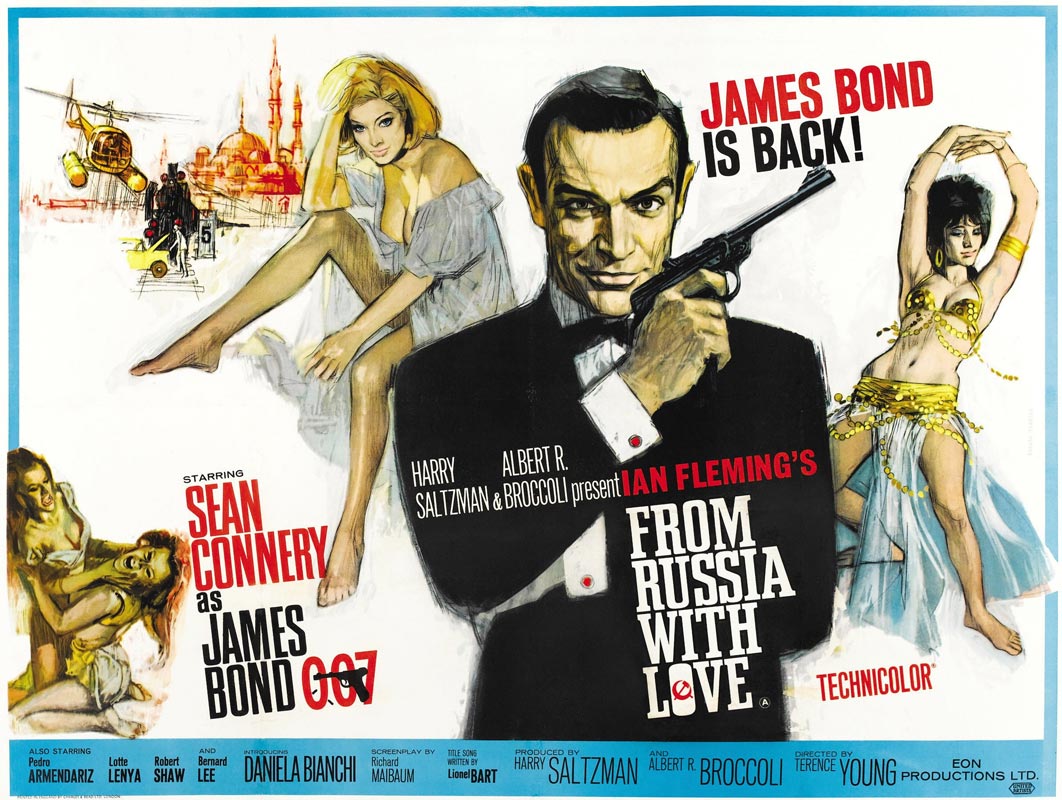
Analysis
It is no accident that the decade of film most known for spy films and spaghetti westerns would land three of those types of movies on this list. With the elimination of the Hayes Code, films became more experimental and were the forerunners to what would become the definitive of 70s filmmaking. The 1960s saw the introduction of the MPAA rating system that is still used today. Along with new experimentation in filmmaking and storytelling, this decade brought about more adult themes and graphic violence. A youth movement was taking place that Hollywood capitalized on with films that embodied the changing values of society at the time.
Top Movies By Decade: Part 6
– "I'm going to make him an offer he can't refuse."
1970s
Honorable
Mentions: Get Carter
(1971),
A Clockwork
Orange (1971),
Enter the
Dragon (1973),
The Sting
(1973),
Chinatown
(1974),
Close
Encounters of the Third Kind (1977),
and Halloween (1978)
10. Rocky (1976)
10. Rocky (1976)

9. The Day of the Jackal (1973)

8. Star Wars: Episode IV – A New Hope (1977)

7. Animal House (1978)
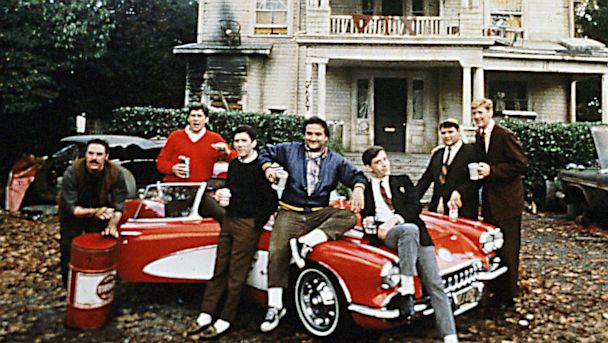
6. The Exorcist (1973)

5. One Flew Over the Cuckoo’s Nest (1975)

4. Alien (1979)

3. The Godfather: Part II (1974)

2. Jaws (1975)

1. The Godfather (1972)
Analysis
In my opinion, which isn't worth the money advertising could make on this piddly website, the 1970s is the weakest decade in filmmaking history. It may be that I am a prude or I don't have the social angst of people who grew up in the 70s, but simply put I don't generally find movies of this decade to be near as entertaining or worthy of praise as other decades. Despite Hollywood facing financial difficulties at the beginning of the decade, after a few years the blockbuster was created (thanks to Spielberg's Jaws) and audiences also saw the loosening of restrictions on language, sex, violence, and other adult content. Young filmmakers, known as the Movie Brats, started making their mark in the industry, especially those with financial backing from Roger Corman, and location shooting became much more common among directors.


