Friday, April 18, 2014

Top Movies By Decade: Part 9 - "Why so serious?"

Author’s Note: I apparently did this in July of 2009 but didn’t list my top ten favorites.  It simply had my favorite film and then a few honorable mentions that would have been in the top five.
I started a series of lists that rank my top ten favorite movies by decade.  It began in the 1920s and will be working toward the new millennium.
To compile this list, I took my ranked films from IMDb, which I grade after every movie viewing, and sorted them from highest to lowest.  Then, looking at each movie in each decade I came up with my favorite ten.
I have included some honorable mentions to show what the top ten were up against. We will continue with the 1990s.

2000s
Honorable Mentions: Almost Famous (2000), Crouching Tiger, Hidden Dragon (2000), Amelie (2001), The Royal Tenenbaums (2001), X2 (2003), The Bourne Supremacy (2004), Shaun of the Dead (2004), King Kong (2005), Little Miss Sunshine (2006), Pan’s Labyrinth (2006), Man on Wire (2008), Slumdog Millionaire (2008), Harry Potter and the Half-Blood Prince (2009)

10. Star Trek (2009)
Similar to another reboot of a well-established film franchise higher on this list, Star Trek reintroduced audiences to the original crew of the starship Enterprise.  Director J.J. Abrams revitalized the series with an action-packed time-travel story that allowed for the filmmakers to explore an alternate timeline without being constrained by the continuity of the previous five decades of Trekkie canon.  Critics praised the feature for being well balanced among humor, action, drama, and spectacle.  Star Trek had the largest American opening ever in the series’ history and went on to be the highest-grossing of all the Trek feature films.  The movie received four Academy Award nominations, winning in Best Makeup, and other nominations included a Grammy, three Empire, five Teen Choice Award, four People’s Choice Award, and five Broadcast Film Critics Association nominations.

9. Harry Potter and the Prisoner of Azkaban (2004)
The third film of the Harry Potter series, it is the first of the franchise that took a darker, more mature, tone and was truly stylized for both children and adults.  It is also the only film of the series that could be a stand-alone picture, which is one of the reasons that makes it so appealing to me.  Harry Potter and the Prisoner of Azkaban is the story of a man named Sirius Black who has escaped prison and looks to murder Harry.  Despite enormous, and even record-breaking in some areas, box office receipts and earning nearly $800 million worldwide, it is the lowest grossing of all the Harry Potter films.  The movie garnered two Oscar nominations for Best Original Score and Visual Effects and found its way on to a few “Best Of” lists, including Empire magazine, IGN, and Moviefone.

8. WALL-E (2008)
Pixar is heavily represented on this decade’s list, but this is right in the middle of the Golden Age of Pixar filmmaking.  WALL-E is a futuristic story that follows a robot designed to clean a waste-covered Earth that falls in love with another robot and travels into space, altering the lives of mankind.  Although a children’s computer-animated movie, the story deals with deeper societal issues, including consumerism, complacency in the technological age, environmental and waste management, and nostalgia.  WALL-E received near universal acclaim and was a box office success.  Accolades included nominations and wins at the Academy Awards, Golden Globes, Hugo Awards, Saturn Awards, and numerous Critics’ Award ceremonies.  It also was named the best film of the decade by TIME.

7. City of God (2002)
Most likely the only Brazilian film I have ever seen, Cidade de Deus, or City of God, follows the rise of organized crime in Rio de Janeiro from the late 1960s to the early 1980s.  Among the movies bountiful praise from critics, it received abundant rankings on top ten lists for the year and decade.  The film received four Academy Award nominations and was named the Best Foreign Language Film at the Chicago Film Critics Association Awards, New York Film Critics Circle Awards, Las Vegas Film Critics Society Awards, Satellite Awards, Southeastern Film Critics Association Awards, and Toronto Film Critics Association Awards, along with several other nominations in the same category at other award ceremonies.  The movie also spawned a television series and a film based on the TV series.

6. Gladiator (2000)
Not just an epic guy movie that supplanted Spartacus as greatest gladiatorial film, but Gladiator was also an Academy Award winning best picture.  Ridley Scott directs Russell Crowe as former general, turned gladiator, who seeks revenge on the emperor who has murdered his family while surviving fights to the death in Rome’s Colosseum.  Due in part to its box office success, favorable reviews from critics, and showering of awards, Gladiator renewed interest in the historical epic genre.  While it wasn’t a universal success with critics, despite the Best Picture Oscar, audience-goers loved it, making it one of the highest grossing films of the year.  The film was nominated in 36 individual award ceremonies and of the 119 nominations it received, it garnered 48 wins.  Along with the Academy Award, BAFTA, Golden Globe, and other award nominations, Gladiator was included on the American Film Institute’s 100 Heroes and Villains list, the Total Film list of 50 best heroes and villains, and Empire’s 100 Greatest Movie Characters.

5. Up (2009)
One of the things that makes Pixar’s Up so incredible is the first four minutes of the film is a gripping dramatic montage of cinema that summons the deepest compassion in nearly every viewer as it traces the love story of two characters.  Yet, Pixar didn’t stop there and the next 92 minutes follows that up with some of the most heartfelt storytelling Hollywood has ever produced.  The movie centers on an elderly man and young Wilderness Explorer who are thrown together on a trip into South America after the former ties thousands of balloons to his home.  Up was the first animated film to ever open the Cannes Film Festival and only the second animated movie to receive a Best Picture nomination.  It went on to become a huge financial success and was lauded by critics.  The movie was named Best Animated Feature and won for Best Original Score at the Academy Awards and Golden Globes.  It also received nine Annie Award nominations along with several other accolades.

4. Finding Nemo (2003)
Yet another title from the prodigious filmmakers and designers at Pixar, Finding Nemo is not only an astonishing work of storytelling, but the achievements in creating natural-looking water through computer animation is beyond belief.  Like the title implies, Finding Nemo follows an over-protective clown fish named Marlin, who is searching for his abducted son and meets a friend with short-term memory problems along the way that helps teach him that not everything in life can be safe.  Another critical and financial smash for Pixar, Finding Nemo was the second highest grossing film of the year, won the Academy Award and Saturn Award for Best Animated Feature, and is the best-selling DVD of all time.  It received countless other awards and nominations, among which included Best Animated Film at several critics’ award ceremonies.  AFI included the movie among its 10 Top 10 Best Animated Films.

3. Casino Royale (2006)
No “Best Of” list by decade would be complete for me without at least one James Bond movie in consideration, except for the 70s (that’s on you Roger Moore).  Casino Royale, the first written and last filmed of Ian Fleming’s novels, is a reboot of the series, becoming grittier and showing a more vulnerable hero.  Bond must win at a high-stakes poker game in order to bankrupt criminal-financier Le Chiffre.  Current 007 Daniel Craig took over the role with this film, presenting an interpretation more in the mold of Sean Connery and Timothy Dalton than Roger Moore and Pierce Brosnan.  Critics were receptive to the new direction of the series but some felt the more brutal tone was turning James Bond into Jason Bourne.  Financially it was the biggest Bond film ever up to that point.  Casino Royale made it on several critics’ top 10 lists and received eight BAFTA nominations, five Saturn Award nominations, and several other awards for its screenplay, film editing, visual effects, and production design.

2. The Dark Knight (2008)
Another film series that rebooted the character to create a darker, more realistic tone, Christopher Nolan’s Batman series is considered to be supreme among the superhero genre.  The Dark Knight is based on the comics The Killing Joke and The Long Halloween and focuses on Batman and Harvey Dent’s pursuit of a new menace in Gotham, the Joker.  Heather Ledger was posthumously awarded the Best Supporting Actor Oscar, Golden Globe, and BAFTA for his role as the Joker and the film was nominated for another seven Academy Awards and eight BAFTAs.  Several other award ceremonies recognized the film and financially the picture made more than a billion dollars worldwide.  With the tone being much more serious than previous comic book movies, real-world themes and analysis were presented with the release of The Dark Knight, including vigilantism, escalation and the extreme measures men will take to fight for justice.

1. The Incredibles (2004)
The fourth and final entry of a Pixar film on this list, The Incredibles presents themes concerning a family of supers attempting to cope with living a normal existence, such as what the Fantastic Four has attempted to achieve, but on a much more human level.  Like Finding Nemo before it having to generate an accurate representative of animated water, The Incredibles required animators to create new technology that would result in realistic-looking human characters that would detail human anatomy, clothing, and skin.  Praised as one of the best of the year, the film was the first all-animated feature to win the Hugo Award for Best Dramatic Presentation.  The movie also received the Academy Award and Annie Award for Best Animated Feature.  Winning another Oscar for Best Sound Editing, The Incredibles was the first Pixar feature to win multiple Academy Awards.  It was announced last month that a sequel is currently in the works.

Analysis
Including four computer-animated features on this list portrays me as a simpleton that cannot handle more complex movies than what is presented to a child, but that is simply not the case as Pixar’s filmography includes titles with complicated themes and mature content.  Plus, computer-generated effects were heavily used throughout the 2000s, especially in the animated feature genre.  This specific decade also saw an increased interest in foreign language films and documentaries.  Another attribute of the period was how 9/11 affected filmmaking and the use of social networking to promote movies.

Thursday, April 17, 2014

Thoughts On Oscar's Nominations

The other night while at an Arlington Landmark of Eatery (Candlelight Inn), my friends and I got into a conversation about this past year in film.  One friend claimed the Academy Awards were becoming like the Grammys, in that the nominations are a joke and it is all name recognition at this point.  Anyone who pays the slightest attention to movie and music awards knows that is about the most insulting thing you can say about an awards presentation.
The example he used was Bradley Cooper from American Hustle.  His complaint was Cooper’s performance was not so great that he deserved a nomination, and on top of that opinion he also included that the movie, along with Captain Phillips, shouldn’t have even been included in the list of nominees for Best Picture.  My counter to his complaint was name another movie to replace either American Hustle or Captain Phillips within the list of nine.
I should have prefaced this post with the caveat that I have not yet seen all nine nominated films.  I lack viewing American Hustle, Her, and Philomena.  However, my argument for American Hustle wasn’t predicated on needing to see it.
You see, part of my friend’s complaint with the Academy Awards is that there is too much politicking for specific movies to be nominated in certain categories.  I completely agree with that aspect of his argument.  As my friend stated, “If Harvey Weinstein’s name is on the movie, it’s getting nominated.”  That is a bit hyperbolic, but you get the point.  The campaign period and release schedule do weigh heavily on whether a movie is considered for nomination during awards season.  However, where my stance on whether the Academy Awards has become as preposterous as the Grammys diverges greatly is in his complete dismissal that movies like American Hustle and Captain Phillips aren’t at least in the conversation of the year’s best.
Although I am defending a movie I haven’t seen as one of the best from 2013, I really am justifying the idea of finding nine movies in 2013 to at least consider being the best.  After watching 12 Years a Slave and Gravity, it is unquestionable that one of those two films was the best from last year.  It is completely your prerogative as to whether you would award Gravity for its technical brilliance or 12 Years a Slave for its compelling story and captivating performances, but to have a completely objective view and give the Oscar to any other movie from last year would be a hard sell.
Last year there were 158 movies released in America.  Among that group, there is a lot of crap.  In fact, there is more filth and cash-grabbing from Hollywood’s releases last year than artful, well-made pictures.  To go through the entire list of movies eligible for consideration of the best picture and ignore movies like American Hustle and Captain Phillips is a disservice.  Sure, there are some smaller, more intimate indie-made movies that get overshadowed due to the late-season campaigning, and there are even some movies that not only get a nod for Best Picture but actually end up erroneously being crowned winner, *cough* Shakespeare in Love *cough*.
Back to my friend’s negative outlook on Bradley Cooper’s performance in American Hustle, since I have not yet seen the movie I am not able to confirm or deny the validity of his opinion.  Yet, I think that the acting categories are open to much more interpretation than the technical categories when awards are given out.
If you were to get my opinion about some of the Best Actor/Actress nominees, which you’re not, I would say Lupita Nyong’o’s performance in 12 Years a Slave wasn’t Best Supporting Actress worthy.  She had one scene that showed any real range other than silent submissiveness or the painful wailing brought about by the crack of a whip, but what made that single scene stand out for her is that it was quite a departure from all the other moments she was a part of.   In reality, 95 percent of her acting was inaudible taunting toward her master’s wife and the cries of agony from the beatings she endured as punishment, so of course that final 5 percent would appear to be splendid.  Should a Best Supporting Actress award really go to someone for one good scene when Sally Hawkins, Jennifer Lawrence, Julia Roberts, and June Squibb carry their great performances throughout the entire film.
My thought train has become derailed a bit and crashed through the wall of a depot like the Kool-Aid Man, but what I am trying to get at is five minutes of what appears to be remarkable acting can get you a nomination, but an entire film of great visual effects, music, costumes, or cinematography are needed for a nomination in the specialized categories, including Best Director and Best Picture.
Is the Academy of Motion Picture Arts and Sciences a perfect system that gets it right every time?  No.  Does it bring to the public’s attention several motion pictures that are superbly made and deserve recognition for the hard work put into them?  Absolutely.
And for the final record, if I had an Academy vote it would have gone to 12 Years a Slave.  The movie is superbly done and to me outweighs the technical virtuosity that Alfonso Cuaron provided with Gravity.

Sunday, March 16, 2014

Happy (Gloomy) Spring

There is not much to really update, but I haven't written lately.  My work schedule has been extremely busy lately as this our most hectic time of year.  It is called analysis season because most of our customers receive their new payment amounts due to escrow analysis (an escrow is the funds that are collected with each month's mortgage payment to pay your taxes and insurance).  On top of the escrow analysis taking place, several customers contact us to get a copy of their tax and interest statements, or 1098 Form, for tax reporting purposes.  Nearly all of the customers wanting another 1098 Form claim they never received one in the mail, but a lot of those probably just either threw it away on accident or don't realize it is in the coupon booklet they received in the mail.  That is just a little look into the life of a mortgage company customer service rep.
A position is opening up at work that I will be applying for.  The story behind the position is a little long, but the short version is that my boss's boss has tried to fill this position twice already and both times it didn't work out.  I am going to push hard at getting hired for the spot, but we will see.
As for life outside of work, my family is doing great.  Sawyer is now 2 months old and sleeping about six hours a night.  We can nearly get through the entire night without Joanna having to get up in the middle of the night to feed him.  Yes, she is the most amazing wife to let me sleep while she feeds Sawyer.  Jack is the sweetest big brother, constantly wanting to kiss Sawyer's head.  Sometimes he gets a little carried away and kisses him about 15 times in a row or leans into Sawyer's rock and play to give him a smooch, putting all of his weight on Sawyer's gut.
We just finished Spring Break with Emery at our house.  Joanna took the week off and had all three kids at the house.  It was her first real try at being a stay-at-home mom with three children.  I should let her have a paragraph or two to explain how that experience went, but I try to keep this website family friendly and she might not be able to properly edit herself.
That is about all.  Hopefully something of importance happens soon that I can add a post again this month.

Tuesday, February 04, 2014

Indelible - 5 Top Hoffman Performances

Indelible. It is the single word that best describes Philip Seymour Hoffman's career. When news broke of Hoffman's death and as details have become public knowledge, reactions from both Hoffman's friends and family and those who knew nothing more of the man than what he gave them through the portrayals of his vasting characters have been the same: overwhelming sadness.
Finding five really great characters Hoffman has epitomized is not hard. Narrowing it down to five is the difficult task this post is attempting. I should note before listing my top five performances from Philip Seymour Hoffman, I have not been able to view every movie he has ever starred in. The only movie I believe might be included in this list had I yet seen it would be The Master, but until that and other of his films have been viewed this will be the difinitive tally of my favorite five characters Hoffman has left us with.
We are going to start of with two honorable mentions, because while I was able to narrow it down to the five best (in my opinion), these two were good enough that I couldn't write up a post about Hoffman and not give them their proper due.

Honorable Mentions:
25th Hour
Jacob Elinsky
Equal parts vile and woeful, Hoffman's performance as a high school teacher who is crushing on one of his students makes you nearly pity the situation he find himself in. Few actors could bring about that kind of emotional reaction for a potential sexual predator.


Mission: Impossible III
Owen Davian
He is hands down the best villain in the entire series, which might not be saying much considering we are talking about the Mission: Impossible franchise. However, every scene Hoffman is in he is practically commanding us to watch him, despite what is going on in the rest of the scene.


Top 5 Hoffman Characters:
5: Before the Devil Knows You're Dead
Andy Hanson
Having already won an Oscar and starred in a big budget action movie, Hoffman still maintained and improved his craft by finding the best people to work with. This led him to starring alongside Albert Finney in Sidney Lumet's final film.


4. Doubt
Father Brendan Flynn
The ambiguity brought about by the title phrase is made even more powerful from Hoffman's turn as a Catholic priest accused of improper actions with an altar boy.


3. Almost Famous
Lester Bangs
I don't know anything about real-life music journalist Lester Bangs, but what I do know is Hoffman brilliantly delivers every line as the wise sage who bestows his world-weary understanding on the 15-year-old protagonist of Cameron Crowe's semi-autobiograhical rock comedy-drama.


2. Capote
Truman Capote
Winning an Oscar for a role will most likely result in landing you on a top something list when going through a person's filmography, and for Hoffman, leaving off his titular award-winning performance as Truman Capote is foolish.


1. Boogie Nights
Scotty J.
In a gritty look at the Golden Age of the adult film industry that stars Hollywood pros like Burt Reynolds, Mark Whalburg, Julianne Moore, Don Cheadle, William H. Macy, and a frequently naked Heather Graham, it is Philip Seymour Hoffman who will be most remembered.

Saturday, January 25, 2014

Top Movies By Decade: Part 8 - "Get busy livin', or get busy dyin'."

Author's Note: I apparently did this in July of 2009 but didn't list my top ten favorites.  It simply had my favorite film and then a few honorable mentions that would have been in the top five.
I started a series of lists that rank my top ten favorite movies by decase.  It began in the 1920s and will be working toward the new millennium.
To compile this list, I took my ranked films from IMDb, which I grade after every movie viewing, and sorted them from highest to lowest.  Then, looking at each movie in each decade I came up with my favorite ten.
I have included some honorable mentions to show what the top ten were up against.  We will continue with the 1990s.

1990s
Honorable Mentions: The Silence of the Lambs (1991), Unforgiven (1992), Jurassic Park (1993), Pulp Fiction (1994), Braveheart (1995), Casino (1995), Goldeneye (1995), The Usual Suspects (1995), Fargo (1996), Swingers (1996), American History X (1998), Rounders (1998), American Beauty (1999), Fight Club (1999), Toy Story 2 (1999)

10. The Lion King (1994)
The final masterpiece animated film from Disney prior to a 15-year drought from the Mickey Mouse company, The Lion King includes delightful characters, a heartbreaking storyline of Greek tragedy proportions, award-winning songs from music legend Elton John and Hans Zimmer resulting in a sequel, prequel, and Broadway adaptation.  The movie was nominated for four Golden Globes, winning three, and four Academy Awards, taking home two Oscars.  It won three Annie Awards, was named Favorite Movie at the Kids' Choice Awards, and was nominated for two Saturn Awards, two BAFTAs, two BMI Film & TV Awards, and two MTV Movie Awards.  Time and Empire Magazine listed The Lion King among its greatest movies lists and the American Film Institute included the movie on its 10 Top 10 Animated list and the song "Hakuna Matata" among its 100 Songs list.

9. Heat (1995)
Listing the main cast and director of Heat for today's readers might not have the impact it did in 1995, but at the time Robert De Niro, Al Pacino, Val Kilmer, and Michael Mann were hot commodities in Hollywood.  Besides being a tense crime heist drama film, Heat was also significant for teaming film icons De Niro and Pacino for the first time since 1974's The Godfather Part II, which never saw the two stars share the screen.  Based on real events, the movie follows an LAPD detective's pursuit of a career criminal and his crew.  A critical and commercial success, Heat combined thrilling action sets, gripping dialouge, and powerful performances that left its imprint in both Hollywood and the criminal world.  Several crimes have been linked to be modeled after Mann's film, with the initial armored car caper being a blueprint for thefts to come.

8. Schindler's List (1993)
There are some movies out there too grievous, too realistic, to watch multiple times.  They may be incredible pieces of work, but ultimately just too sorrowful to agonize through more than a handful of times.  Requiem for a Dream and Precious are both on that list for me.  American History X nearly reaches that threshold.  Steven Spielberg's epic Holocaust drama Schindler's List meets the guidelines for many to never sit through a second viewing.  The movie tells the tale of real-life German Oskar Schindler who saved more than a thousand Jews during World War II, but it is the period-setting black-and-white cinematography, stark photography, and documentary style that people have a hard time forgetting.  Schindler's List is considered to be one of the greatest films of all time, was a critical darling at awards shows, and made nearly a $300 million profit at the box office.  It was nominated for 12 Academy Awards and BAFTAs, winning seven at each ceremony that included Best Picture and Best Director, and five Golden Globes, winning the award for Best Motion Picture - Drama, Director, and Screenplay.  The film also saw its way onto the American Film Institutes Top 100 Movies, 100 Movies 10th Anniversary, 100 Cheers, 10 Top 10 Epics, and 100 Heroes and Villains (twice) lists.


7. The Matrix (1999)
A glitch in the matrix.  I know kung fu.  Red pill or blue pill.  The one.  These were references to The Matrix that have lived on in every-day vernacular for the past 15 years, but this film's real gift to Hollywood was the establishment of "bullet time."  Set in a dystopian future, humans are bred by machines for power and their subconscious is kept in a simulated reality called the Matrix.  Heavily influenced by Japanese animation, martial arts films, and wire fu techniques from Hong Kong cinema, the Wachowski brothers advanced American action films in visual effects with the use of "bullet time," where action was slowed down but the camera speed remained normal.  The Matrix was a box office smash and critically admired for its clever premise and ramped-up action sequences, earning $460 million worldwide and winning four Academy Awards.  It also won two BAFTAs, with three more nominations, two Saturn Awards, with another seven nominations, and was included on AFI's 100 Thrills list.  The legacy of this movie can be found in numerous films and video games since its release and has resulted in its placement on several lists as one of the greatest science fiction movies of all time and inclusion in 2012 to the Library of Congress National Film Registry for being "culturally, historically, and aesthetically significant."

6. Goodfellas (1990)
Americans have always had a fascination for the mafia and Martin Scorsese's inside look into the criminal fraternity is the greatest since Francis Ford Coppola's Godfather films in the 1970s.  Goodfellas follows the rise and fall of Lucchese family foot soldier Henry Hill and his associates.  The film is based on Hill's biography Wiseguy: Life in a Mafia Family by Nicholas Pileggi.  The film received overwhelming positive feedback and was named the best movie of the year by several film critics, including Roger Ebert, Gene Siskel, and Peter Travers.  Earning six Academy Award, five Golden Globe, and seven BAFTA nominations, the movie received six wins total.  It also received a myriad of nominations and wins at other award ceremonies.  Publicatons including Sight and Sound, Time, Empire, Total Film, and Premiere rated Goodfellas among the best films of all time and inspired the creation of HBO's The Sopranos.  It ranked 94th and 92nd on AFI's 100 Movies and 100 Movies 10th Anniversary Edition lists, respectively, and ranked second on AFI's 10 Top 10 Gangster films.  In 2000, it was included in the National Film Registry.

5. Toy Story (1995)
The film that put PIXAR on the map, had Disney rethinking its animation style, and created two characters to children that have become as legendary as Mickey Mouse, Bambi, and Cinderella, Toy Story introduced computer animation in feature-length format to the world.  PIXAR's first major hit features Buzz, Woody, and other toys who come to life when humans aren't around and follows the adventures of the two main characters when they get separated from the group as a result of Woody's jealousy at the attention Buzz receives as the new toy in the house.  At the time of its release, Toy Story was praised by critics and audiences alike, considered to be the greatest animated film of all time, and spawned two sequels, short films, toy merchandising, video games, and theme park rides.  Toy Story won eight Annie awards and was nominated for several Academy Awards, Golden Globes, BAFTAs, Kids' Choice Awards, and MTV Movie Awards.  It also won best animated feature at the Los Angeles and Kansas City Film Critics award shows.  Director John Lasseter was awarded an Academy Special Achievement Award "for the development and inspired application of techniques that made possible the first feature-length computer-animated film."  The Library of Congress included the movie in the National Film Registry in 2005.

4. Terminator 2: Judgment Day (1991)
What computers did to advance animation in Toy Story, Terminator 2: Judgment Day did the same in progressing computer visual effects.  James Cameron's follow-up to 1984's The Terminator brought Arnold Schwarzenegger back to the screen as the killer robot from the future, but this time he is programmed to be the protector of Linda Hamilton's Sarah Connor and her son John, who will be a liberator for mankind in the future in the war against the machines.  Audiences and critics alike were blown away by the special effects Cameron was able to manufacture, creating the first partially computer-generated main character in the T-1000 model terminator, played by Robert Patrick.  Terminator 2 was awarded best visual or special effects at the Academy, Saturn, and BAFTA awards.  It also won three additional Academy Awards, four Saturn Awards, and a BAFTA.  At the time of its release, the movie had the highest budget of all time at a little more than $100 million, however, it made nearly $520 million from worldwide receipts.  The American Film Institute included the film on its 100 Thrills, 100 Quotes, and 10 Top 10 Science Fiction lists and the Terminator character was included on both the 100 Heroes and Villains list.

3. The Shawshank Redemption (1994)
Initially receiving a tepid reception from audiences and barely making its money back on the initial box office run, Frank Darabont's The Shawshank Redemption has since grown to become an exemplary case in storytelling and acting.  The story, based on a novella from Stephen King, is about a banker named Andy Dufresne, imprisoned for the murder of his wife and her lover, befriends a fellow inmate and becomes the warden's personal treasurer in a money laundering scheme.  The Shawshank Redemption received seven Academy Awrds nominations, but went home empty-handed.  It did win two Golden Globes and received nominations at the Screen Actors Guild, Directors Guild of America, and American Society of Cinematographers award ceremonies.  AFI ignored the film in its initial 100 Movies list, but upon review for the 10th Anniversary Edition it ranked at 72.  It was also included in AFI's 10 Cheers list.  Readers of Empire magazine ranked the film as the best film of the 1990s and IMDb users have listed the movie as the greatest of all time as of this writing.

2. Forrest Gump (1994)
Second guessing an Academy Award winning best picture is nothing new and there are not many movies that have won the top Oscar as emotionally gratifying as Forrest Gump, but for some reason there are several moviegoers who find the fictional biographical tale that covers multiple newsworthy moments in American history across numerous decades so trite.  Along with the Best Picture win, the film was also awarded an Oscar for Best Director, Best Actor, Best Adapted Screenplay, Best Visual Effects, and Best Film Editing.  It also received seven Golden Globe nominations, winning in three categories, along with numerous other accolades were bestowed upon the movie at the People's Choice Awards, Saturn Awards, and Young Artist Awards.  With powerful performances, a top-selling soundtrack, and symbolism laced throughout Forrest Gump, the real standout achievement of the movie are the special effects that incorporated Tom Hanks' character into real-life archive footage.  The AFI included the film in its 100 Movies, 100 Movies 10th Anniversary, 100 Quotes, and 100 Cheers lists and the Library of Congress selected it for preservation in the National Film Registry in 2001.

1. Saving Private Ryan (1998)
Acclaimed for intense and graphic sequences of war violence, including the opening scene that depicts soldiers storming Omaha Beach on D-day, Steven Spielberg's Saving Private Ryan is an epic story detailing the horrors of war that surrounded a small group of men searching for a single man in all of German-occupied France.  Its depiction of warfare was so realistic, there are reports of World War II veterans walking out of the film rather than suffer the memories Speilberg was able to recall through his photography.  The film was nominated for eleven Academy Awards, winning five awards and resulting in Spielberg garnering his second Best Director award.  However, the movie's lack of a Best Picture win puts it on the losing side in one of the greatest upsets in Academy history.  Other award ceremonies recognizing the picture were the Golden Globes, BAFTAs, Directors Guild of America, Producers Guild of America, Saturn Awards, and Grammys.  Saving Private Ryan was celebrated among critics and earned significant returns at the box office.  The American Film Institute included the picture among its 100 Thrills, 100 Cheers, 100 Movies 10th Anniversary Edition, and 10 Top 10 Epics lists.

Analysis
Like several examples on this list prove, film in the 1990s saw great advances in CGI-technology and it was the pinnacle of Tom Hanks career.  In 1997, home theater saw the emergence of the DVD, providing for sharper picture quality and interactive special features, including director and actor commentaries and in-depth "making of" documentaries.  The Internet also played a part in marketing films, beginning with The Blair Witch Project.  Another accomplishment of the decade for cinema was the rise in independent filmmaking.

Thursday, January 16, 2014

2014 Academy Award Best Picture Nominees

The list of nine Oscar nominated Best Picture movies were announced this morning and all but one were films I wanted to see last year.  The nominees include American Hustle, Captain Phillips, Dallas Buyers Club, Gravity, Her, Nebraska, Philomena, 12 Years a Slave, and The Wolf of Wall Street.
As always, I am looking forward to the Best Picture Showcase AMC Theaters put on every year and getting to view every nominee in the Best Picture category prior to the ceremony.  This year's Academy Awards will take place on March 2.

Tuesday, January 14, 2014

Update: Sawyer Dean Cook

Sawyer, Joanna, and I have been home since Sunday afternoon.  We registered and were in our room Thursday morning at 10 a.m. and didn't get in the car to leave until Sunday afternoon about 12:30.  Spending that long in a sterilized room with nurses and doctors constantly interrupting any sleep Joanna was trying to get isn't an experience either of us would like to repeat again in the near future.
Joanna is doing great.  It took only four pushes to bring Sawyer into this world, which was an incredible improvement over the two hours of pushing Jackson took.  Sawyer is a tiny thing, but overall he is healthy.  He came into this world at 5 pounds, two ounces.  His length was 17 3/4 inches.
We are looking forward to a week at home welcoming our new addition to the family.  Jackson has been incredible with his new baby brother.  He kisses him on the head and is very gentle.  Emery is a little more reserved with her feelings about the baby.  I'm sure she will come around soon.

Sunday, January 05, 2014

Sawyer Dean Cook

The new baby is not yet here.  In fact, he wasn't scheduled to be here until the end of this month, but a recent sonogram revealed him to be rather small for how far along he should be at this point and the doctor is worried enough to possibly induce Joanna into labor.  The thinking is that if he isn't getting the nutrition he needs on the inside, they can provide him the proper nutrition outside.
We were told he is currently in the ninth percentile in weight, which is a little scary, but in the grand scheme of things this is a minor problem and neither Joanna nor Sawyer are in great danger.  We have a doctor's visit again tomorrow and a final decision will be made as to when Sawyer is delivered.  By this time next week there could be a new addition to the Cook family.  We will see.

Monday, December 09, 2013

Why The Star Trek Hate

Ever since the latest Star Trek movie was released last summer, Trekkie fanboys have been going nuts over the "inaccuracies" and "sacrilege" that J.J. Abrams has created with his version of the Star Trek universe.  I would suggest that if you have not seen Star Trek into Darkness and want to not spoil it then stop reading.
I would agree that Abrams has turned Star Trek into more of a Star Wars world, but his movies are still entertaining and provide enough thrills that fanboys should enjoy what is provided.  Yet, this just isn't the case.
Following the release of Abrams reboot Star Trek, the comments were near universal that fans were excited about the possibility of Khan being reintroduced now that the timeline had been changed.  However, when they actually get a new Khan story, they nitpick it to death.  I have not understood where all the complaining is coming from.  Yes, some of the details have been changed and the deep thinking themes of previous Star Trek adventures is missing from Abrams films, but they are still highly engrossing.
I came across the following website that counterpoints many of the arguments Star Trek fans have with the latest movie.  The author presents some valid opinions regarding the supposed plot holes.  The webpage can be found here.
You may find Star Trek into Darkness as dumb and pointless as many Star Trek fans did, but for me it was a great blockbuster action/science fiction movie that told a different, but familiar, tale.


Friday, November 15, 2013

Top Movies By Decade: Part 7 - "Roads? Where we're going, we don't need road."

Author’s Note: I apparently did this in July of 2009 but didn’t list my top ten favorites.  It simply had my favorite film and then a few honorable mentions that would have been in the top five.
I started a series of lists that rank my top ten favorite movies by decade.  It began in the 1920s and will be working toward the new millennium.
To compile this list, I took my ranked films from IMDb, which I grade after every movie viewing, and sorted them from highest to lowest.  Then, looking at each movie in each decade I came up with my favorite ten.
I have included some honorable mentions to show what the top ten were up against. We will continue with the 1980s.

1980s
Honorable Mentions: The Blues Brothers (1980), Caddyshack (1980), The Shining (1980), Das Boot (1981), Mad Max 2: The Road Warrior (1981), E.T.: The Extra-Terrestrial (1982), National Lampoon’s Vacation (1983), Amadeus (1984), The Living Daylights (1987), Beetlejuice (1988), Who Framed Roger Rabbit (1988), National Lampoon’s Christmas Vacation (1989), and When Harry Met Sally (1989)

10. The Princess Bride (1987)
While not a box office triumph or awards show darling, The Princess Bride is considered to be one of the funniest and widest-genre-spanning film of all time.  A modest success in theaters, the film has garnered a cult following over the years with numerous quotable phrases and jokes becoming part of the general lexicon of America.  The Princess Bride follows the story of a woman named Buttercup who is to wed Prince Huperdinck but is kidnapped by the dread Pirate Roberts.  What follows is a madcap tale of revenge, love, adventure, laughs, swordfights, plot twists, six-fingered villains, and R.O.U.S.’s.  The film was a critical success and over the years has been labeled the most quotable movie since The Wizard of Oz.  Landing on several “Best Of” lists, the accolades include Total Film magazine readers voted it the 38 greatest comedy film of all time, ranking at 88 on AFI’s Top 100 Passions list, and William Goldman’s screenplay twice came in at 84 on the Writers Guild of America’s best screenplays of all time in 2006 and 2013.

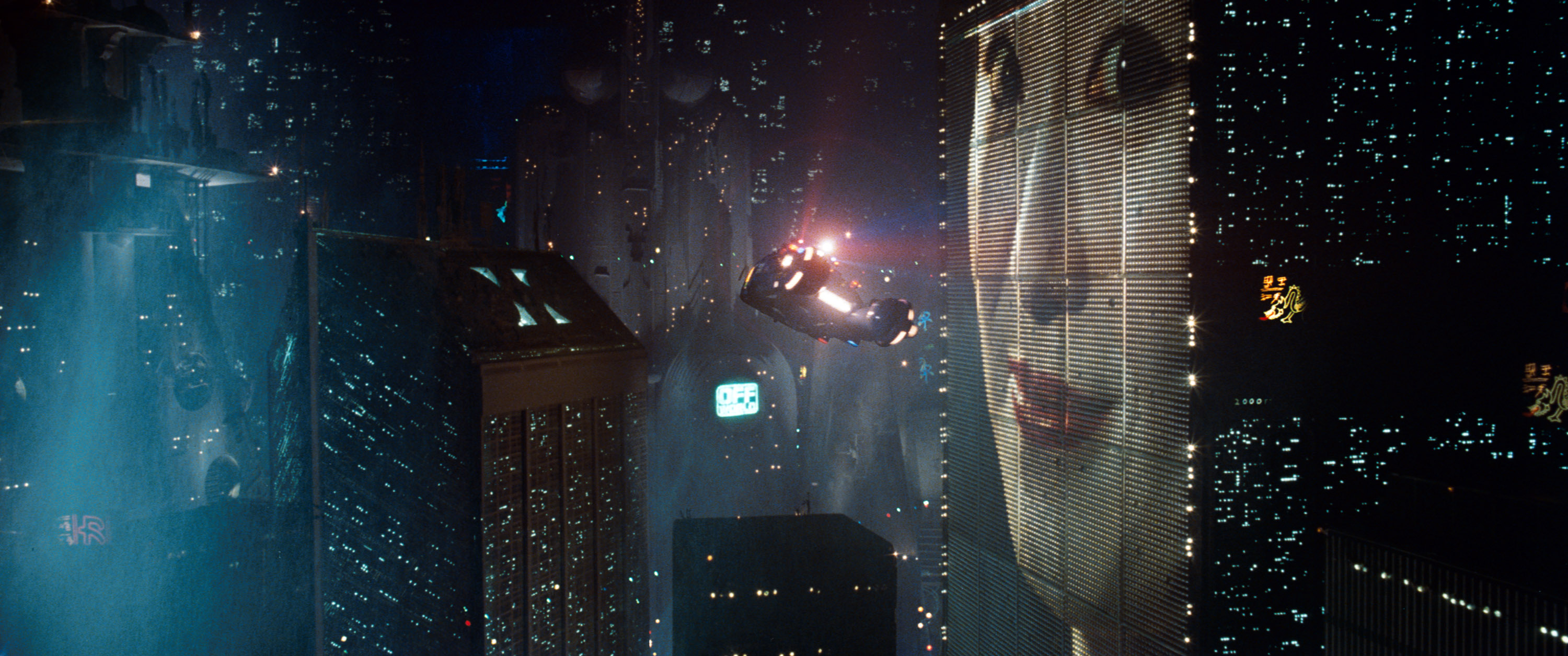
9. Blade Runner (1982)
Ridley Scott’s dystopian future portrays a dark, dirty, noir-like world where organic engineered android beings, called replicants, are hunted down and retired by beings known as “Blade Runners.”  Another example of a 1980s film growing in popularity due to its cult status, the film was originally a box office failure and divided critics.  It has since garnered great amounts of praise for its complex themes and “retro-fitted” production design.  Blade Runner, based on Philip K. Dick’s novel Do Androids Dream of Electric Sleep?, brought Dick’s work to the forefront of Hollywood and numerous other stories have since been adapted.  The biggest complaint of the film was its slow pace, but since its release Blade Runner has become one of the most reworked pieces of film in Hollywood history, resulting in seven different versions in existence.  Included among its numerous award nominations and wins are eight BAFTAs, four Saturn Awards, two Oscars, a Hugo Award, and a Golden Globe.  It has also made several Best Film Lists, including AFI’s 100 Movies and 10 Top 10 Science Fiction, Sight & Sound, Total Film, Empire, Time, and Entertainment Weekly.  The film was selected to the Library of Congress’s National Film Registry in 1993 and in 2007 the Visual Effects Society identified it as the second most visually influential film of all time.

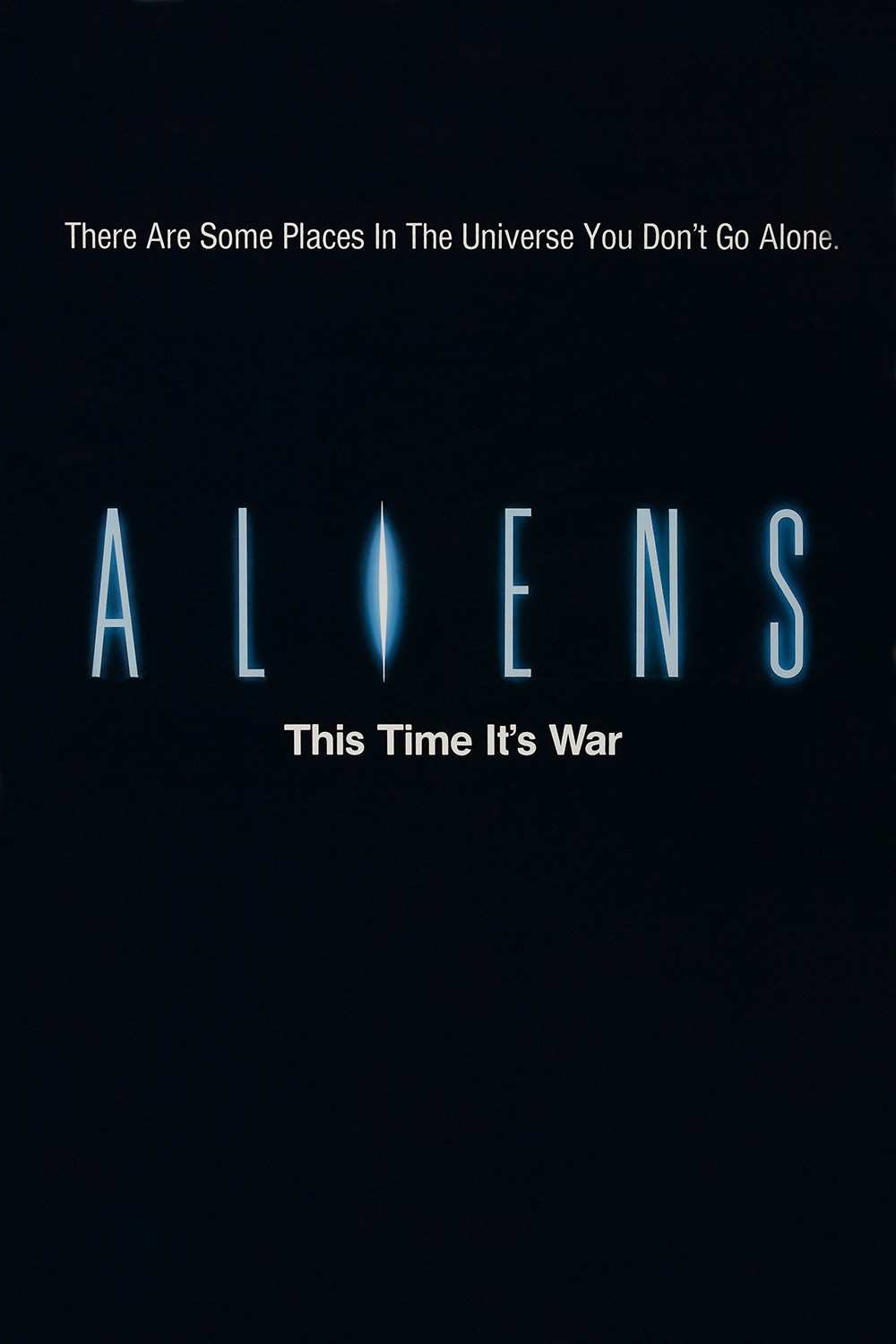
8. Aliens (1986)
“This Time It’s War.”  Not just a catchphrase for the poster, the sequel to 1979’s Ridley Scott space-horror film Alien was more of a science-fiction-action-adventure picture.  Aliens not only was a box office success and more firmly established James Cameron as a highly coveted director, but it was also well received at awards shows.  The story returns heroine Ellen Ripley and a group of Colonial Marines to the planet where the original hostile alien was encountered to investigate the lack of contact with a terraforming colony.  Due to the change in tone many have praised Aliens to be a superior film than its predecessor, with Alien feeling now slow and plain compared to the intensity of Cameron’s combat-packed action movie.  Aliens was nominated for seven Academy Awards, including Best Actress for Sigourney Weaver, and won two Oscars for sound and visual effects.  It also won a BAFTA Award in visual effects, with another three nominations.  Yet, the big award haul was at the Saturn Awards, where it won in eight categories.  The film has also accumulated high-ranking spots on multiple Best Of lists among the years.

7. Batman (1989)
Today it seems the comic book genre is a staple of big budget summer blockbuster Hollywood, but prior to Tim Burton’s moody Dark Knight film, the only real silver screen success comic book fans had experienced was with Superman in the 70s.  The start of a four-picture series, the initial adventure pits Batman against his greatest nemesis, the Joker.  In typical Tim Burton fashion, the setting and atmosphere of the film is quite dark, which rubbed some movie critics the wrong way, with a German Expressionist feel to the Gotham City design.  A massive hit financially, Batman was the first film to reach $100 million in the first 10 days of release.  The film received an Academy Award for art direction, Jack Nicholson was nominated for a Golden Globe for his performance as the Joker, and the BAFTAs and Saturn Awards handed out 11 nominations.  The success of this movie led to Warner Bros. Animation to create the DC animated universe for television.  AFI included both Batman and Joker on their 100 Heroes and Villains list, with nominations for the film to other of their Top 100 lists.

6. Die Hard (1988)
Cited as the summer blockbuster lone gunman, shoot-‘em-up action movie all subsequent action movies have been compared with, Die Hard has stood the test of time as a gripping thrill ride filled with violent exploits and comedic one-liners.  Turning Bruce Willis into a movie star, the film follows New York detective John McClane as he singlehandedly attempts to stop a group of terrorists in a Los Angeles high-rise.  The movie was a financial success and most critics loved the tense storyline and humorous performance Willis was able to give, despite his character being in such a dangerous situation.  Die Hard received four Academy Award nominations and Michael Kamen’s score earned him an award win.  The movie ranked at 39 on AFI’s 100 Thrills list and Alan Rickman’s Hans Gruber came in at 46 on the 100 Heroes and Villains list.  McClane, Gruber, the hero’s catchphrase, and the movie in general have also made countless other lists regarding the greatest aspects of film in history.

5. Indiana Jones and the Last Crusade (1989)
The third installment in the Indiana Jones series was intended to be more light-hearted after the darker tones of Temple of Doom.  Harrison Ford’s Indy treks across Europe searching for his father, played by Sean Connery, who has gone missing while on a quest for the Holy Grail.  The result is a father-son theme that develops throughout the movie, a common Steven Spielberg motif.  Indiana Jones and the Last Crusade was a box office success, earning more than $10 million in its first day.  Although audiences loved it, critics found the movie to range from “wild and witty” to “soulless.”  It won an Academy Award for sound editing with two more nominations.  Connery received great praise for his performance, acquiring nominations for supporting actor from the BAFTAs and Golden Globes.  The sound effects team received a BAFTA nomination as well.  John Williams’ score won a BMI Award and received a Grammy nomination.

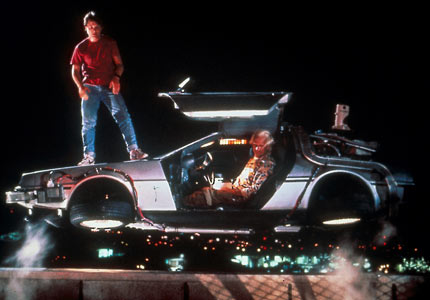
4. Back to the Future Part II (1989)
Piggybacking on the success of its predecessor, Back to the Future Part II continued the story of Marty McFly altering his family’s history.  This sequel picks up right where the first film left off, sending Marty and his scientist friend Doc to the future, an altered present, and the past to (stealing a quote from Quantum Leap) put right what once went wrong.  Shot back-to-back with the third entry in the series, Back to the Future Part II was the third highest grossing film of the year, falling short of the other two films on this list from 1989, and was a great achievement in filmmaking from the standpoint of camerawork with a single actor playing multiple parts onscreen.  Not as well liked as the original by film critics, it was still well received.  Winning Saturn and BAFTA awards for special effects design, it also received a nomination for the visual effects at the Academy Awards.

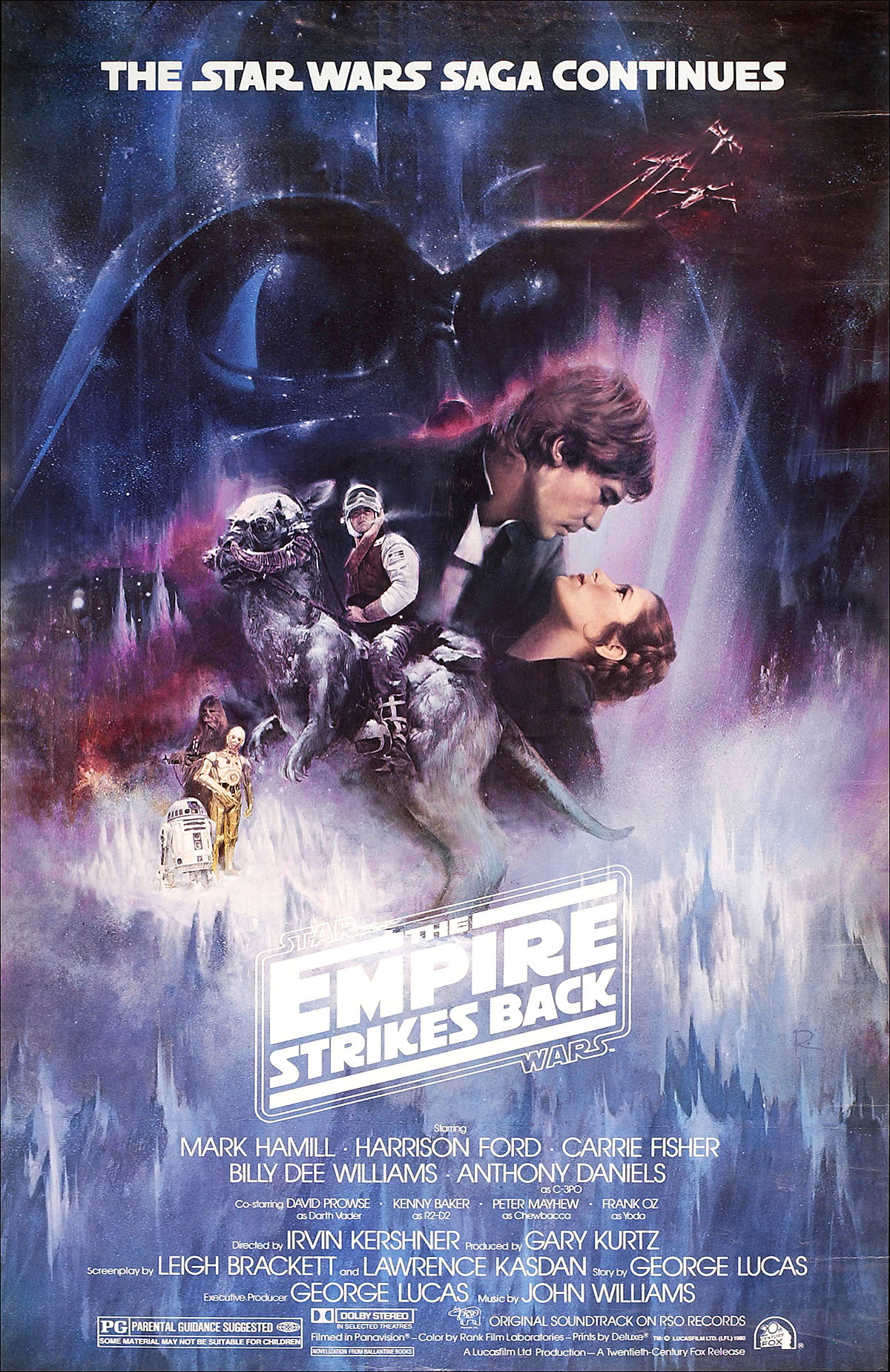
3. Star Wars: Episode V – The Empire Strikes Back (1980)
While my overall opinion of the second (or fifth) film in the Star Wars universe doesn’t coincide with Joss Whedon, our agreement over the lack of a true ending does notch it a bit lower than it could have been on this list.  It’s not that the ending is depressing or the Dark Side has their day, but that it is a cliffhanger of an ending.  Great movies need clear-cut endings that don’t rely on another film to tie up loose ends.  I’m not saying a movie’s conclusion can’t be ambiguous or open to interpretation, but it does need to be an ending.  With that said, The Empire Strikes Back is still a phenomenal movie that improved upon what its predecessor had begun.  The story continues the struggles of the Jedi-led rebellion against the Dark Side Empire, with Luke studying and training under Master Yoda.  Initially received to mixed reviews, the appreciation and esteem for this film has grown over the years and is now considered to be not only the best in the series, but one of the greatest movies of all time.  It was the highest grossing movie of its year and, adjusted for inflation, as of 2012 it is at number 12 on the all-time domestic box office records list.  The Empire Strikes Back won an Academy Award for sound mixing as well as a Special Achievement Award for visual effects and two other nominations were received.  John Williams’ score won Grammy, Golden Globe, and BAFTA awards and two other BAFTA nominations were included for best sound and production design.  The film also received four Saturn Awards and a Hugo Award.  Darth Vader was ranked the third greatest villain on the AFI 100 Heroes and Villains list.  In 2010, the film was included in the National Film Registry for being “culturally, historically, and aesthetically significant.”

2. Raiders of the Lost Ark (1981)
Fashioned after the idea of bringing a modern-day form of 1930s and 40s serials to moviegoers in the 80s, Indiana Jones was introduced to audiences to overwhelming praise.  Raiders of the Lost Ark became the highest grossing film of the year and remains one of the highest grossing films of all time.  It is deemed a classic in the action-adventure category and nearly universally praised by critics.  It was nominated for nine Academy Awards including best picture, winning four and receiving a fifth special award for sound effects editing.  The film received three BAFTA nominations.  It also won a Grammy and People’s Choice Award.  Director Steven Spielberg was nominated for his work at the Golden Globes.  Due to the success of Raiders of the Lost Ark, a prequel, two sequels, a television series, books, comics, and video games were spawned.  AFI included the movie among the top 100 Films, 100 Films 10th Anniversary, and Top 10 Thrills and Indiana Jones its second greatest hero on the 100 Heroes and Villains list.  Empire magazine considers Raiders of the Lost Ark to be the second greatest movie, bested only by The Godfather.  In 1999, it was included in the Library of Congress National Film Registry.

1. Back to the Future (1985)
Created on the premise of whether the screenwriter would have befriended his father had they attended the same high school, Back to the Future became the biggest hit of the year and led to a trilogy, animated television series, theme park ride, and several video games.  Marty McFly travels back in time, unintentionally altering his would-be parents love story and working with his scientist friend to return to his own time.  The film was universally praised for its acting and balanced storyline between dramatic tension, science fiction, and comedy.  Back to the Future won an Academy Award for sound editing and received three other Oscar nominations.  The movie also won Saturn and Hugo awards for Best Science Fiction Film and Best Dramatic Presentation.  It was nominated for another two Saturn awards, five BAFTAs, and four Golden Globes.  The success was so large, even President Ronald Regan mentioned the movie in his 1986 State of the Union address.  Among the many other praise it has received, Back to the Future has been included in Best Of lists in Entertainment Weekly, Empire, The New York Times, and Total Film.  It was also among the AFI 10 Top 10 in science fiction.  The film was included in the Library of Congress National Film Registry in 2007.

Analysis
Being born in 1980, this is the decade of my youth.  Therefore, many of these movies are fun, adventure films that a child delights in.  Blade Runner is the only serious, thought-provoking film of the bunch.  The 80s continued the trend of blockbuster filmmaking and launched the idea of franchises, especially in the science fiction, horror, and action genres.  Due to the violent nature found in such “family” films like Indiana Jones and the Temple of Doom and Gremlins, the MPAA found it necessary to add the PG-13 rating.  There was an increase in popularity with the teen comedy, largely influenced by National Lampoon’s Animal House from 1978.