Wednesday, October 01, 2014

The James Bond Theme

My wife and I recently had a date night and went to see a screening of The Man with the Golden Gun at the Magnolia.  This now puts my total of James Bond movies seen in the theater at 14.
 
One of the trademarks of the 007 film series is its music and each film has its own theme song.  These are normally songs that match the title of the film and are sung by a popular band or musical artist of the time period.  However, when it comes to The Man with the Golden Gun, the singer is a girl by the name of Lulu.  Although I’m an 80s baby and the Bond film series began in 1962, I can tell you at least something about each theme song singer, barring Miss Lulu.
 
Wanting to know a little more about Lulu the singer, I did some research and found out she is a bit more popular than I realized, but far below the level of stardom most 007 theme song performers have reached.  With little to do at work right now and wanting to share my James Bond knowledge with the world, I thought I would start a new series of posts that expounds upon the lives of those involved with composing and performing each theme song of the Bond series.  Obviously we will begin with the first film, 1962’s Dr. No.
 

Dr. No is an example of when the film’s title doesn’t match the theme song’s title.  The title of the theme song, which is quite original, is the “James Bond Theme.”  There is a bit of controversy to who actually composed the “James Bond Theme,” but the three men most involved in popularizing it is Monty Norman, John Barry, and Vic Flick.
 
Of those three, John Barry has the most history with the James Bond filmmakers.  Barry, born November 3, 1933, as John Barry Prendergast, was an English composer and conductor who worked on 12 Bond soundtracks from 1962 to 1987.  His work on Dr. No comprised of arranging the music that Monty Norman composed, including the “James Bond Theme.”  Barry then went on to compose the soundtracks for From Russia With Love, Goldfinger, Thunderball, You Only Live Twice, On Her Majesty’s Secret Service, Diamonds are Forever, The Man with the Golden Gun, Moonraker, Octopussy, A View to a Kill, and The Living Daylights.
 
Other notable film scores include The Lion in Winter, Midnight Cowboy, Out of Africa, Dances with Wolves, King Kong (1976), Robin and Marian, The Black Hole, Body Heat, Howard the Duck, Peggy Sue Got Married, Zulu, Chaplin, and The Ipcress File.
 
Barry started his own band in 1957 and went on to write some of the most legendary music in film history.  His accolades include winning five Academy Awards, four Grammys, two BAFTAs, two Emmys, and a Golden Globe.  He also received two Lifetime Achievement Awards, was made a fellow of the British Academy of Film and Television Arts, and was inducted into the Songwriters Hall of Fame.
 
Having been married four times, he died of a heart attack in January 2011 and at the time of his death was survived by his wife of 33 years, four children, and two grandchildren.
 
While Barry is repeatedly mistaken to be the creator of the famous Bond theme song, Monty Norman actually is the legal composer.  Norman was born Monty Noserovitch on April 4, 1928.  Norman’s career in music began as a singer for big bands and on variety shows.  In the late 1950s, he began composing music, including songs for Count Basie and Bob Hope.
 
Norman’s most famous contribution to music is the “James Bond Theme,” but he also composed for the musicals Songbook and Poppy.  His film composition includes theme songs for The Day the Earth Caught Fire and Call Me Bwana.
 
Earning six pounds for his work on the “James Bond Theme,” which was made up of recording the guitar riff on a 1939 English Clifford Essex Paragon Deluxe guitar plugged into a Vox AC15 amplifier, Victor Harold Flick, better known as Vic Flick, was born on May 14, 1937.  Flick joined John Barry’s band, the John Barry Seven, in the 1960s and his guitar playing was used on such television shows as Juke Box Jury and Drumbeat.
 
His work with the 007 series didn’t conclude with Dr. No.  He continued playing on soundtracks from the 1960s through the late 1980s.  Flick also provided his guitar talents for the soundtrack of the From Russia with Love video game.
 
Other film work included playing on the soundtrack of The Beatles A Hard Day’s Night.  He has also worked with artists including Tom Jones, Eric Clapton, and Jimmy Page.
 
James Bond musical theme history will return in From Russia with Love.

Monday, September 22, 2014

Here I Go Again

I guess it is the boredom I have at work right now with nothing to do all day, but I continue to read Internet comments and it is shocking how little thought goes into a person’s rant, especially when it comes to comic book movies.
 
A new rumor is going around Hollywood today, on the heels of the announcement that the Marvel comic book character Deadpool would be getting a feature film, that the Deadpool movie is going to be rated PG-13.  If you know anything about Deadpool, which for me is little, you know he is a violent mercenary with a mouth like a sailor’s alcoholic stepfather.  Most commenters have been hardcore fanboys of the Deadpool series who think that Fox Studios is not giving the character the proper venue to be true to the comics with a rating any less than R.  That may actually be a valid point, but from the perspective of the business side, R-rated comic book movies, which are few in supply, don’t generally do as well as if the same movie, minus a few cuts here and there to tone down the blood and vulgarity, were to receive a PG-13 rating.  That doesn’t mean a PG-13 ensures success, but with the R rating, you are already starting behind the eight ball by limiting your audience numbers.
 
The comment I took particular issue with was this (sans editing):
 
“Im so tired of these studios wanting every comic book film to be PG-13. Gag me with a spoon! It’s very lame, take a chance for once! Roll out a ‘R’ rated comic book film and see what happens. You will never know until you try. Look at the Kick-Ass films, they may not have been runaway blockbusters that made huge dollars, but they made money and more importantly, were well received (the first film anyways lol)”
 
Actually anonymous poster (username is James), Hollywood has tried R ratings for comic book films.  Here is what happened:
300 – $65 million budget – $210 million domestically – $456 million worldwide
300: Rise of an Empire – $110 million budget – $106 million domestically – $337 million worldwide
Sin City – $40 million budget – $74 million domestically – $158 million worldwide
Sin City: A Dame to Kill For* – $65 million budget – $13 million domestically – $27 million worldwide
Wanted – $75 million budget – $134 million domestically – $341 million worldwide
V for Vendetta – $54 million budget – $70 million domestically – $132 million worldwide
The Punisher – $33 million budget – $33 million domestically – $54 million worldwide
Punisher: War Zone – $35 million budget – $8 million domestically – $10 million worldwide
The Watchmen – $130 million budget – $107 million domestically – $185 million worldwide
Constantine – $100 million budget – $75 million domestically – $230 million worldwide
The Crow – $23 million budget – $50 million domestically – Unknown worldwide
Kick-ass – $30 million budget – $48 million domestically – $96 million worldwide
Kick-ass 2 – $28 million budget – $28 million domestically – $60 million worldwide
Blade – $40 million budget – $70 million domestically – $131 million worldwide
Blade II – $54 million budget – $82 million domestically – $155 million worldwide
Blade: Trinity – $65 million budget – $52 million domestically – $128 million worldwide
Judge Dredd – $90 million budget – $34 million domestically – $113 million worldwide
Dredd – $50 million budget – $13 million domestically – $35 million worldwide
 
*To be fair to Sin City: A Dame to Kill For, it should be noted the movie has only been in theaters for four weeks, but it is going to be a financial failure.
 
From that list of 18 films, in the case of a Deadpool movie you should probably focus on six in particular.  Those movies are The Watchmen, Kick-ass, Kick-ass 2, The Punisher, Punisher: War Zone, and Dredd.  Those six movies are highlighted because they have great similarities to what fans of the Deadpool series are asking for from studio executives.
 
As the blog poster points out, the Kick-ass series has made money overall, but Hollywood wants a more bankable item when releasing a comic book film.  Kick-ass and Kick-ass 2 are exactly what Deadpool fans are asking for with the latest movie when it comes to the violence and obscenities.  The foul-mouthed characters, especially Hit Girl, were funny and drew audiences in with the first film, but from the drop-off seen with the second movie it apparently lost some of its allure with moviegoers.
 
The Punisher and Punisher: War Zone are highlighted because they are the most similar comic book character to Deadpool.  While Deadpool is much more light-hearted in his humor and by breaking the fourth wall he has a more intimate relationship with the viewer, Punisher is still a mercenary/vigilante whose movies are filled with violence and obscenities.  That is exactly what Deadpool fans are wanting with the newest movie, but these films have proven that is not a recipe for success by tacking on the R rating.
 
That leaves The Watchmen and Dredd.  The reason for these selections is because of how faithful to the source material these movies were, even to a fault with The Watchmen.  Both were not just violent and profanity-laced, but they retained the true nature of the characters.  However, financial successes they were not.
 
Am I saying an R-rated Deadpool movie won’t be financially successful?  Absolutely not.  Movies like 300, Sin City, Wanted, The Crow, and Blade have proven that is just not true.  However, by forcing your hand and making an R-rated movie, a giant populace of moviegoers will be turned away at theaters simply because they aren’t of a certain age.  Producers and other studio executives don’t want to limit their target audience simply because the character originally said a lot of dirty words and sprayed blood all over the place with his swords.
 
Taking issue with watering down the character by limiting him to a PG-13 rating can be up for debate, but claiming that studios haven’t made R-rated comic book movies before is an uneducated rant.  I don’t know why I have become the Internet comment police as of late, but when you have zero to do for eight hours at work any menial task becomes interesting.

Monday, September 15, 2014

Bond 24 Production Date Announced

It was revealed this weekend that shooting of the latest James Bond movie was to commence on December 6 and a British release date of October 23, 2015, was still on schedule, with the U.S. release of the latest 007 picture to take place two weeks later.  Sam Mendes will return to the helm of Bond 24 and it has been rumored that the script, which is being fine-tuned in order to add some humor, will continue the themes that were explored in Skyfall.  With the Mendes-Daniel Craig team-up garnering Bond producers more than one billion dollars in ticket sales in 2012, it is no wonder they do not want to shake things up too much with the next film.
 
While scouring the Internet for information about this announcement, I began reading the comments section on a particular website (which is never a good idea) and the standard bickering in regard to the Bond series quickly got under way.  The two topics of disagreement among Bond fans that garner the most attention are whether Skyfall is overrated and how Bond movies should get back to its roots in gadgets and laughs.  The specific statement that sent me into research mode is below in its unedited version.  It was in response to a commenter stating that Skyfall was a terrible film and only did well financially because of critics’ response.  The commenter’s first paragraph, which is not included, was spot on about how critical analysis usually has no bearing on whether a movie is going to make money since critics have lambasted Michael Bay movies for years and they keep making billions at the box office but the award show darlings the reviewers love become flops.  However, it is the second part of his response that is very wrong.  Here it is:
 
“Lastly the old james bond you love and want to see is the reason the franchise was doing poorly before Daniel Craig re invented its success. Go ahead and look at the numbers for bond films pre craig, kept getting worse and worse numbers hence why we didn’t have any for a long time until Craig came along and rebooted it. I respect your a real bond fan but it seems like you just want the same thing over and over, which is exactly why it got stale and needed new life. If the old format was working and MOST OF ALL MAKING MONEY the nit wouldn’t have changed, fact!”
 
Ignoring the poor grammar, his idea that the series had become stale and needed a fresh look is absolutely correct.  However, the first part of that paragraph couldn’t be more wrong.  The pre-Craig era, specifically the Pierce Brosnan films, were doing just fine fiscally.  Brosnan’s four films started strong, with Goldeneye making $352 million internationally, but then Tomorrow Never Dies dipped slightly down to $333 million.  The next two films saw increases with each release, The World is not Enough making $361 million and Die Another Day $431 million.
 
Those numbers are quite formidable compared to Brosnan’s predecessor, Timothy Dalton, where License to Kill and The Living Daylights brought in $191 million and $156 million, respectively.  Even with higher production budgets than the Dalton films, and in some cases the budget increased by $100 million, and inflation being taken into consideration, the profits were still higher in the 1990s with Brosnan’s portrayal of the British superspy.
 
What does all this mean?  Why am I attempting to discredit an anonymous website commentator that I have no previous interaction with?  Is this all a waste of time and computer space?  The answers to those questions are probably “I don’t know,” “Just because,” and “Absolutely,” all in that order.  But I am bored at work and this has given me some sort of purpose for the past two hours.

Despite the fact Brosnan’s final outing as 007 was a gigantic success money-wise, the series needed to take a different direction.  The gadgets were running rampant and the set pieces had become so over the top that producers couldn’t bring things back down to reality with Brosnan still in the lead.  The Daniel Craig era, which has been grittier in tone and replicated the fast-paced action of the Jason Bourne film series, has been a massive triumph.  Audiences have embraced the blond Bond, resulting in two of the most financially successful movies of the series.

Thursday, August 21, 2014

Quick Hits

Here are two things to think over.  Firstly, have you ever noticed in the Sonic commercial with the two guys talking about what is on the outside being more important and the dimwitted one says he only reads the cover of books, they are both wearing seatbelts?  Noticing this tidbit on about the 75th viewing of that particular ad (thanks a lot Texas Rangers and Fox Sports Southwest broadcast people), I couldn’t say whether they do this in every single one of their Sonic commercials or if it is just this one.
 
This is weird, right?  They are stopped in a Sonic parking space and not going anywhere.  Why wear the seatbelt?  Is this some sort of cross-advertising with the state of Texas in regard to the “Click it or ticket” campaign?  A quick Google image search shows in nearly every commercial that these two are in together, they are wearing seatbelts.  I just find this odd.
 
Here is the second thing.  Were you to rank where the Jack Ryan film series falls in the pantheon of Hollywood heroes it likely would fall pretty far down the list, especially since it hasn’t been very relative since Harrison Ford last portrayed the Tom Clancy character in 1994’s Clear and Present Danger.  Ben Affleck attempted a reboot of the series in 2002 that led nowhere and now Chris Pine has taken a stab at the part in Jack Ryan: Shadow Recruit.
 
I watched the movie for the first time last night and, while the movie overall wasn’t fantastic, what it did do that stood out over most of the other Jack Ryan films was an emphasis on his analytical skills.  Not since The Hunt for Red October have we seen the character actually do analytical work.  We are always told that Ryan is a great analyst and not a CIA field agent, but somehow he constantly is pitted against the villain in a battle of fists, not wits.  Patriot Games did the best job of justifying why Ryan was exchanging physical blows with the baddies, but the Harrison Ford films and Affleck’s outing both were light on the analysis when it came to Ryan’s character.  That is not to say Chris Pine doesn’t get himself in the fight, but the screenwriters and director at least balanced the brawling with actual paper-pushing skills.
 
That is all for now.  Go back to your regularly scheduled programming.

Monday, August 11, 2014

The Love-Hate Relationship Of A Cult Classic

Merriam-Webster defines cult as “great devotion to a person, idea, object, movement, or work (as a film or book).”  Wikipedia is a little more specific in regard to cult films.  The online encyclopedia states a cult film is one “that has acquired a cult following and are known for their dedicated, passionate fanbase, an elaborate subculture that engage in repeated viewings, quoting dialogue, and audience participation.”  This category of film can be broken down into sub-genres, including “So bad it’s good,” camp and guilty pleasures, nostalgia, midnight movies, art and exploitation, B and genre films, animation, and nonfiction.
 
The Matt Cook definition of cult movie falls mostly under the first two sub-genres: “So bad it’s good” and camp and guilty pleasures.  Upon initial release the film could be either loved or hated by critics, but what tags it with the cult-like status is that it is initially ignored by the masses but slowly builds up a beloved fanbase.  When it comes to movies, the term cult classic more than likely generates thoughts of Rocky Horror Picture Show.  That seems to be the most popular candidate, with massive turnouts for late-night sing-along showings.  However, a recent contender for the top spot of cult classics that is coming on strong is Tommy Wiseau’s The Room.
 
Previewing a list of cult movies on Wikipedia, it included several titles that were successful hits upon their initial release in theaters.  Instead of cult classics, they really should be considered sleeper hits.  This list includes:
Anchorman: The Legend of Ron Burgundy
The Blair Witch Project
The Breakfast Club
Clueless
Dirty Dancing
Dumb and Dumber
Galaxy Quest
The Goonies
Mamma Mia!
Pulp Fiction
 
All of the above movies were generally well-received by critics and box office successes.  It would be unfair to compare them with true cult classics like Brazil and Donnie Darko.  There was also another group of movies included in Wikipedia’s list that, while technically falling into the Matt Cook definition of cult classic in that they have gradually cultivated massive followings after being box office disappointments, their approval by the masses have turned them into legitimate classics.  This group is made up of the following:
2001: A Space Odyssey
Blade Runner
Dazed and Confused
Fight Club
Godzilla (1954 original)
Napoleon Dynamite
Monty Python and the Holy Grail
The Princess Bride
The Shawshank Redemption
Willy Wonka & the Chocolate Factory
The Wizard of Oz
 
With zero statistical evidence to support this opinion, a true cult classic is either treasured or loathed.  It is the rare moviegoer who watches a genuine cult film and doesn’t have their interest meter make a move one way or another toward “loved it” or “hated it.”  Last night I watched Suspiria from Dario Argento and within five minutes my interest meter was dropping quickly toward “hated it.”  While it certainly didn’t end up at the fathomless depths of abhorrence I feel toward cult films like Faster Pussycat! Kill! Kill! or Blue Velvet, it definitely will not see a second viewing again anytime soon, if ever.  Some of the more popular cult classics are listed below and I have broken them up among my “loved it” and “hated it” categories.
 
Loved it:
An American Werewolf in London
The Blues Brothers
Bottle Rocket (after multiple viewings)
Caddyshack
Clerks
A Clockwork Orange
Clue
The Crow
Empire Records
Freaks
Kiss Kiss Bang Bang
Mad Max
Mars Attacks!
Night of the Living Dead
Office Space
The Road Warrior
Robocop
Super Mario Bros.
This is Spinal Tap
Tremors
UHF
Unbreakable
The Warriors
 
Hated it:
American Psycho
Evil Dead Trilogy (Evil Dead, Evil Dead II, and Army of Darkness)
Big Trouble in Little China
Howard the Duck
Hudson Hawk
Plan 9 from Outer Space
Time Bandits
Tron
The Wicker Man

Friday, July 25, 2014

Film Club Regroup

Following several months off due to holidays, babies being born, and busy schedules, our film club has resumed meeting.  We left things off after viewing only two Martin Scorsese movies, Mean Streets and Taxi Driver, but we decided to pick things back up with Quentin Tarantino’s early films.
 
A recent radio segment on the 20th anniversary of Pulp Fiction piqued our interests in Tarantino and our film club decided that before returning to Scorsese we would view Reservoir Dogs and Pulp Fiction.  The initial plan was to dive back into Scorsese after those two movies, but after our first meeting last weekend and rave reviews for the two movies viewed, it was decided we would watch the Kill Bill series before returning to Scorsese.
 
A recent ranking of Tarantino’s directorial films has been attempted, but it may change a bit after another viewing of the Kill Bill films since I haven’t seen those movies in nearly a decade.  Below are my current rankings of the nine films Tarantino has directed.  It should be noted that regarding Grindhouse and Four Rooms I have included the portion of the films that Tarantino actually controlled.
 
9. Kill Bill: Volume 1
8. Grindhouse (Death Proof)
7. Jackie Brown
6. Kill Bill: Volume 2
5. Four Rooms (The Man from Hollywood)
4. Django Unchained
3. Reservoir Dogs
2. Inglourious Basterds
1. Pulp Fiction

Wednesday, July 02, 2014

James Bonds' John Gardner Novels

Listed below are my ranking of the 007 continuation novels penned by John Gardner.  Gardner was the author selected to revive James Bond in print following a one-off in 1968 by Robert Markham, which was a pseudonym for Kingsley Amis.  Gardner's novels ran from 1981-1996.  In my humble opinion, Gardner's best Bond novel was about on par with Fleming's average works.
 
Gardner started out in his Bond writing career leaning heavily on gadgets, but gradually got away from those gimmicks.  Some of my biggest complaints with his writing was that he seemed to either get too technical, as he was an ex-Royal Marine commando, or use stale cliches for cliffhangers and plot twists.  In the example of Brokenclaw, the novel is moving along just fine and is actually one of his better works until the ending when he has our hero making the most foolish decisions a person could make, and the worst part is he doesn't even try to provide some sort of explanation for Bond's motives.
 
Here is my rank for the best to worst James Bond novels by John Gardner:
 
1. No Deals, Mr. Bond
2. Death is Forever
3. Icebreaker
4. Scorpius
5. The Man from Barbarossa
6. Cold Fall
7. Never Send Flowers
8. Brokenclaw
9. Role of Honor
10. For Special Services
11. License Renewed
12. Win, Lose or Die
13. Seafire
14. Nobody Lives Forever

Monday, June 23, 2014

Tarantino's Film Universe

There is a premise out there among film theorists and bloggers that the movies Quinten Tarantino has been a part of make up a cinematic universe not wholly unlike what Marvel has done with its comic book superheroes, just not near as intricate.  This theory has even been confirmed by Tarantino himself concerning a few of his movies and deep introspection has been fleshed out among the World Wide Web that a hasty Google search will provide many results for your perusal if interested.  What I would like to look at today is not how his alternate universe has movies within movies and whether characters that make up the Tarantino universe can cross over to the different planes of existence.  Instead I will be connecting the Easter eggs of his films.
 
What brought about this post was when my friend Danny and I were discussing Pulp Fiction and Reservoir Dogs.  He has seen neither of these movies and I am working to find a date that works for us to have a movie club night with Evan to watch both.  While talking about the greatness of both films, Danny asked whether they were connected and he had to watch Reservoir Dogs prior to Pulp Fiction since it was released first.  My answer to him was yes and no.
 
The reason for the ambiguity is because the films do not require a specific order of viewing to be understood but they are thinly related, and I do mean thinly.  The specificity of this connection is that two of the characters in each film are brothers.  Tarantino has stated in interviews that Vic and Vincent Vega are siblings and there is even the hope out there among Tarantino fans that eventually a movie will be made that teams the two up.
 
 
The most recent Easter egg discovered that unifies the Tarantino universe is from Django Unchained.  A character never seen onscreen by the name of Crazy Craig Koons, found on a Wanted Poster, is related to Captain Koons, played by Christopher Walken, in Pulp Fiction.
 
 
Another connection in this film universe includes Mr. White speaking with a woman named Alabama in Reservoir Dogs, who is a main character in the Tarantino written True Romance.  An additional ancestral connection is Donny “The Bear Jew” Donowitz in Inglourious Basterds and Lee Donowitz from True Romance.  The failed television pilot Uma Thurman’s character discusses in Pulp Fiction bears a strong resemblance to the assassins in the Kill Bill films.  The same sheriff character can be found in From Dusk Till Dawn, Kill Bill, and Death Proof.
 
 
An unconfirmed relationship between Django Unchained and Kill Bill is that the Bride is buried in the grave of Dr. Schultz’s ex-wife.
 
 
Recurring elements of the Tarantino universe include Red Apple cigarettes, Big Kahuna burgers, and Jack Rabbit Slims restaurant.

 
Like the Slusho in J.J. Abrams movies or a bright yellow ball with a star on it in the Pixar universe, these kinds of things don't enhance the movies or forward the plots in any way.  They are simply little nods of the cinematic head to fans that pay close enough attention to spot the Easter eggs Tarantino is dropping throughout.

Friday, June 13, 2014

James Bond Gadgets That Jumped The Shark

When a film franchise endures for more than 50 years and 23 films, there are going to be some high points and low points throughout.  The James Bond series has such moments, and a consensus among many fans is that Die Another Day, as a whole, is a low point for the series.  To be fair, a lot of people see the first third of the film as a great starting point.  It isn’t until Bond goes off to Cuba and beyond that the thing goes off the rails.
 
However, the masses are in harmony when it comes to criticism of one specific aspect of the film: 007’s vehicle.  Aston Martin unveiled their newest model, the V12 Vanquish, in the 2002 film, but due to one particular option added to Bond’s vehicle, Q Branch had renamed it the Vanish.  This was due to the fact that they had included a cloaking feature that rendered the car invisible to the human eye.
 
 
Both when the movie was initially released and up to now, the two biggest grievances about the film are the overuse of CGI and the invisible car.  I personally am completely on board with the former complaint, but as far as having an invisible car, I don’t quite see how you can demonize that particular gadget over others that have seemed just as far-fetched that came before it.
 
For those who are not as big of a fan of the James Bond series as I am, let me shed a little light on the argument I’m about to defend.  The 007 film series has always relied on gadgets to help our hero in the field.  Some movies tone down the amount of gadgets, such as For Your Eyes Only and Casino Royale, while others ramp up the technology, like Goldfinger or Octopussy.  Die Another Day is one of the movies that relied heavily on gadgets for the latter half of the film, and the vanishing car is what draws the most ire from the fan base.
 
I would like to start off and state that I am not defending the absurdity of the technical flaws with trying to spy on people in an invisible car.  Transporting the occupants to and from locations behind enemy lines in the concealed vehicle is about the only great use for such a medium of technology.  Otherwise, people would be able to hear the purr of the engine as it cruised around a military base or would walk into it when parked inside the heart of the villain’s lair.  Obviously there are better ways of spying on people than spending hundreds of millions (maybe even billions) of dollars on creating invisible cars, but I’m sure there are some great uses for cloaking devices for the future of our military.  If anything, it would be nice to be on the same playing field as the Romulans once we start exploring space like in Star Trek.
 
What I am here to defend today is the idea that Bond getting an invisible car didn’t take things too far from spy adventure to science fiction, because that is just not the case.  Were the gadgets getting out of hand and a more realistic direction need to be taken?  Yes.  But for the fandom to turn on the Bond filmmaking team because of this single gadget, that seems a bit excessive to me.  Especially since in the decade that has passed since the release of Die Another Day it has been revealed that scientists around the world are working on perfecting such a device on clothing material and vehicles.  At this point in life these things obviously aren’t perfected and don’t look as sleek as it did in the film, but the concept is available to us and given time it could be achieved.
 
I’ve come up with five other gadgets from the James Bond movies that are much more ridiculous or less attainable due to the limitations of science.

 
The first such item is Oddjob’s bowler from Goldfinger.  The hat looked rather normal, but when he took it off and launched it like a Frisbee, the audience learned of its deadly capability.  The derby’s rim was made of a thin metal that could slice stone or snap a person’s neck.  Just think about that last sentence.  It can cut away stone or break bones.  Doesn’t it seem that it should be able to do one or the other, but by being strong and thin enough to cut stone, wouldn’t it then be a decapitating device instead of merely a bone-breaking one?  In a movie where the most absurd gadget should be a car’s ejector seat, Oddjob takes top billing (billing, like the bill of a hat; get it) with his deadly derby.

 
The next gadget up for scrutiny is the mini-breather from Thunderball.  This tool, used to get much needed extra time when underwater diving, seems extremely feasible.  In fact, following the release of the movie in 1965 the military contacted the Bond producing team asking how they could get their hands on the device.  Alas, no such apparatus exists and it was all created using Hollywood editing.  The closest you will get to a mini-breather is a can of spare air in the case of emergency that can be on your person when deep sea diving.  Since no such device has ever, or likely will ever, be in existence, I’m not sure why this one doesn’t get more retractors.

 
In my humble opinion, The Man with the Golden Gun is the worst of the series.  There is little to enjoy throughout and the suspense level gets ratcheted up to about Hervé Villechaize’s height (that is just under four, in case you were wondering).  The standout moment of ludicrousness for this movie is when villain, and the film’s namesake, Scaramanga attaches a set of wings to his transportation, turning it into a flying car.  To me, the idea that attached wings can simply be clipped to a sports car and all of a sudden we are living with Doc and Marty McFly in Hill Valley, circa 2015, is nonsensical.

 
Scaramanga’s flying car was just another blunder among many mistakes found throughout a bad movie, but the Lotus submarine from the following film was something altogether because The Spy Who Loved Me is actually considered to be one of the better entries from the franchise.  In the context of the movie, Bond drives his Lotus Esprit S1 off a pier and as the vehicle is sinking to the bottom of the sea it converts at the touch of a button to a submarine.  Compared to having a car that can become invisible, I see no difference, except that within a decade the theory that an invisible car is actually obtainable, whereas it has been nearly 40 years and we are no closer to converting automobiles to submarines.
 
 
Laser guns.  How does that sound for realism in a Bond movie?  In Moonraker, sending the British spy into space wasn’t enough.  Things had to be tricked up even more with a laser gun battle between space marines and an army of henchmen.  It looks like a grand game of laser tag between floating astronauts.  It is essentially a reworking of the underwater battle from Thunderball, replacing swimmers with spacemen and harpoon guns with laser rifles.  Progress is being made to create applicable laser rifles, or ray guns, but it certainly took a while for science to catch up with the fiction found in Moonraker.

Wednesday, June 11, 2014

Jaws Notes To Chew On

Jaws is a defining moment in cinema as its release was the originator of summer blockbusters.
 
 
The film was shot mostly on location in Martha’s Vineyard, Massachusetts.
 
The mechanical shark proved difficult to work with many malfunctions at the start of production, resulting in the picture going over budget and past schedule.  This also brought about the decision by director Steven Spielberg to simply imply the monster’s presence for most of the film.
 
The producers of the film read the novel on which the film is based in a single night and independently decided to buy the rights to the story.
 
John Sturges was considered for the director’s chair and Dick Richards (who?) was earmarked for the job prior to Spielberg’s hire.  Spielberg had next to zero experience as a major Hollywood director, having just completed his first feature film, The Sugarland Express, which hadn’t even been released prior to him being named director, and having a TV movie released two years prior.
 
Before starting principal photography, Spielberg began doubting the picture and wanted out of his contracting, hoping to avoid being typecast.  His hope was to move to the 20th Century Pictures film Lucky Lady.  What, never heard of it?  It was released in 1975, directed by Stanley Donen and starring Gene Hackman, Liza Minnelli and Burt Reynolds.  The producers refused to let him walk.
 
One of the cuts from page to screen was the adulterous affair between the sheriff’s wife and the visiting oceanographer.  Spielberg feared it would take away from the camaraderie on the boat in the last act.
 
Spielberg sent Carl Gottlieb, a comedy writer at the time working on the TV sitcom The Odd Couple, a script asking for some input on making the film more light.  Gottlieb sent back three pages of notes and ultimately was hired on as the actor who portrayed the editor of the town’s newspaper.  Gottlieb ultimately became the primary screenwriter, despite originally being hired on to do a polish job.
 
The film had several writers contribute throughout the process and many scenes were written the evening before while the principal cast and crew were at dinner together.
 
The credit of Robert Shaw’s monologue about his survival of the USS Indianapolis disaster is in much dispute, with credit going to Shaw himself, who was a playwright, writer John Milius, who contributed dialogue polishes, and playwright Howard Sackler.
 
Three full-size pneumatically powered sharks were created for production, which the crew named Bruce after Speilberg’s lawyer.  It took 14 crewmembers to operate the shark.  A shark in Finding Nemo has the same name.  Another Jaws reference in Finding Nemo is when Dory and Marlin release a missile from its pod into Bruce’s mouth, just like the finale of Jaws.
 
Charlton Heston was interested in the role of Chief Martin Brody, which ultimately went to Roy Scheider.
 
Speilberg’s friend George Lucas suggested the role of Matt Hooper to go to Richard Dreyfuss, who initially declined.  However, a few days later he came back to Speilberg and accepted after being disappointed with a part he had recently completed and was soon to be released, fearing he would not be hired again.  Ironically, he received rave reviews for his performance.
 
The scene where Hooper discovers Ben Gardner’s body required a reshoot, which resulted in Spielberg paying $3,000 of his own money as Universal didn’t want to pay it.  The scene was shot in film editor Verna Field’s pool and milk was poured into the water to recreate the murky setting that was found in Martha’s Vineyard.

Tuesday, June 03, 2014

The Boomstick's Return To Texas

A lot is being made of a local reporter's piece on whether Nelson Cruz should be booed upon his return to Texas tonight. Cruz was with the Texas Rangers for eight seasons and was a central part of the recent successful run the metroplex has been a part of in regard to postseason baseball. Yet, because of a 50-game suspension last season due to a link with PEDs that was a crucial part of why the local ball club missed the playoffs, fandom is divided on whether Cruz will be booed or cheered.

Many remember the past glories Cruz gave us with his "boomstick," even leading to a carnival-style hotdog of the same name that got the same amount of smiles as Cruz's homers.  But the other group of fans only want to remember the missed fly ball in game six of the 2011 World Series (which does still pain my sports heart to think about) and the suspension last year.  For me, the criteria of whether you are booed or not upon your return is how your exit is handled.
 
Mark Texeira had no desire to be here and didn't disguise the fact.  Josh Hamilton and C.J. Wilson both went to teams in our division and made comments that had Rangers fans shaking their heads in bewilderment and anger.  They all deserved to be booed.  Ian Kinsler also said some things that irked the fanbase here, but in reality the only comment that should have given us pause was the desire to see us go 0-162.  While all ballplayers should want other teams in the league to go winless for the season, you don't want to hear that from an ex-player who you rooted for day in and day out about your team.
 
That leads us to Nelson Cruz.  His exit was pretty clean and he kind of already received his punishment by receiving six million less than what he was offered for staying in Texas.  I personally would not boo Cruz if I were to attend tonight's game or any of the games for this series, but I guess I can see the argument for doing so.

Thursday, May 15, 2014

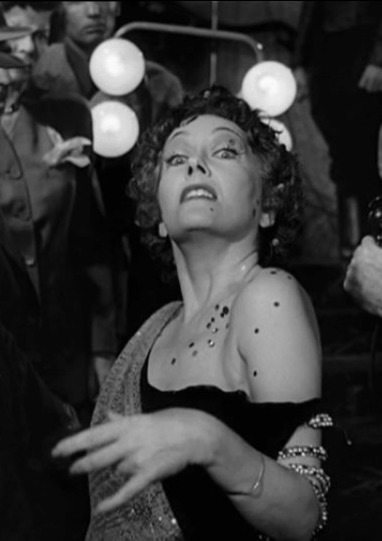
Gloria Swanson's Best Actress Bid

A friend and I recently went to a special screening of Sunset Boulevard in Dallas and, as all of our outings together end after viewing classic films, we discussed the merits of the Billy Wilder movie on the drive home.  One such topic for this film noir/black comedy was the Oscar nominated role of Norma Desmond, played by Gloria Swanson.
 
Much like the Sunset Boulevard character, Swanson was a silent film star who did not successfully make the transition over to “talkies.”  In the beginning Swanson had mild success in talking features, however, unlike Desmond she bowed out gracefully from Hollywood, withdrawing permanently to New York City in 1938.  Among her activities while in New York were painting, sculpting, writing a syndicated column, engaging in political activism, designing clothing and accessories, marketing, and radio and television work.  She also started an effective enterprise that during World War II was able to liberate Jewish scientists from war-torn Europe, resulting in the creation of a few valuable inventions.
 
Following several refusals from other “has-been” actresses, Wilder approached Swanson for the role of Norma Desmond, a faded and delusional Hollywood actress hoping to mount a comeback with a picture she has written herself.  Desmond elicits the help of a young screenwriter, played by William Holden, with the two eventually becoming romantically involved.  Swanson’s similar background to draw from for the role surely helped with the creation of the irrational Norma Desmond, and with the aid of several legendary quotes that are still known today it is no wonder an Academy Award nomination was bestowed to Swanson.  After watching her performance again it was mindboggling how she did not win the Oscar that year.  I said multiple times that it was inconceivable as to how she was passed up that year, but then I actually looked at the other nominees and realized why.
 
1950 was a tough year to be nominated for an Academy Award in the Best Actress category.  First of all, Bette Davis was involved for her role in All About Eve.  Davis was the Meryl Streep of her time, or I guess it should be Streep is the Davis of now.  If Davis was in it, there was a good chance she was getting nominated.  In all, Davis received 10 nominations for Best Actress, with another honorary nomination that is not recognized by the Academy, and two wins.  Being up against Bette Davis was hard enough for Swanson to overcome, but Davis’s costar inadvertently helped Swanson’s case.
 
Another Best Actress nomination came from All About Eve for Anne Baxter.  It is generally accepted Davis and Baxter negated one another’s votes, resulting in the other three nominees receiving better odds of winning the golden statue.  Baxter was an adequate starlet to the say the least, with the latter days being spent making appearances on popular television series of the 1960s, 70s, and 80s.  It is safe to say the highlight of her career was the Best Supporting Actress Oscar she received for The Razor’s Edge in 1946.
 
With Davis and Baxter cancelling one another out, Judy Holliday ultimately went home a winner for Born Yesterday.  Holliday carried over the success she had in the role as Billie Dawn from stage to screen, not only winning an Oscar, but also the first Golden Globe for Best Actress – Motion Picture Musical or Comedy.  Holliday is ultimately known for her work on the Broadway stage, but besting Bette Davis, Anne Baxter, and Gloria Swanson in the Oscar race of 1950 is certainly a fine feather in her cap.
 
That leaves Eleanor Parker’s performance in Caged.  I’ve never seen the movie, so I really can’t evaluate her much.  Her filmography includes a role in The Sound of Music, The Man with the Golden Arm, three Oscar nominations for Best Actress, and a Volpi Cup for Best Actress at the Venice Film Festival.
 
Even without a good knowledge of Parker’s role or how she did with it, I feel comfortable stating that 1950 was one of the tightest races ever for the Best Actress category.  A little over a week ago I couldn’t fathom Swanson not winning the award, but now I see what she was contending against.  It was really a tough race to win.